Vectors and Forces
Introduction
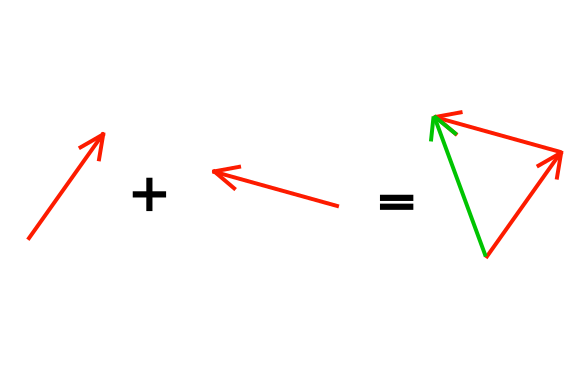
Vectors form the foundation for analyzing physical systems. A vector is a quantity defined by magnitude and direction. Forces are most accurately described using vector notation, so understanding vector combinations is essential.
Notation
Angle-Magnitude: @ above x axis
Cartesian Coordinates: = 3 + 4 - 5
Bracket Coordinates: =〈3, 4, -5〉
Vector Addition
Dot Product
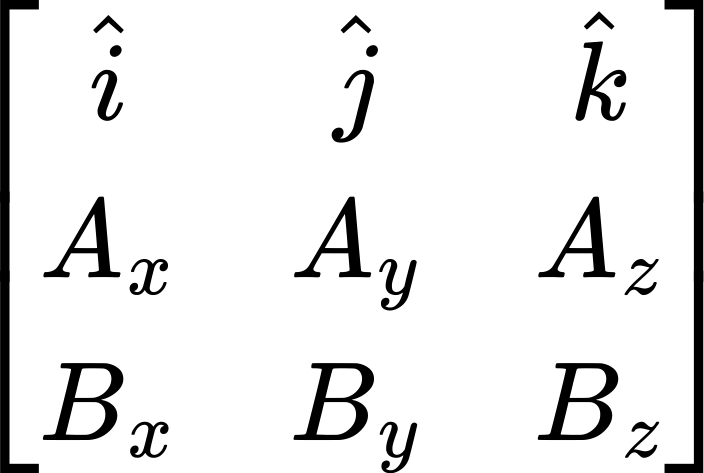
Cross Product
(matrix above) =
Component & Resultant Forces
Given is from the +x-axis, and . Given right triangle where a and b are legs and c is the hypotenuse, is and is . The resultant force is
Position Vector
The vector that points from one point to another (typically the origin to a point):
Unit Vector
Gives direction only and is the position or force vectors divided by their respective magnitudes:
Force Vector
Combines magnitude of force and direction to give components , , and :
Coordinate Direction Angles
The angle between the resultant vector and the +x, +y, and +z axes, respectively:
) ) )
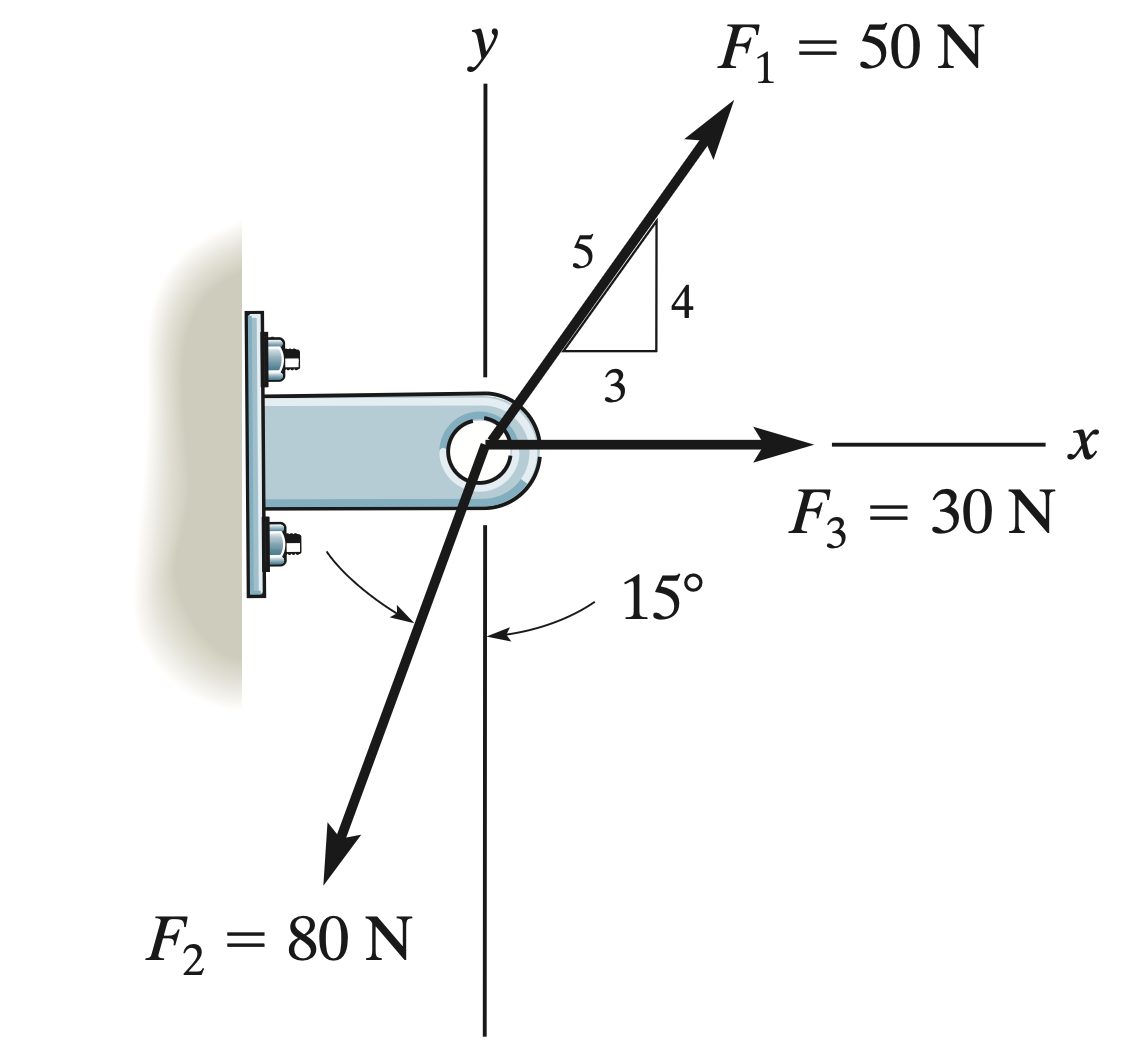
Example 1:
Find the Vector and Magnitude of the Resultant Force
1) Add x-components:
2) Add y-components:
Vector of Resultant Force:
Magnitude of Resultant Force:
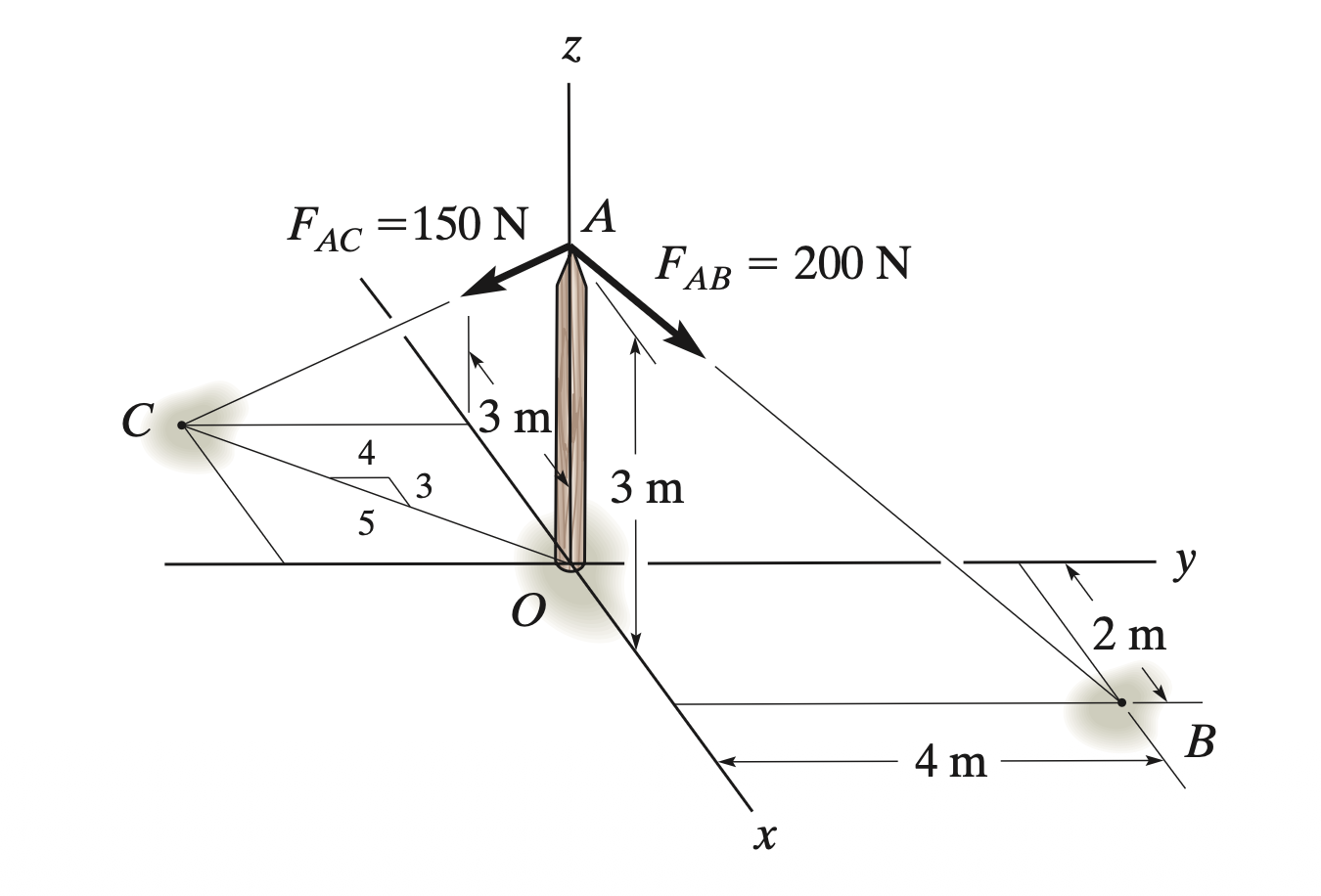
Example 2:
Find the Coordinate Direction Angles of the Resultant Force
1) Position Vectors:
From A to B:
From A to C:
2) Magnitudes of Position Vectors:
3) Unit Vectors:
4) Force Vectors:
5) Sum x, y, and z Components to Find Resultant Force:
6) Coordinate Direction Angles: