Screws

Introductionimage

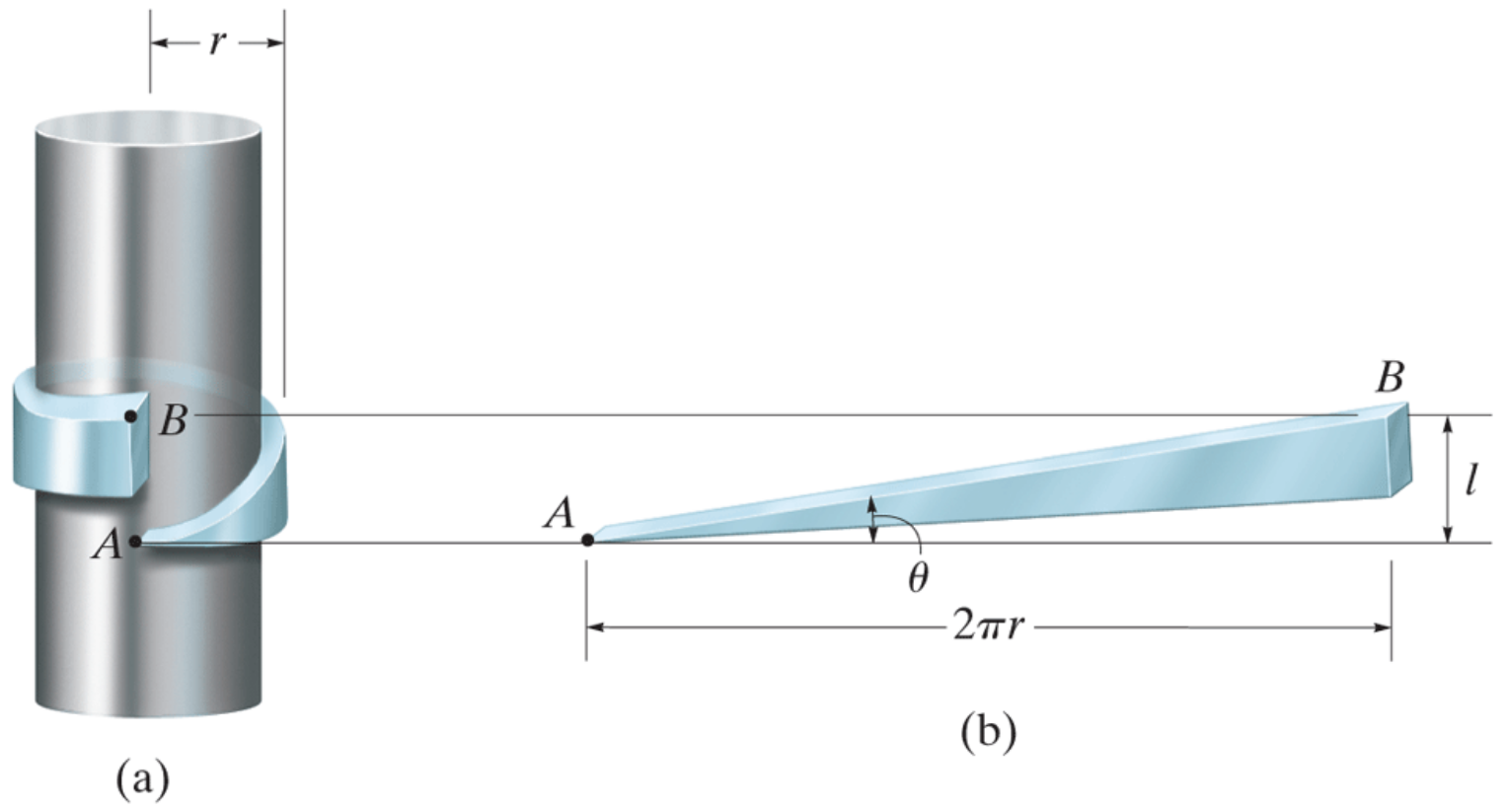
Screws are used to transmit power or motion to another part of a machine. The most common type of screw is a square threaded screw.

lead angle: θ = tan ⁡ − 1 ( l 2 π r ) \theta = \tan^{- 1}(\frac{l}{2\pi r})

where l l = lead of screw

Three Main Types of Screws:
image

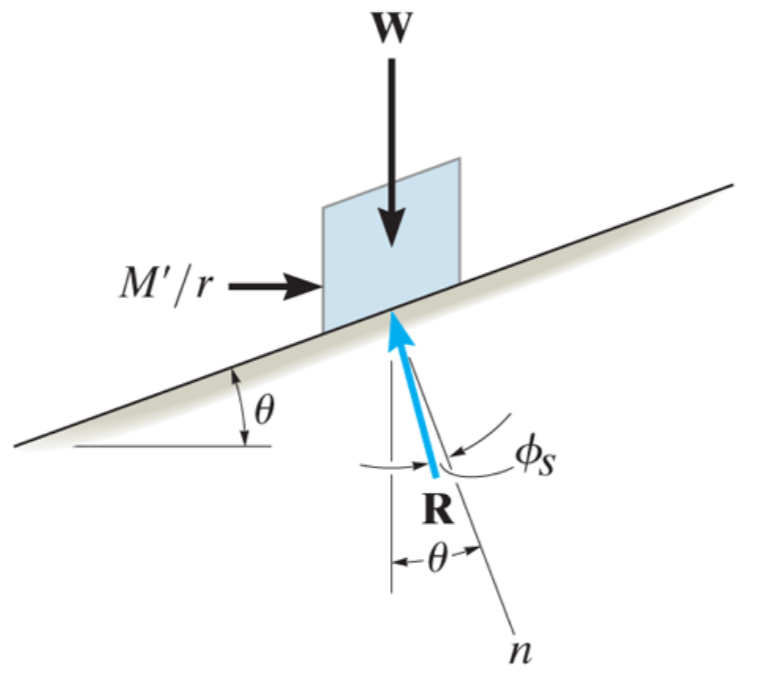
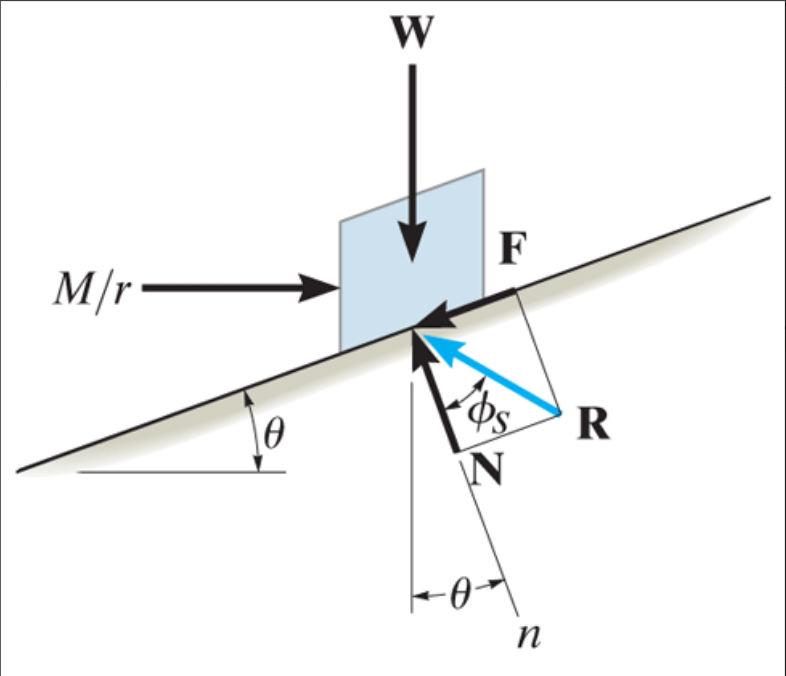
Upward Impending Motion
→ Σ F x = 0 ; \rightarrow \Sigma F_{x} = 0;\ M r − R s i n ( θ + Φ s ) = 0 \frac{M}{r} - Rsin(\theta + \Phi_{s}) = 0

↑ Σ F y = 0 ; \uparrow \Sigma F_{y} = 0; R c o s ( θ + Φ s ) − W = 0 Rcos(\theta + \Phi_{s}) - W = 0

Solve to get: M = r W t a n ( θ + Φ s ) M = rWtan(\theta + \Phi_{s})

image

Downward Impending Motion
When θ > Φ s \theta > \Phi_{s}

→ Σ F x = 0 ; \rightarrow \Sigma F_{x} = 0;\ M ′ r − R s i n ( θ − Φ s ) = 0 \frac{M'}{r} - Rsin(\theta - \Phi_{s}) = 0

↑ Σ F y = 0 ; \uparrow \Sigma F_{y} = 0; R c o s ( θ − Φ s ) − W = 0 Rcos(\theta - \Phi_{s}) - W = 0

Solve to get: M ′ = r W t a n ( θ − Φ s ) M' = rWtan(\theta - \Phi_{s})

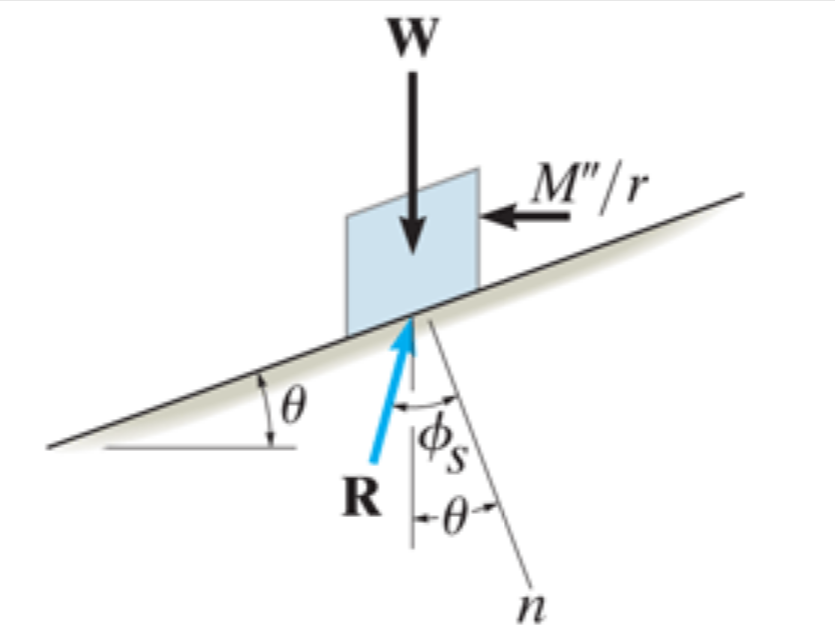
image

Downward Impending Motion

When θ < Φ s \theta < \Phi_{s}

This is a type of self locking screw.

→ Σ F x = 0 ; \rightarrow \Sigma F_{x} = 0;\ M ″ r − R s i n ( Φ s − θ ) = 0 \frac{M''}{r} - Rsin(\Phi_{s} - \theta) = 0

↑ Σ F y = 0 ; \uparrow \Sigma F_{y} = 0; R c o s ( Φ s − θ ) − W = 0 Rcos(\Phi_{s} - \theta) - W = 0

Solve to get: M ″ = r W t a n ( Φ s − θ ) M'' = rWtan(\Phi_{s} - \theta)

Example 1: Problem 8-74

image

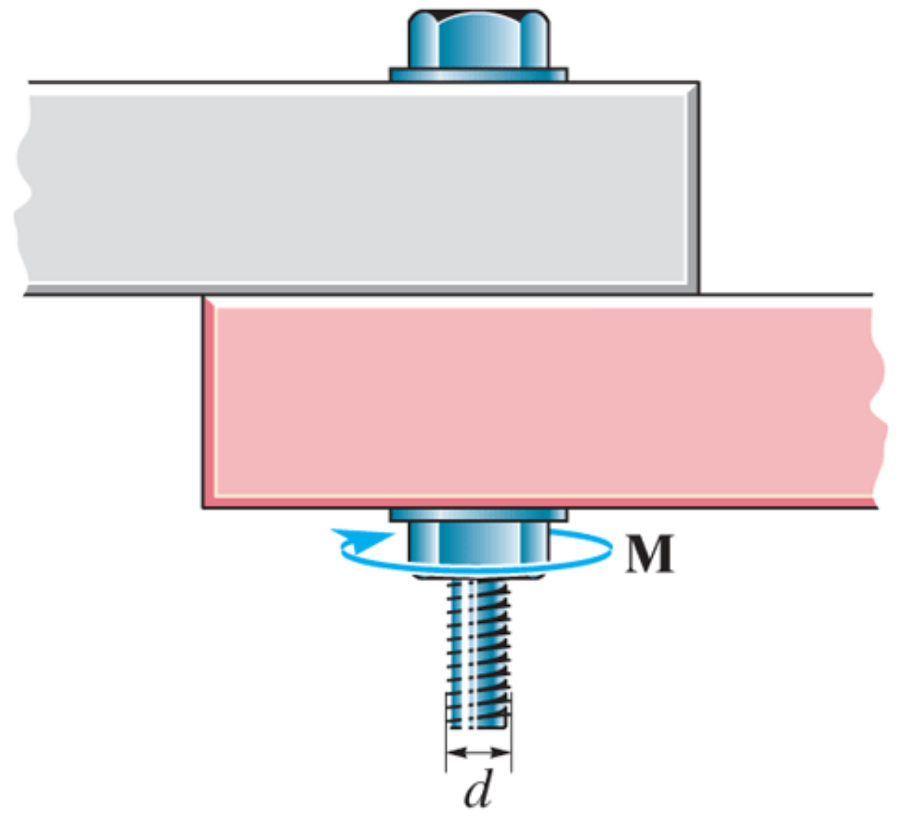
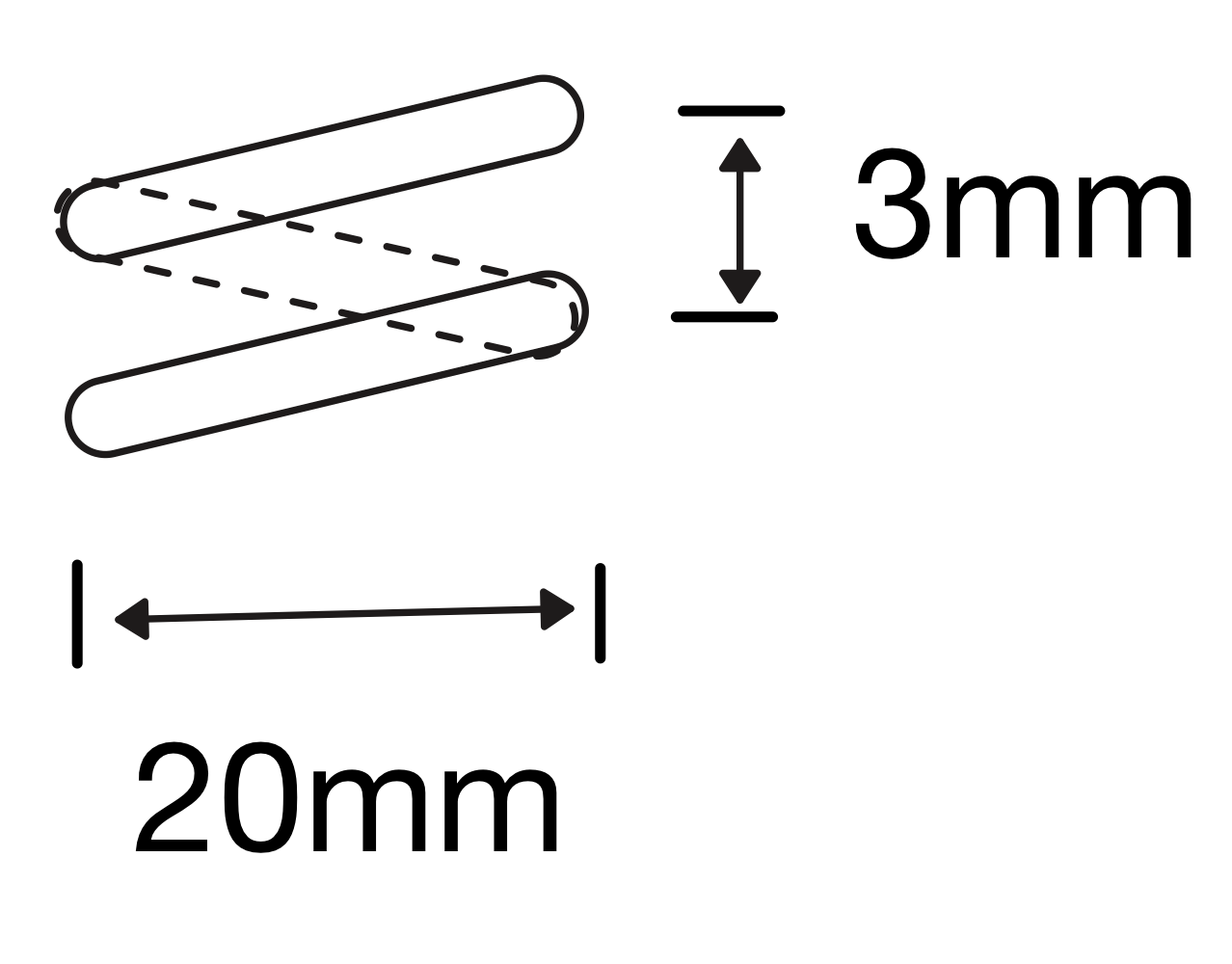
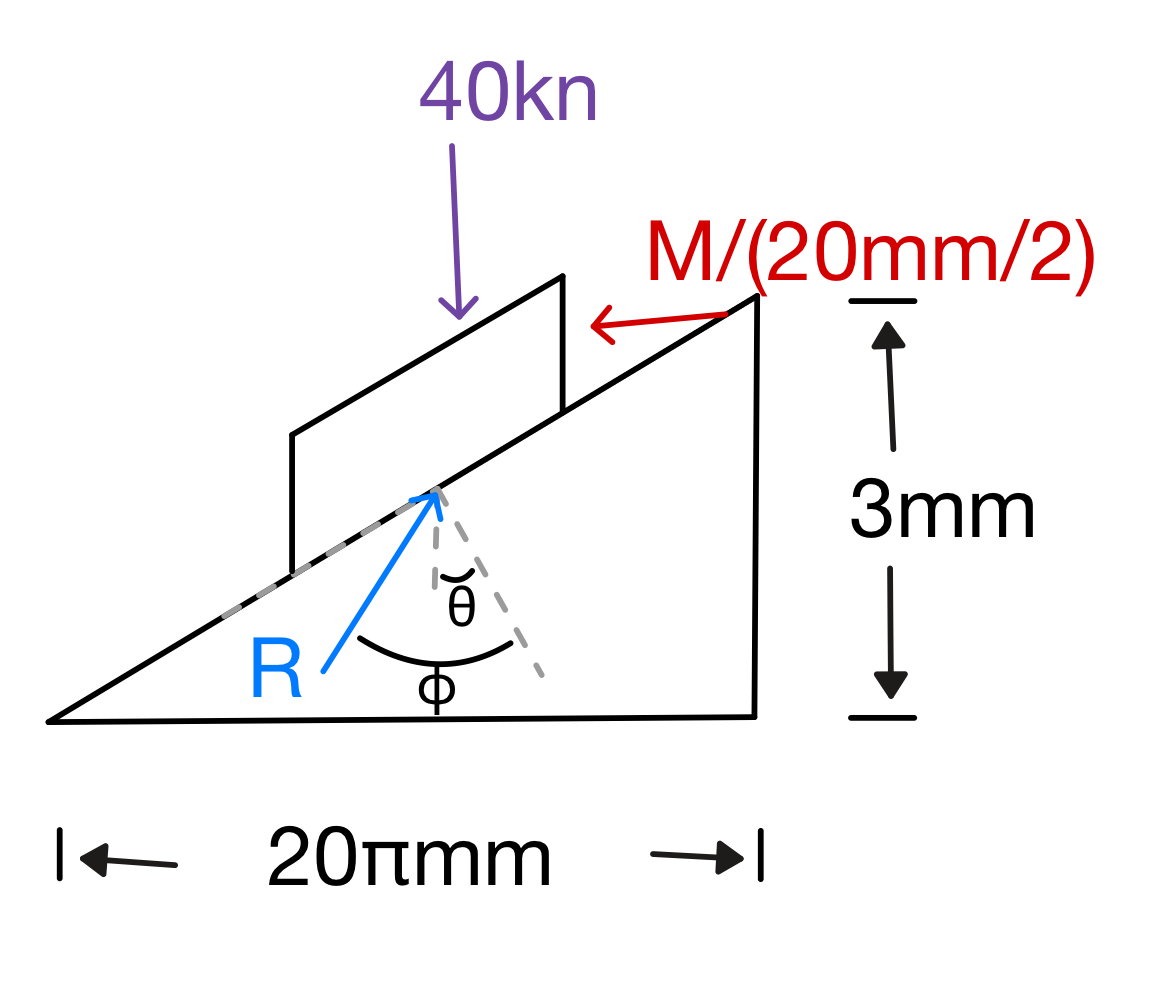
The square-threaded bolt is used to join two plates together. If the bolt has a mean diameter of d=20mm and a lead of l=3mm determine the smallest torque M required to loosen the bolt if the tension in the bolt is T=40kN. The coefficient of static friction between the threads and the bolt is μ s = \mu_{s} = 0.15.

image image

We know: Φ = tan ⁡ − 1 ( μ s ) \Phi = \tan^{- 1}(\mu_{s}) , so Φ = tan ⁡ − 1 ( 0.15 ) ⇒ Φ = 8.53 ∘ \Phi = \tan^{- 1}(0.15) \Rightarrow \Phi = 8.53{^\circ}

θ = tan ⁡ − 1 ( l 2 π r ) ⇒ θ = tan ⁡ − 1 ( 3 m m 20 π m m ) ⇒ θ = 2.73 ∘ \theta = \tan^{- 1}(\frac{l}{2\pi r}) \Rightarrow \theta = \tan^{- 1}(\frac{3mm}{20\pi mm}) \Rightarrow \theta = 2.73{^\circ}

Using the downward impending motion when Φ > θ \Phi > \theta ; M = r W t a n ( Φ − θ ) M = rWtan(\Phi - \theta)

M = 10 m m ⋅ 40 k N ⋅ t a n ( 8.53 ∘ − 2.73 ∘ ) ⇒ M = 40.63 N m M = 10mm \cdot 40kN \cdot tan(8.53{^\circ} - 2.73{^\circ}) \Rightarrow M = 40.63Nm