
Trusses: Method of Joints
Introduction
The method of joints is used to determine the internal forces within members of a truss. A truss is analyzed by isolating individual joints and applying equilibrium equations to solve for the unknown members forces. Since truss members are assumed to be two-force members, each member force acts either in tension or compression along the axis of the members.
Method of Joints Procedure
-
Solve support reactions using global equilibrium.
-
Start at joints with the fewest unknowns.
-
Draw a FBD of the single joint.
-
Assume unknown member acts in tension.
-
Apply equilibrium equations:
-
Positive result tension
-
Negative result compression
Tension vs. Compression
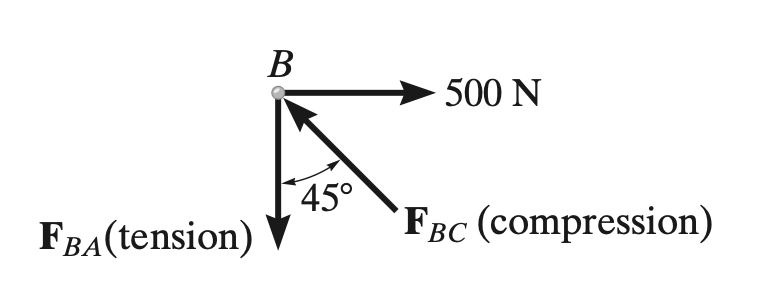
Tension: member pulls away from the joint.
Compression: member pushes toward the joint.
Assume all unknown members are in tension initially.
Zero-Force Members
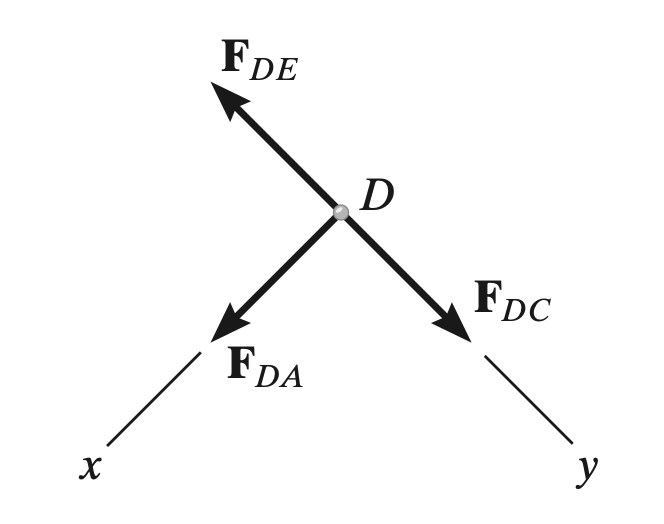
If three members meet at a joint where:
-
Two are collinear
-
No external load or support reaction exists
then the non-collinear member is a zero-force member.
Example:
Find the force in member LK and if the member is in tension or compression.
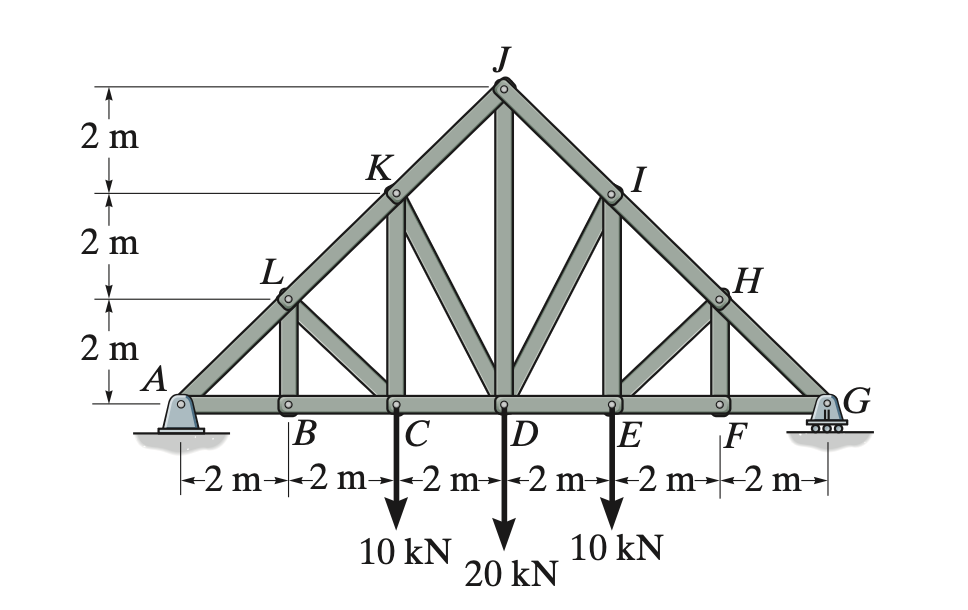
1) Start with Global Equilibrium to solve for Reaction Forces at points A and G:
Assuming CW as positive,
Solving:
Substituting into :
2) Start at Joint A:
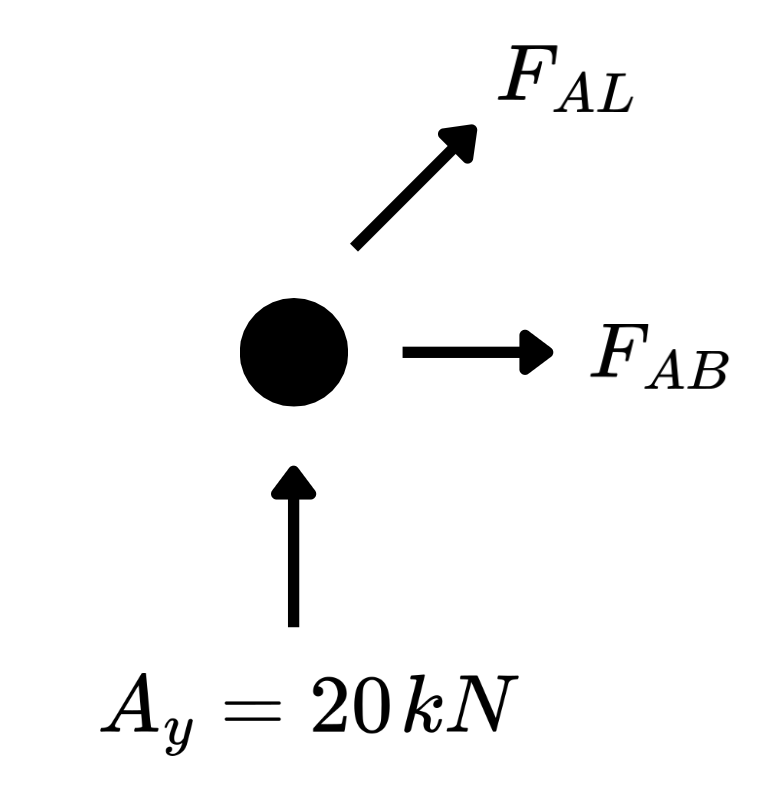
Since is negative, member AL is in compression.
3) Moving on to joint B:
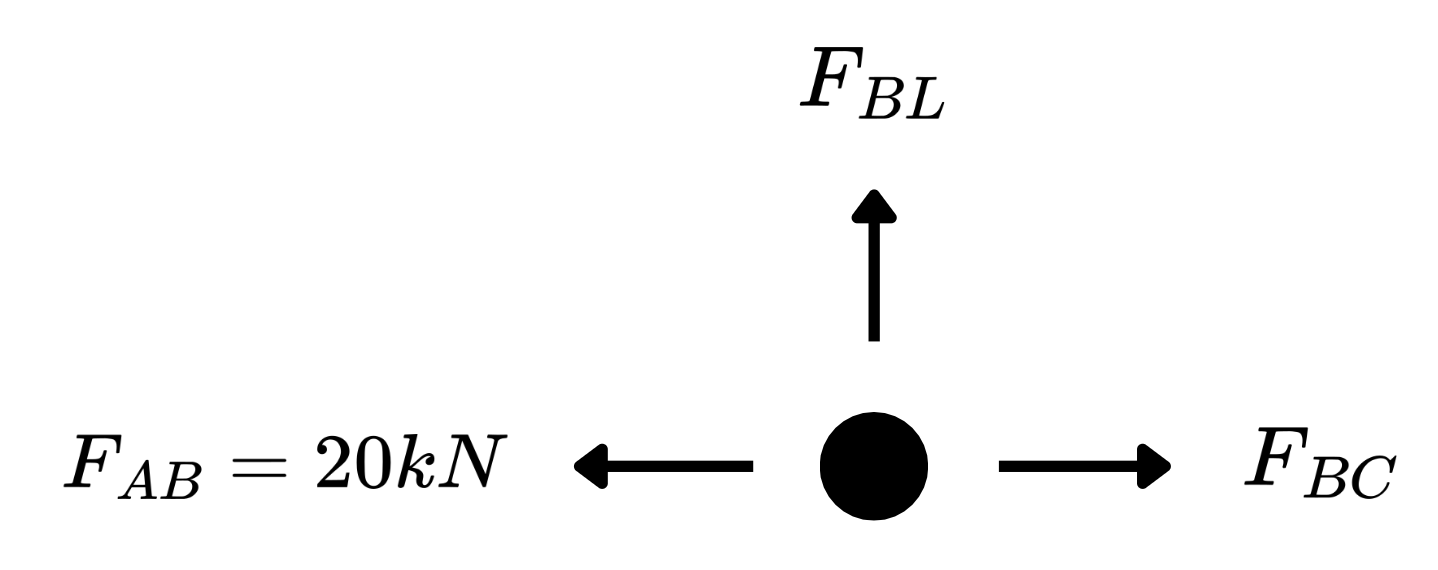
Since AB and BC are collinear and there are no external reactions, member BL is a zero-force member ().
4) Finally, moving to Joint L:
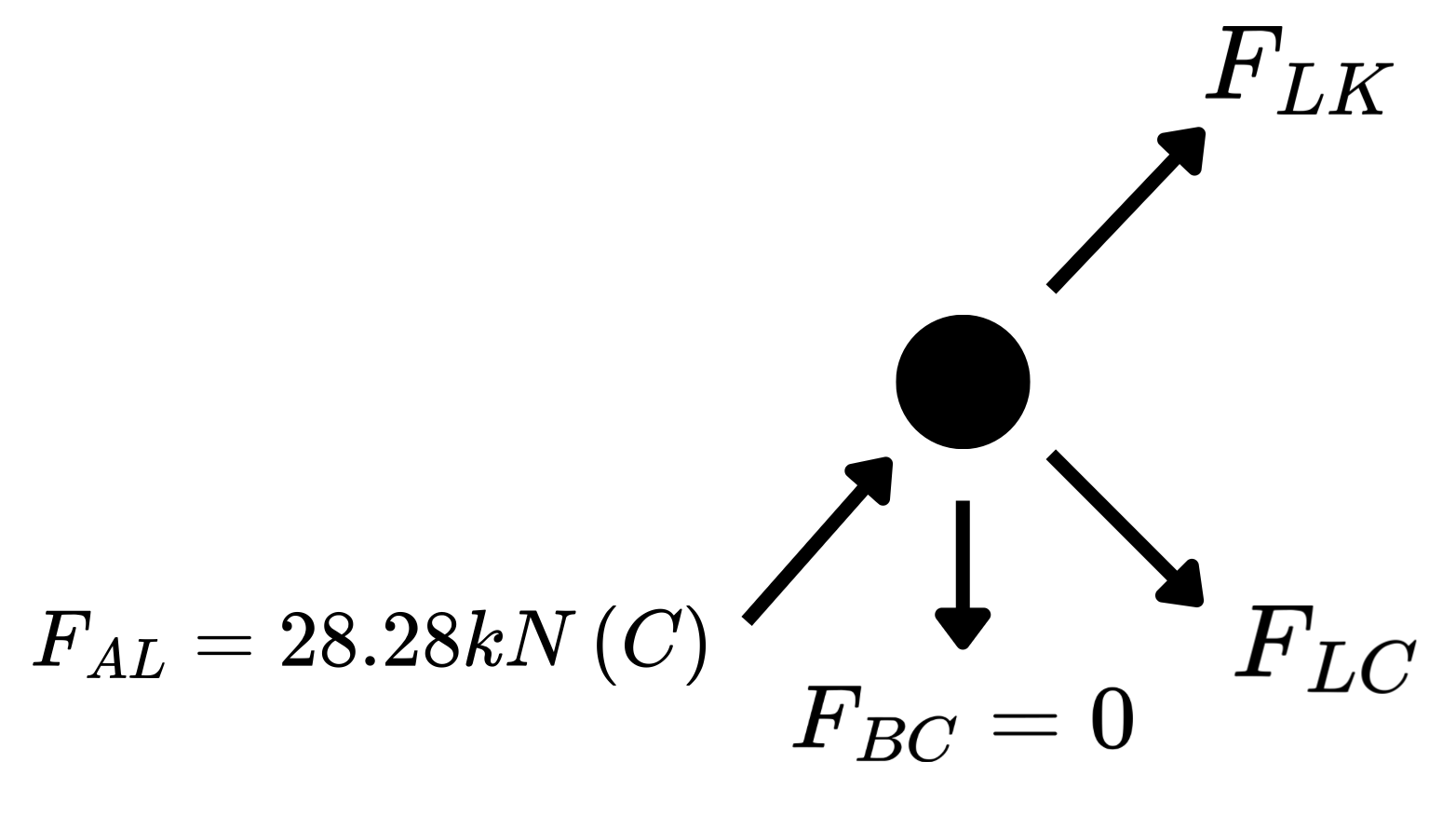
Solving System: ;
Since is negative, member LK is in compression.
Final answer: