
Internal Loadings
Introduction
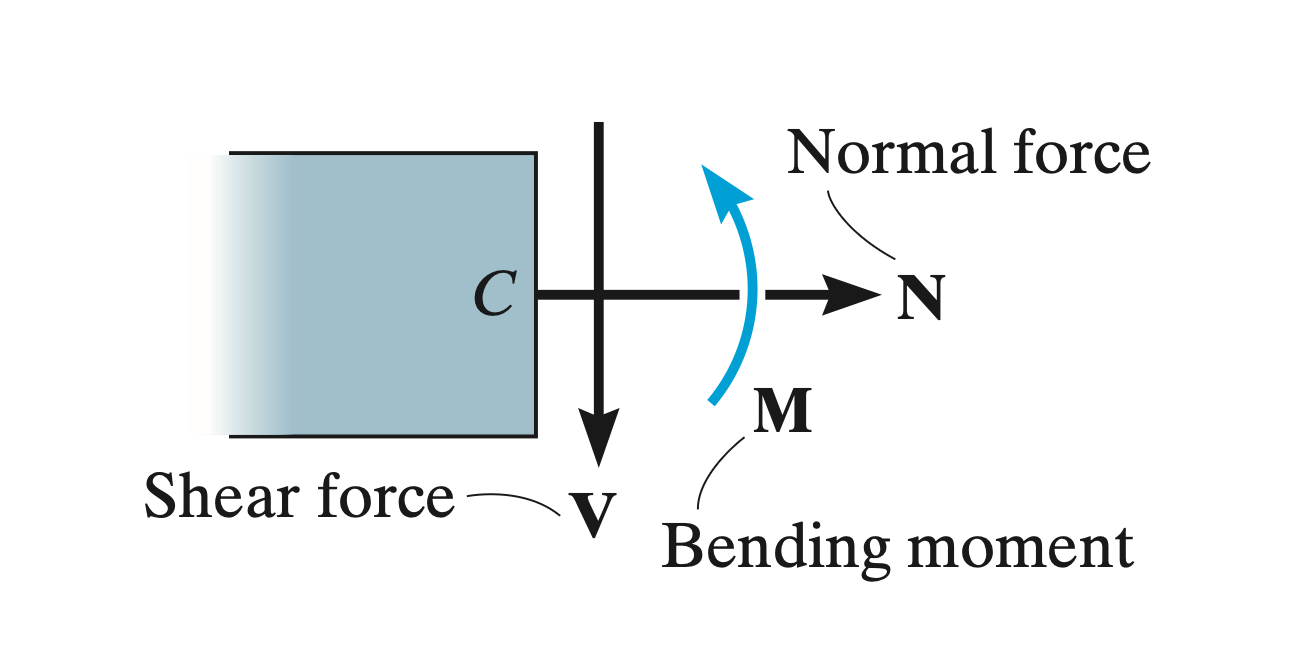
Internal loadings are the forces and moments that develop within a structural member to resist externally applied loads. When a member is cut at a specific location, internal reactions appear at the cut surface to maintain equilibrium. These internal reactions are represented by the normal force, shear force, and bending moment, which describe how the member resists axial loading, transverse loading, and bending.
Internal Resultants
When a member is sectioned, the internal loadings at a cut consist of:
-
Normal Force ()
-
Acts perpendicular to the cut surface
-
Causes tension or compression
-
-
Shear Force ()
-
Acts parallel to the cut surface
-
Resists sliding between sections
-
-
Bending Moment ()
-
Causes bending within the member
-
Methods for Finding Internal Loadings
-
Solve support reactions using global equilibrium.
-
Make a cut at the desired location.
-
Isolate one side of the member.
-
Draw the section FBD.
-
Replace the cut with , , and
-
Apply equilibrium equations:
Sign Conventions
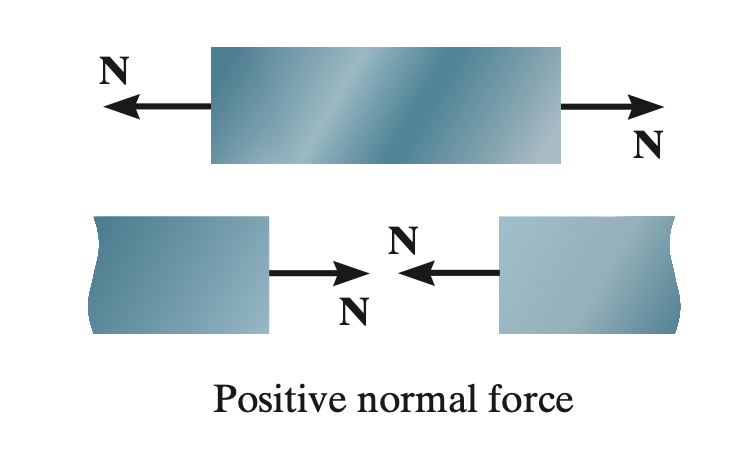
Normal force tension is positive
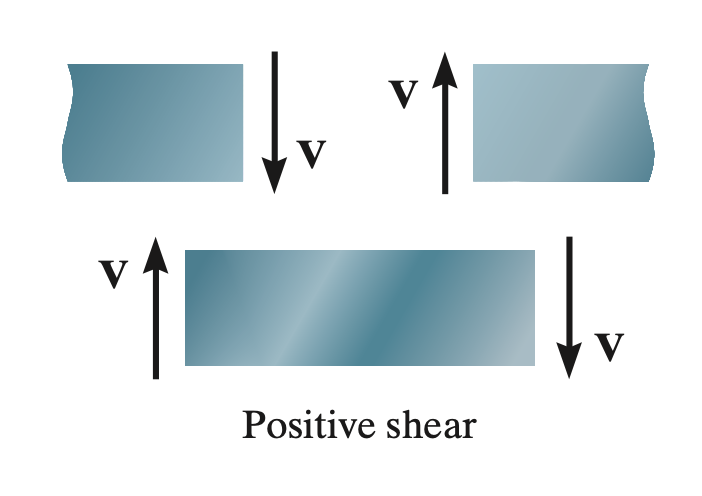
Shear force shear that causes clockwise rotation is positive
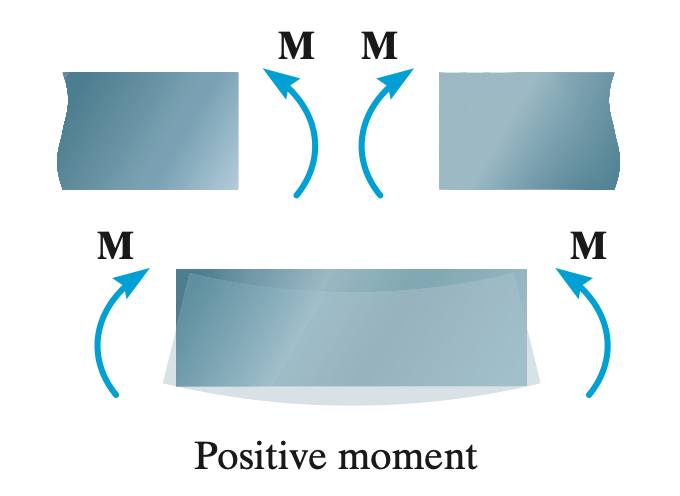
Bending moment moment that causes sagging (“smile” shape)
Example 1:
Find the internal shear force and bending moment acting at point C inside the beam.
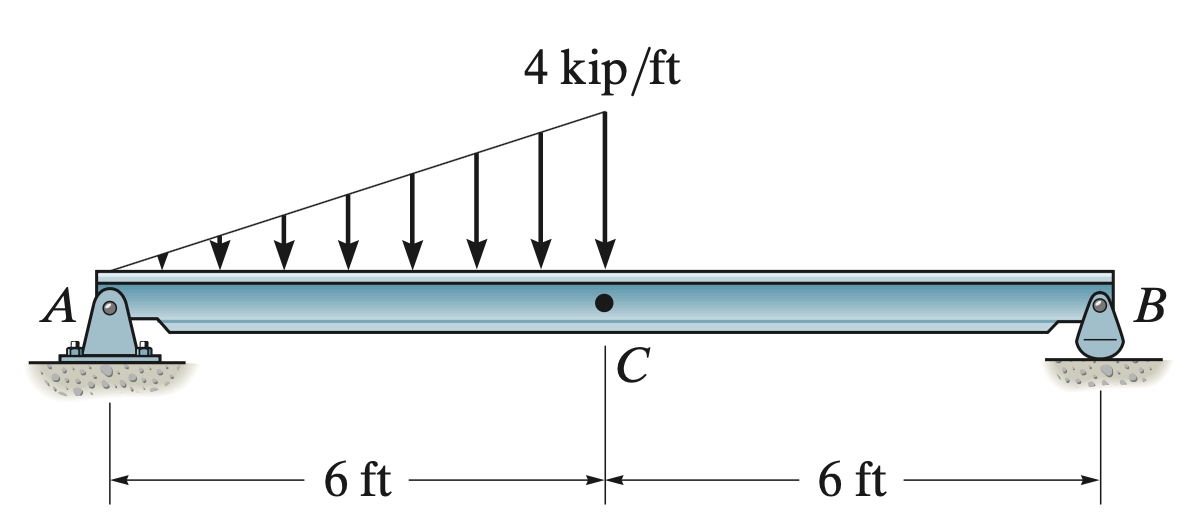
1) Simplify the distributed load into a single force:
acting at
2) Solve for the reaction force at A:
Assuming CW is positive,
Solving:
3) Cut the member at point C and keep the section to the left:
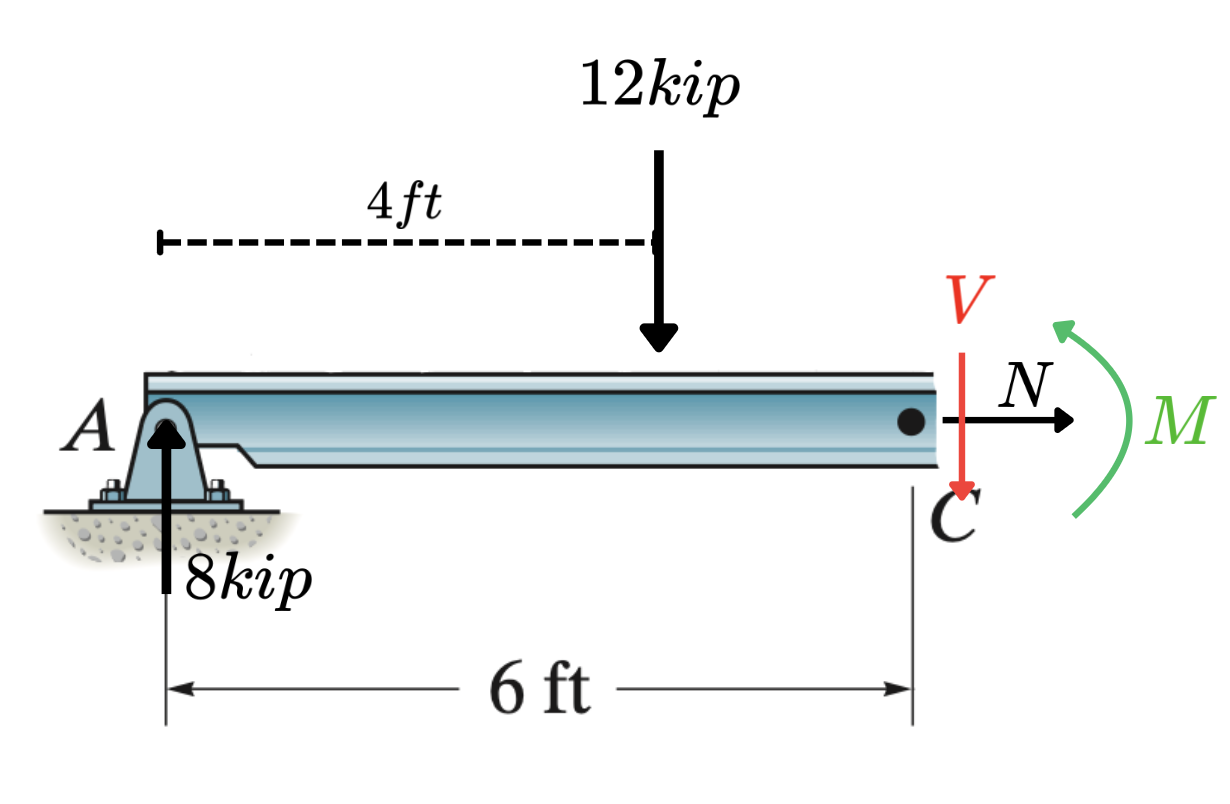
4) Apply equilibrium to solve for and :
Solving:
Assuming CW as positive,
Solving: