
Hydrostatics
Introduction
Pascal’s law states that a fluid at rest creates a pressure at a point that is the same in all directions. Pressure acts normal to a surface and can be drawn as a distributed load. The equation for pressure is:
Where: Pressure, density, gravity, depth, and specific weight
Flat Plate with Constant Width
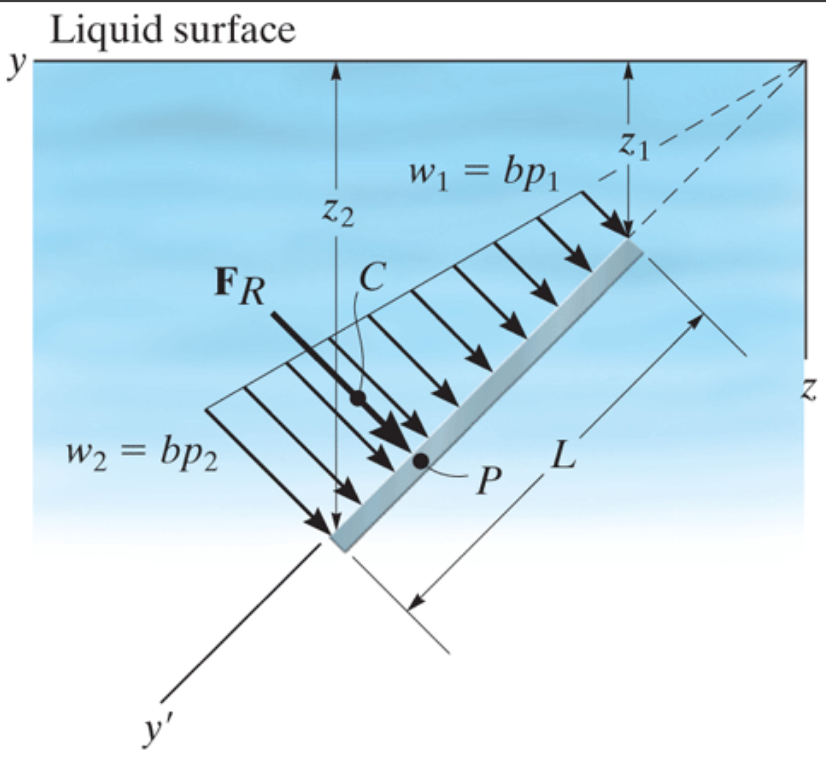
-
Loading is measured in intensity, which is
-
Intensity varies linearly between and , where b is the width of the plate.
-
The magnitude is the trapezoidal area, and the line of action going through the area's centroid.
Curved Plate with Constant Width
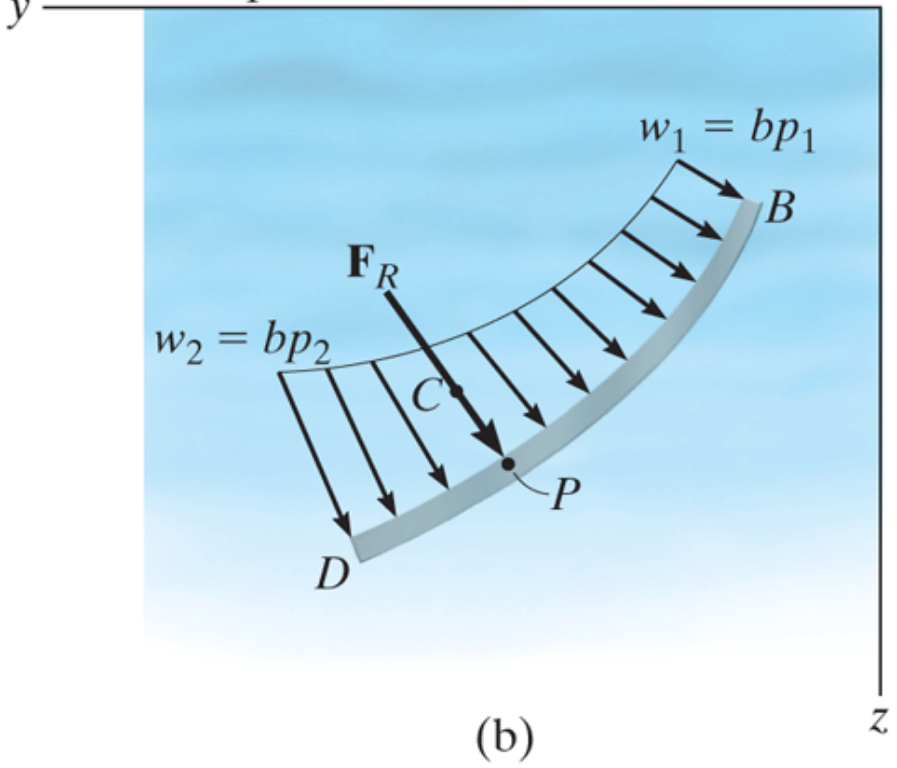
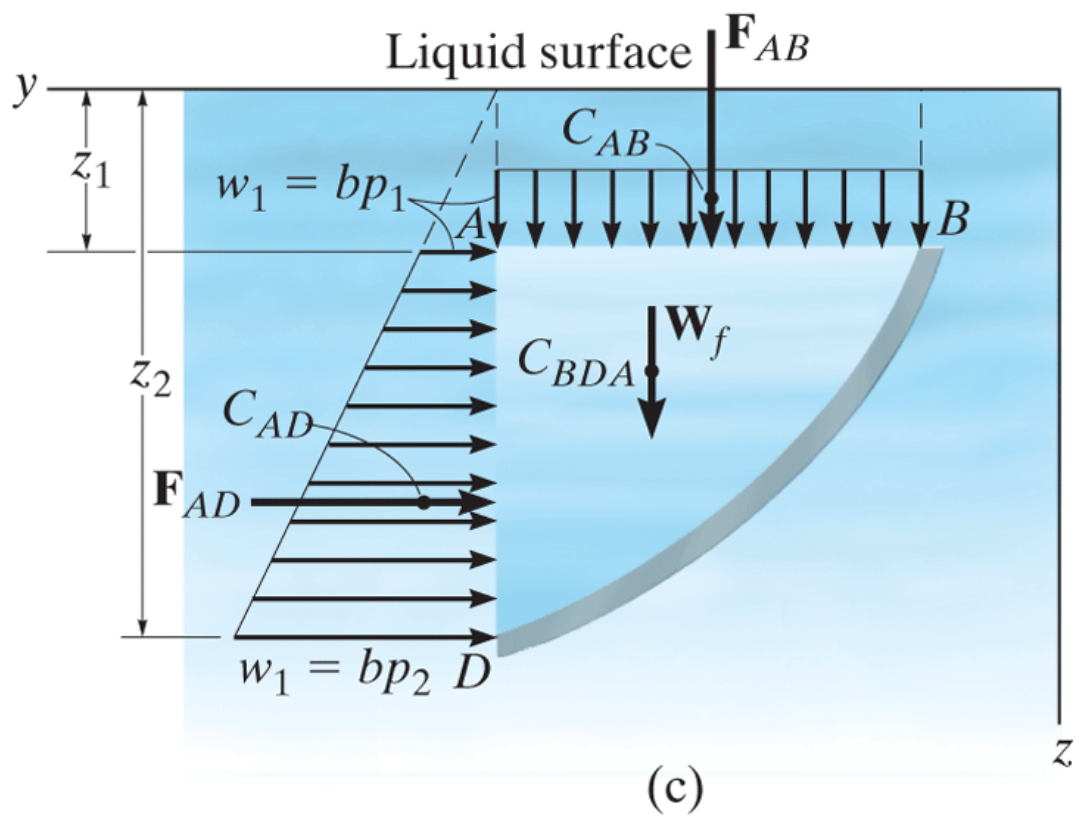
-
Can be solved by integrating the line of the curve
-
Can also be solved by separating into its vertical and horizontal components where:
-
, representing the weight of BDA and acts through
-
is the area of the trapezoid and acts through
-
is the area of the rectangle and acts at the midpoint
-
Location of is found using about a point
-
Steps to Solve
-
Find pressure using
-
Find intensity by multiplying pressure by width of the plate ()
-
Find using area and centroid using
Example 1: Problem F9-19
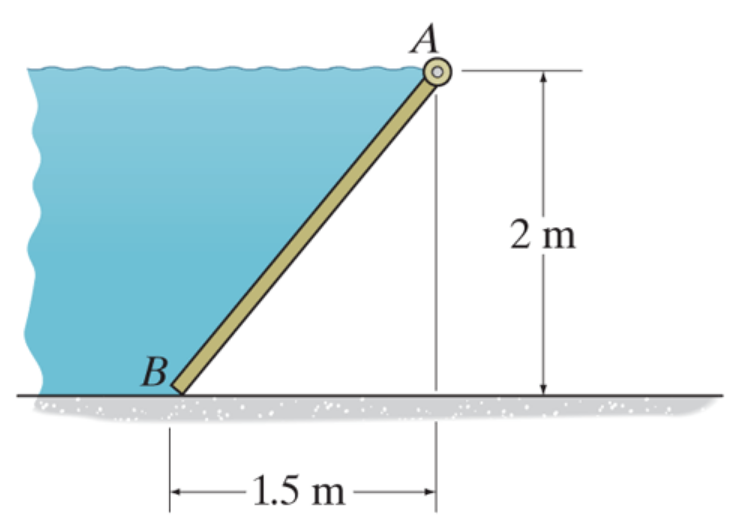
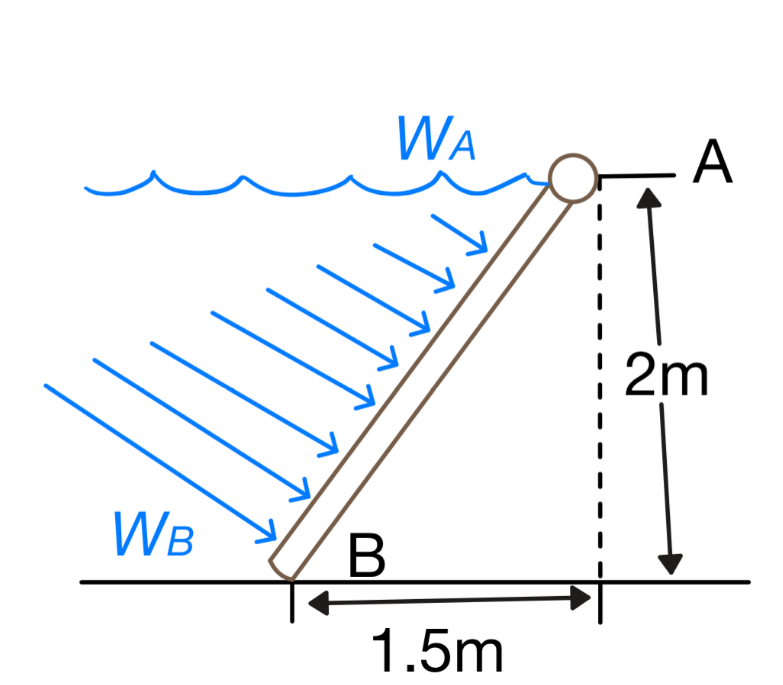
Determine the magnitude of the hydrostatic force acting on gate AB, which has a width of 1.5 m. Water has a density of .
To find the force of the water, multiply the intensity by the length of the gate. The intensity acts as a triangle on the surface of the gate.
The resultant force acts halfway down the vertical at