
Friction and Wedges
Introduction
Friction always acts tangent to the surface an object is sliding on.
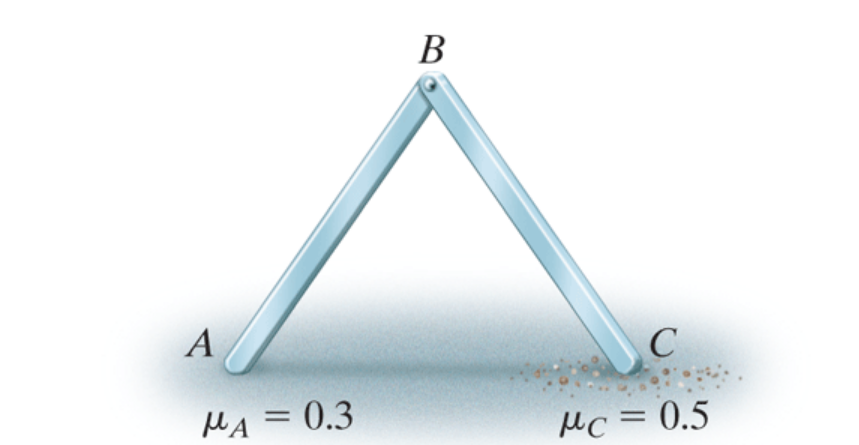
Types of Friction Problems:
-
No impending motion
-
Equations:
-
Force of Static Friction: , where coefficient of static friction
-
Angle of Static Friction:
-
-
Solved using Equilibrium Equations
-
Friction is obtained using
-
-
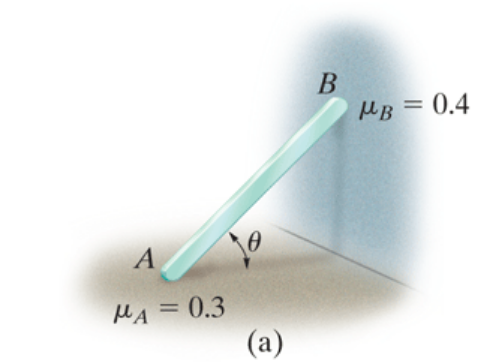
Impending Motion
-
Equations:
-
Force of Static Friction: , where coefficient of kinetic friction
-
Solve using:
-
for impending motion
-
for slipping motion
-
-
Wedges
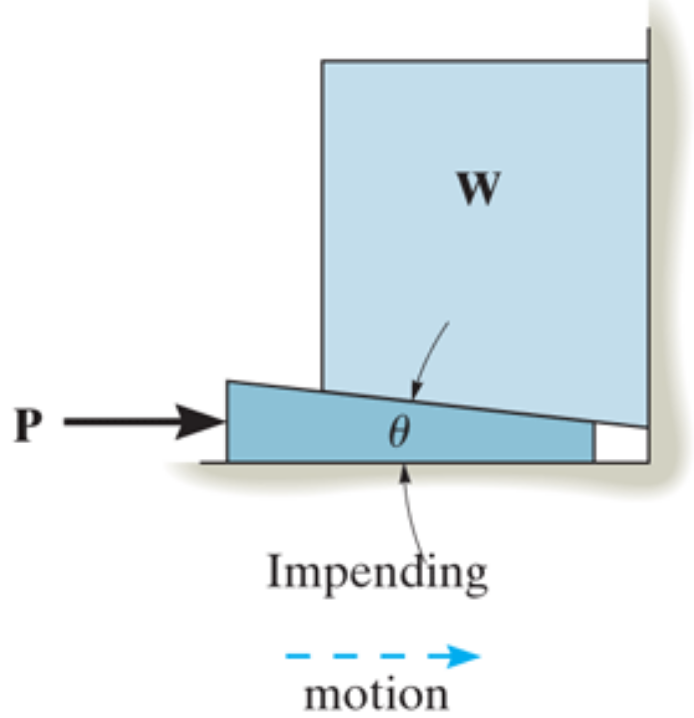
Wedges are simple machines that transform an applied load into a large load, or can adjust heavy loads.
Steps for Solving
-
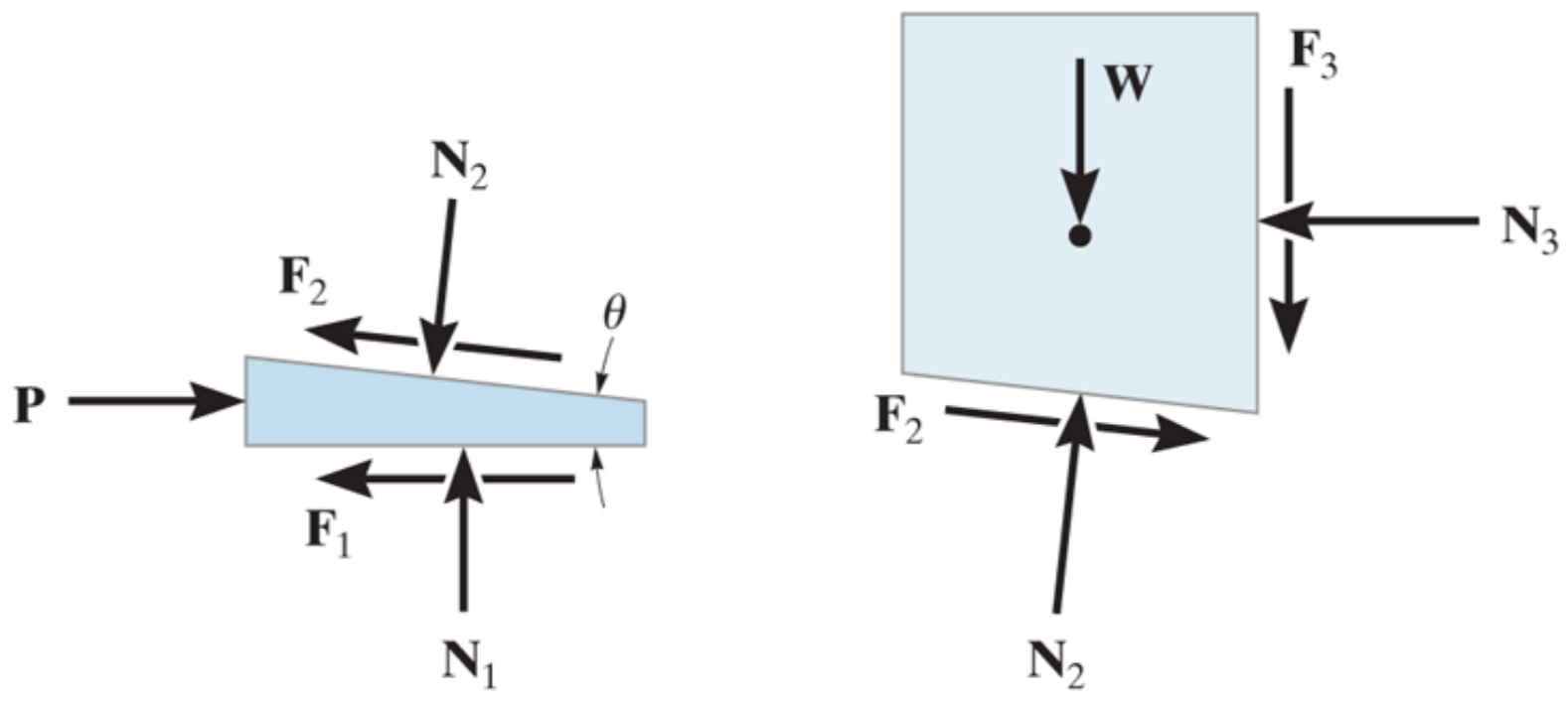
Draw a FBD and label friction forces as unknowns.
-
Solve for equilibrium equations, knowing that normal force is perpendicular to the surface and weight acts straight down.
-
You cannot always assume that you wouldn’t know if the object slips or tips. If it is given, then you can solve the equation.
Example 1: Problem 8-5
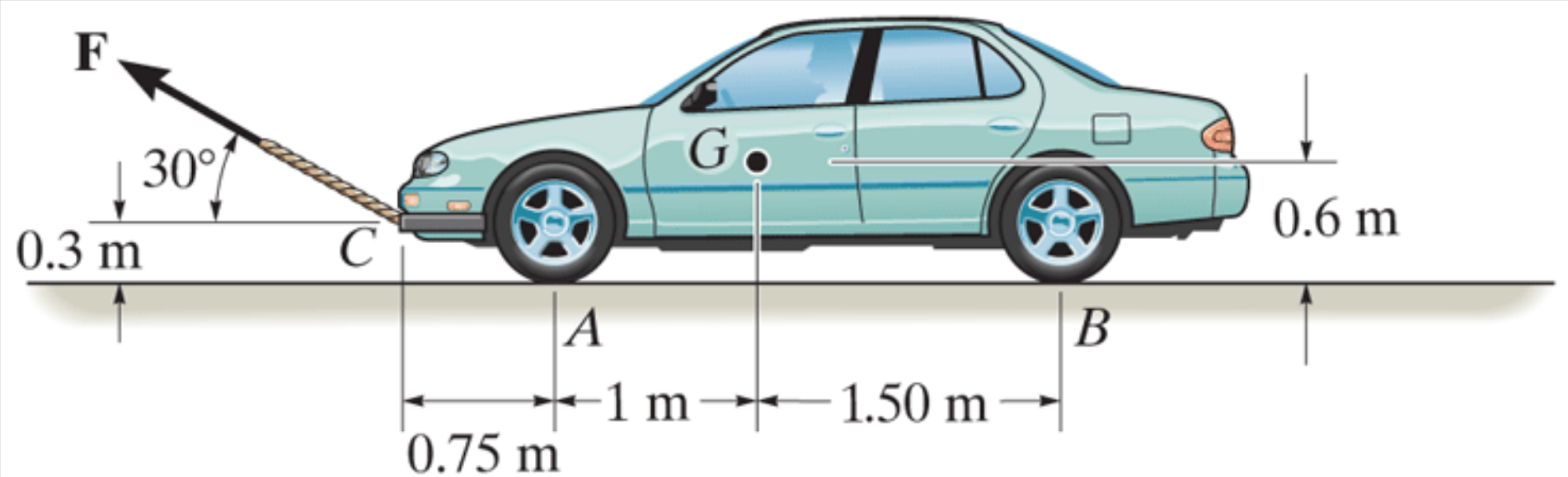
The automobile has a mass of 2 Mg and center of mass at G. Determine the towing force F required to move the car if the back brakes are locked, and the front wheels are free to roll. Take .
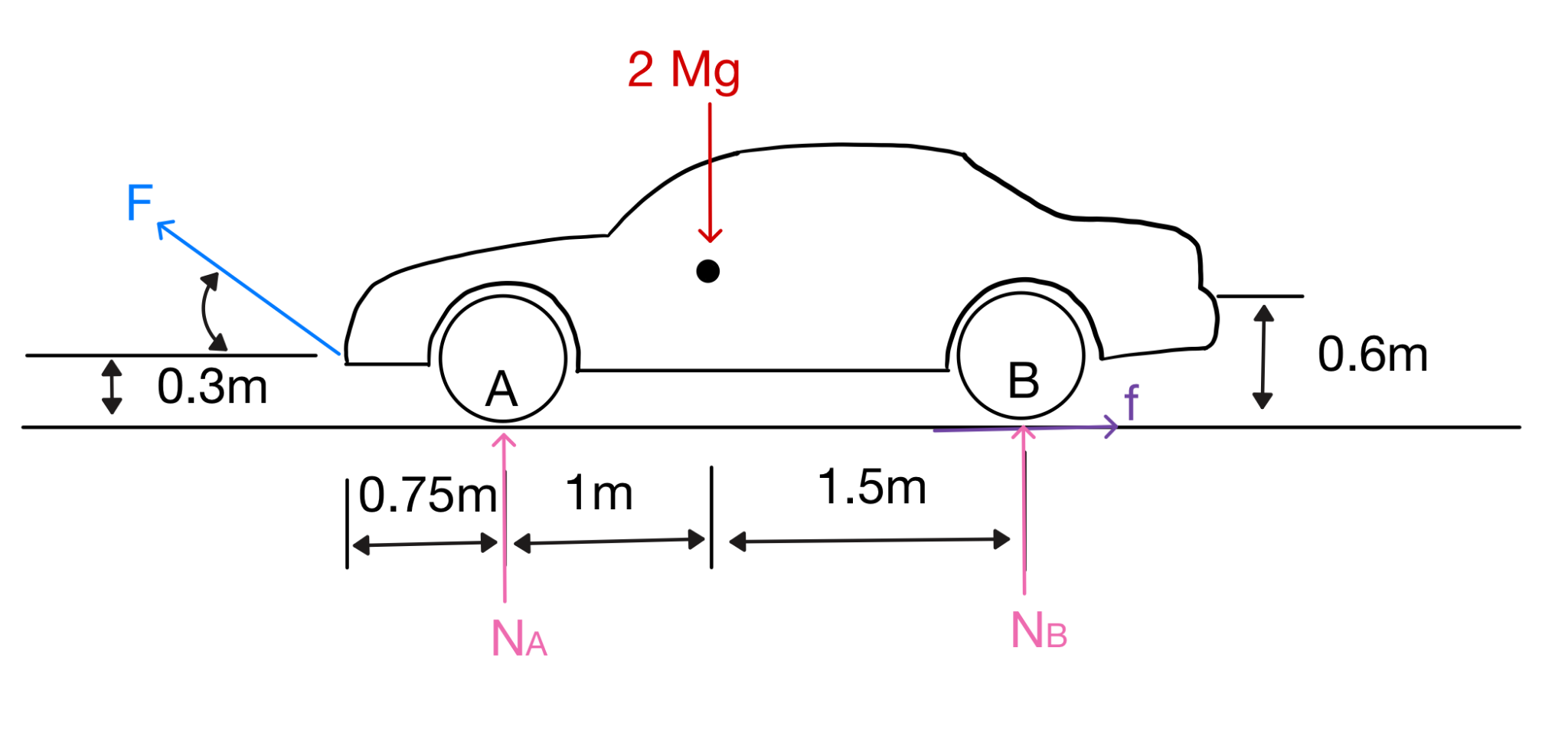
Example 2: Problem 8-58
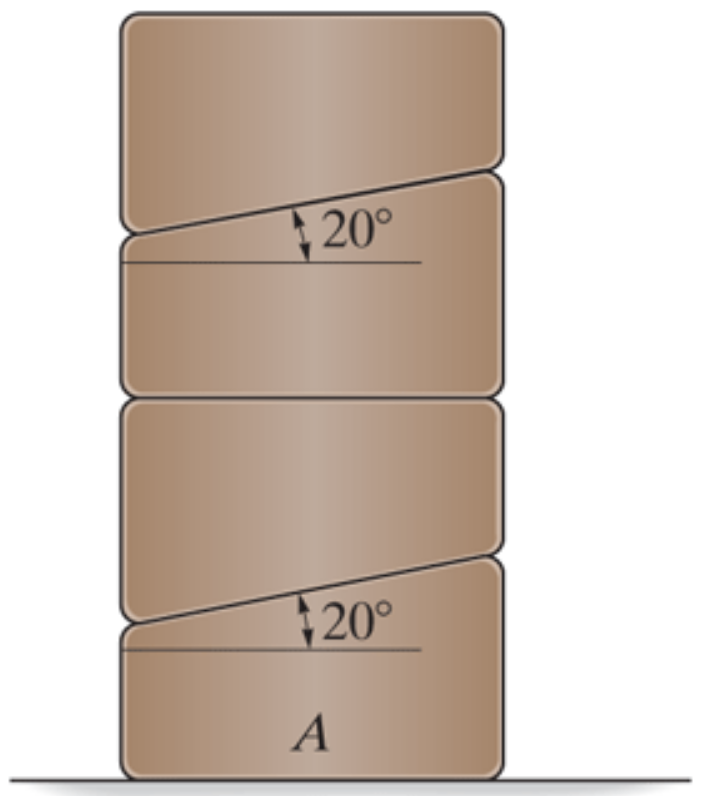
The blocks each have a weight of 50 lb. If the coefficient of static friction at A is
and between each block , determine how many blocks can be stacked as shown before they begin to topple.
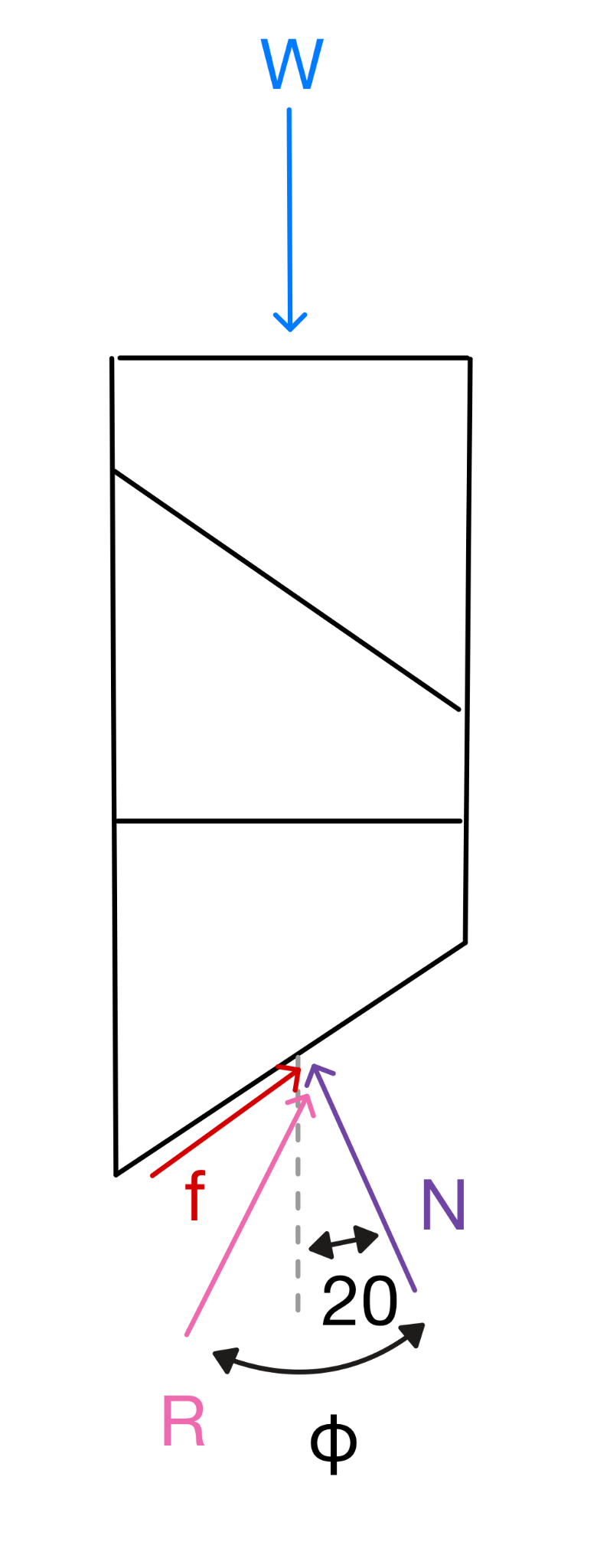
Since , an unlimited number of blocks can be stacked.