
Frames and Machines
Introduction
Frames and Machines are structures composed of multiple multi-force members. Frames are designed to support and maintain external loads in a stationary configuration. Common examples of frames are bridges, scaffolding, and trusses. Machines consist of interconnected moving parts that transmit, modify, or redirect forces to perform work. Examples of machines are scissors, car jacks, and robot arms.
Free Body Diagrams
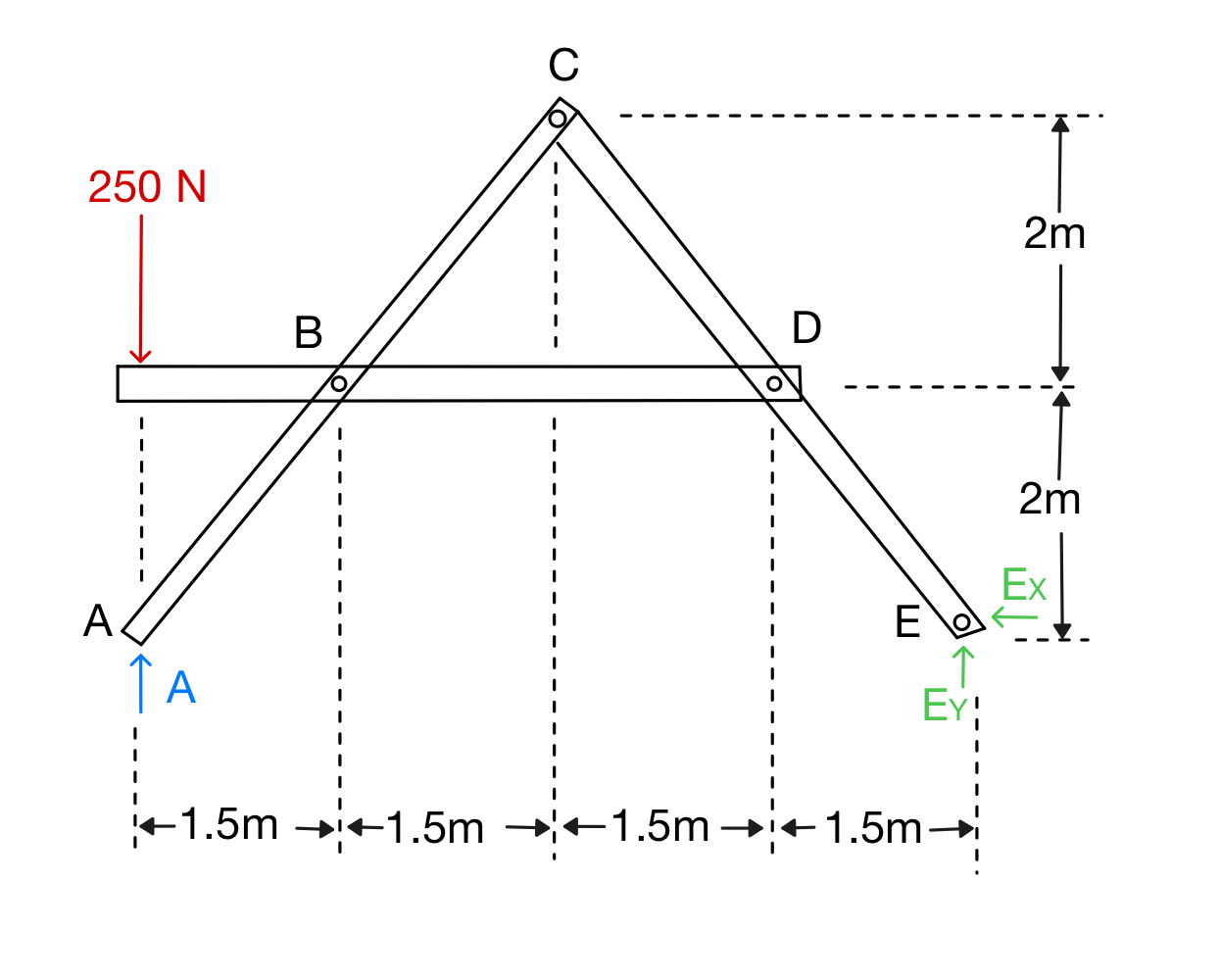
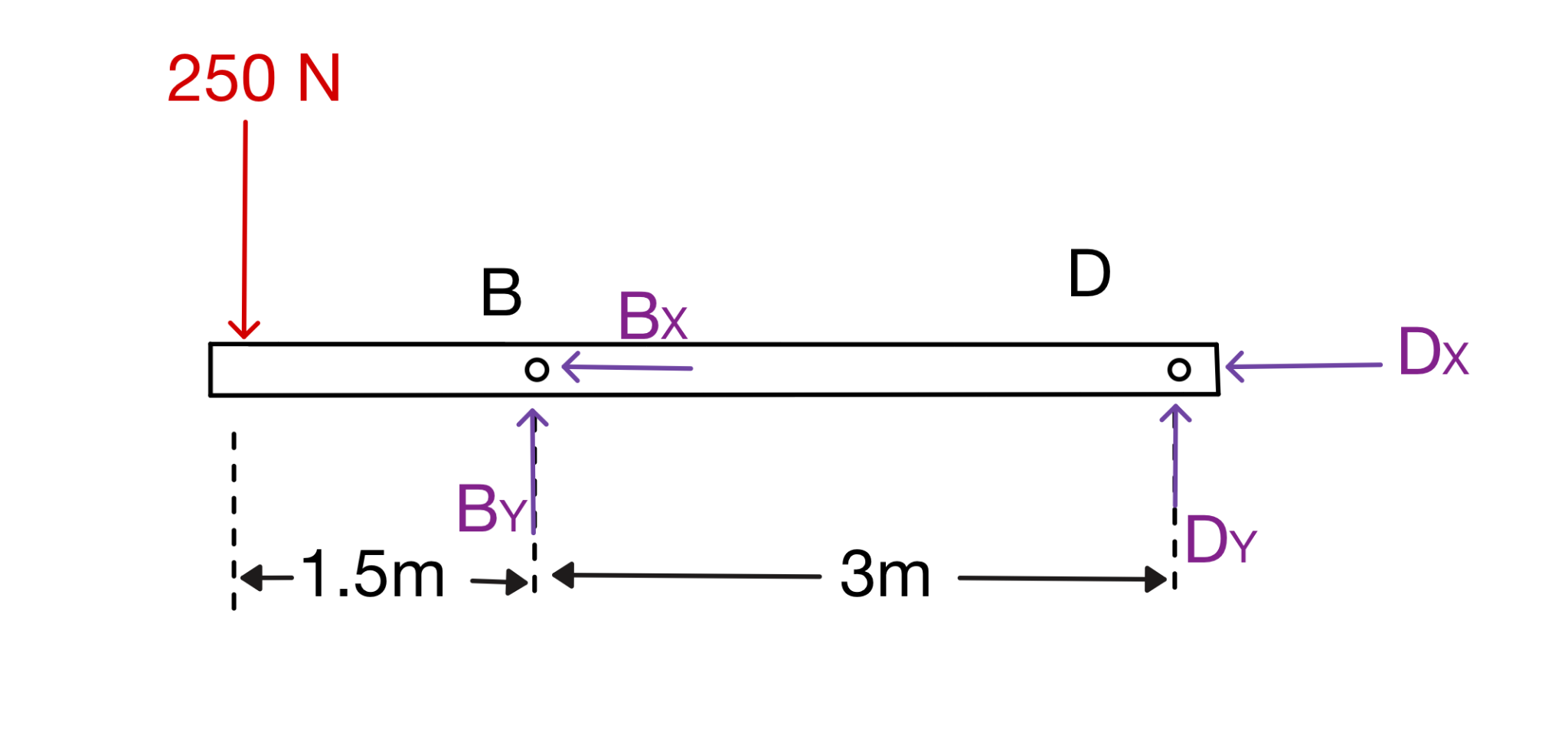
Because frames and machines have multiple members, a free body diagram needs to be drawn for each member. Some important points to follow are:
-
Draw and label an outlined shape of each member.
-
Identify two forced members and represent the force with two equal, but opposite, collinear forces.
-
Forces that act on two contacting members have the same magnitude but act in opposite directions on the FBDs for each member. This means that if a force is in compression on one member, it acts in tension on the other member.
-
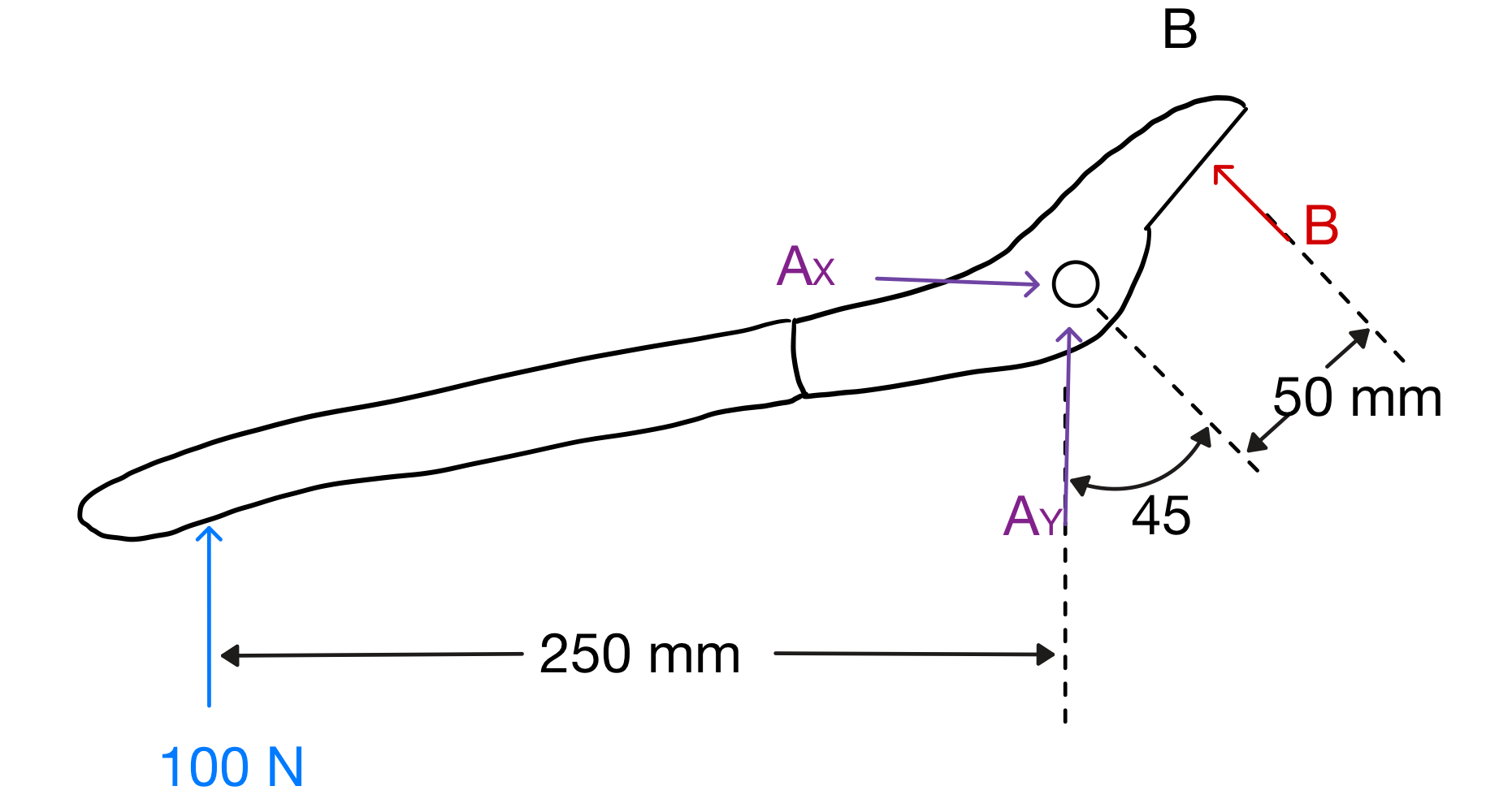
When dealing with pins, on the whole FBD, the pins aren’t included since they are internal forces for an individual member. In the member FBD, pins show up with their internal forces.
Examples
Frames
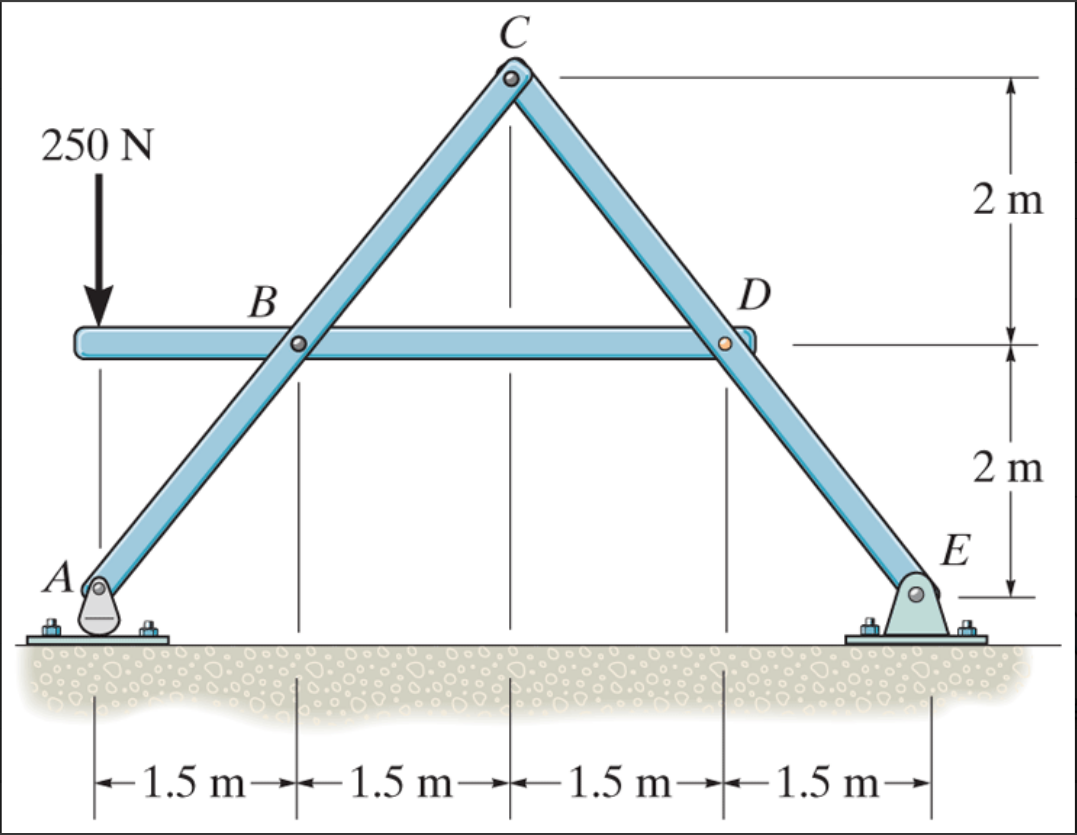
Problem F6-22: Determine the components of reaction at C.
|
1) Draw a FBD |
2) Analyze Beam BD: |
Machines
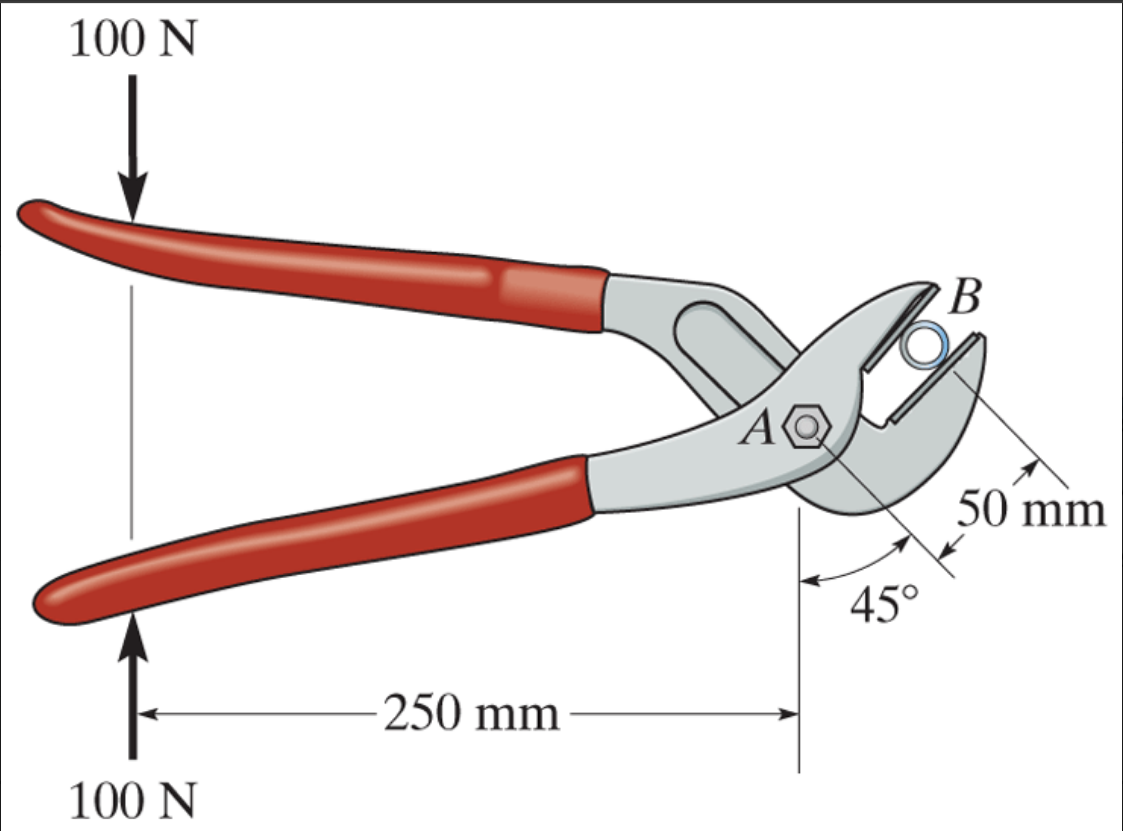
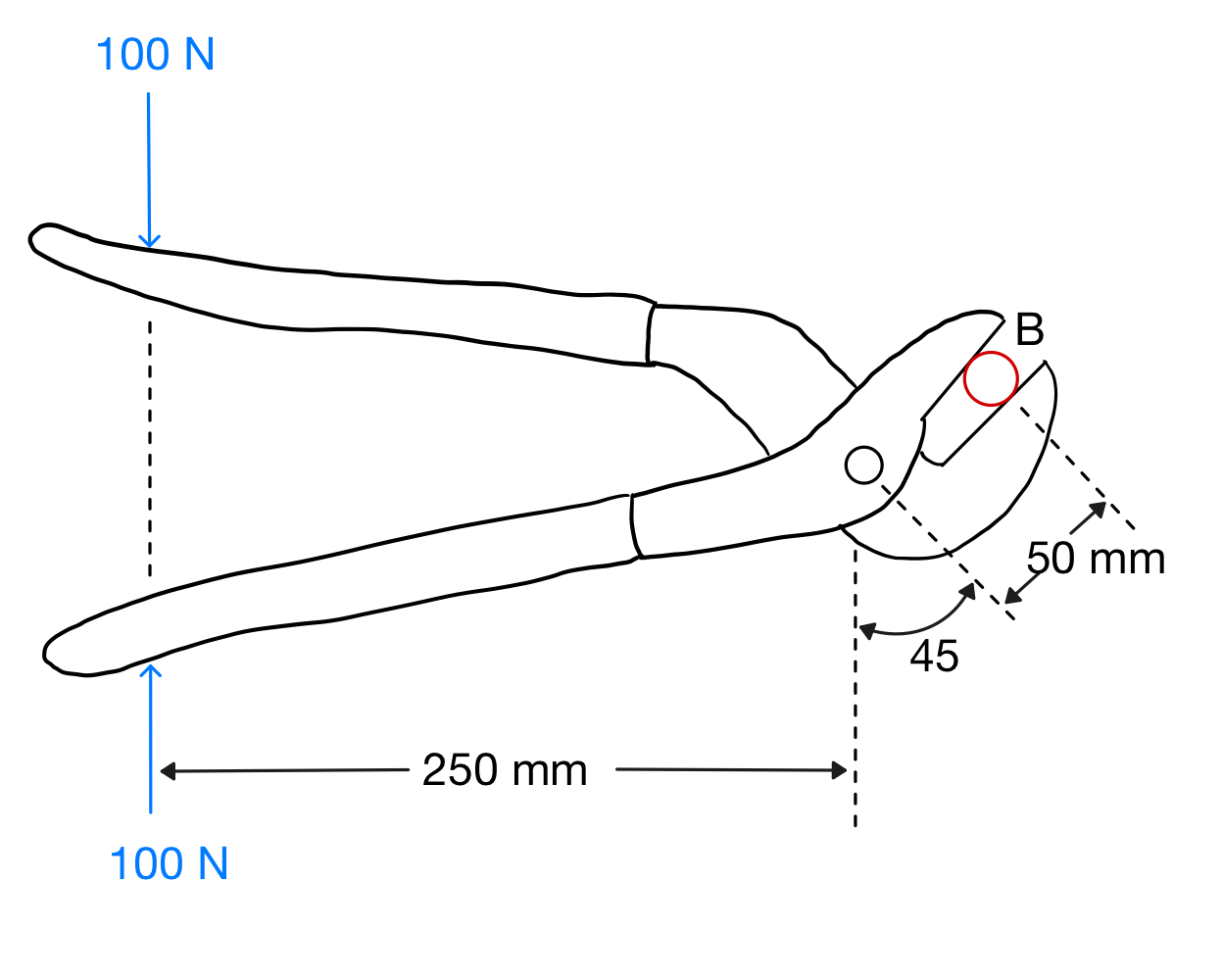
Problem F6-15: If a 100-N force is applied to the handles of the pliers, determine the clamping force exerted on the smooth pipe B and the magnitude of the resultant force that one of the members exerts on pin A.
1. Free Body Diagram
2. Draw individual piece