Work and Energy of Rigid Bodies
Introduction
The work-energy principle for rigid bodies relates the work done by external forces and moments to the change in both translational and rotational kinetic energy. Unlike particles, rigid bodies may translate, rotate, or do both simultaneously.
Kinetic Energy
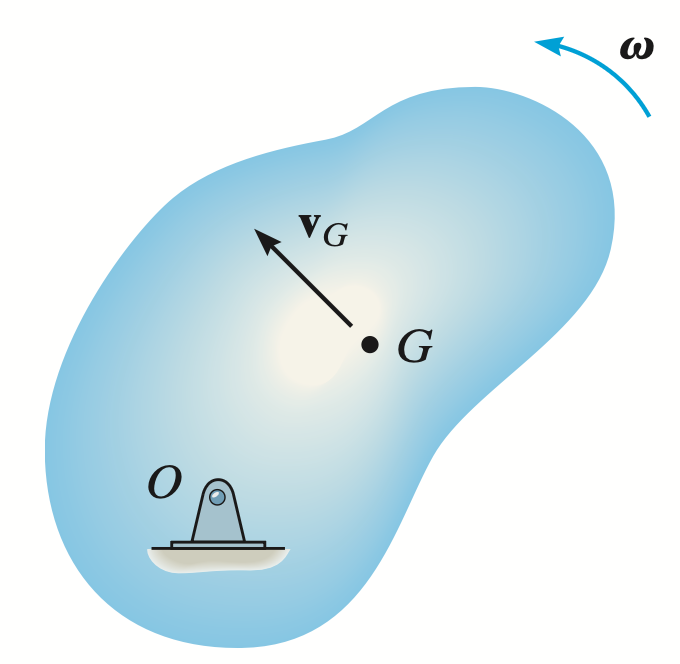
A rigid body’s kinetic energy is the sum of its translational and rotational kinetic energy:
If the body rotates about a fixed axis:
where is about the axis of rotation
Work of External Moments
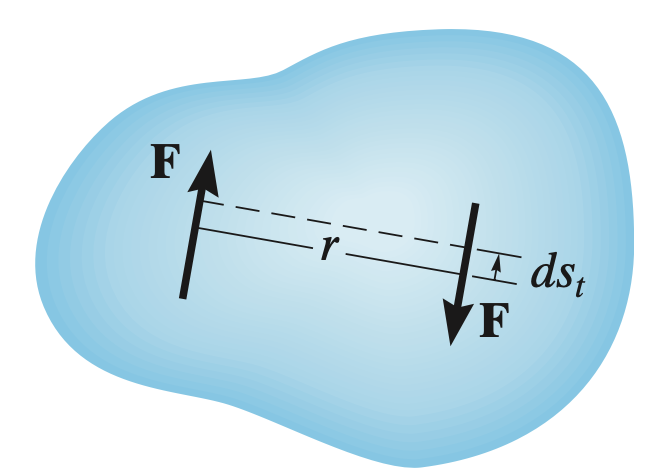
Unlike particle energy, couple moments can perform work:
If the couple is constant,
Conservation of Energy
If only conservative forces act, mechanical energy is conserved:
Rolling without slipping:
Body rotating about a fixed axis:
Spring driving rotation:
Use conservation of energy only when no nonconservatives forces or applied couples do work. If friction or an applied torque does work, use the principle of work and energy ()
Example 1:
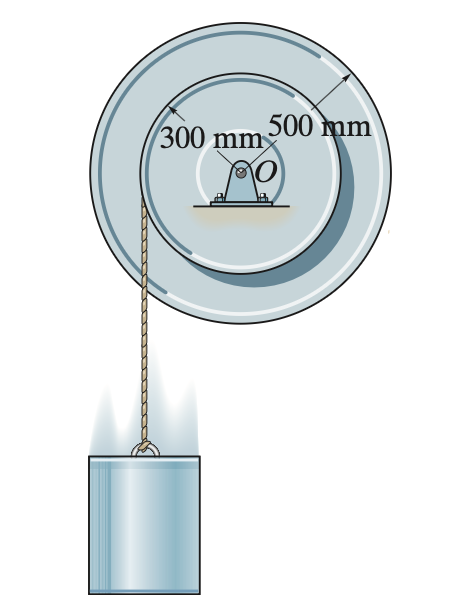
Find the distance the 10-kg block must fall in order for the 40-kg spool to have an angular velocity of 15 rad/s. The radius of gyration about center O is 0.3 m.
Solving for distance:
Example 2:
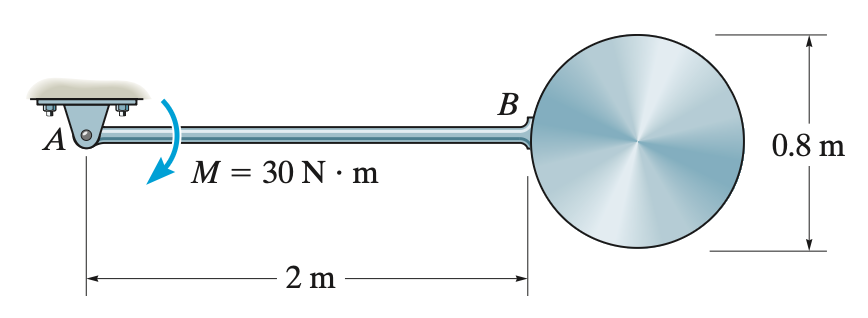
Find the angular velocity of the 10-kg uniform disk and 3-kg uniform slender rod when it has rotated clockwise 90°. It is released from rest.
Since the moment is constant,
The total work done by gravity is the sum of the work of gravity on the rod and disk:
Finally, the moment of inertia about A:
Principle of work and energy:
Since it is released from rest: