Particle Kinetics
Introduction
Particle kinetics relates the forces acting on a particle to its motion. Unlike kinematics, which describes motion without considering forces, kinetics uses Newton's Second Law to determine how forces cause acceleration.
Newton’s Second Law, Weight, and Friction
Newton’s Second Law relates the net force acting on a particle to its acceleration:
For rectangular coordinates, and
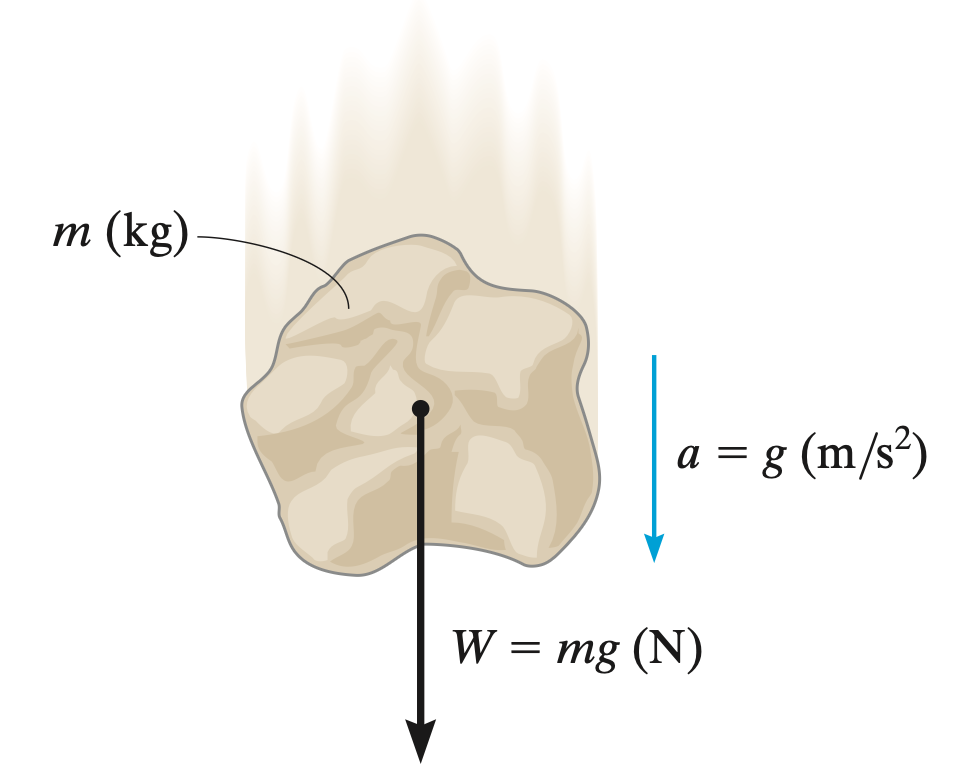
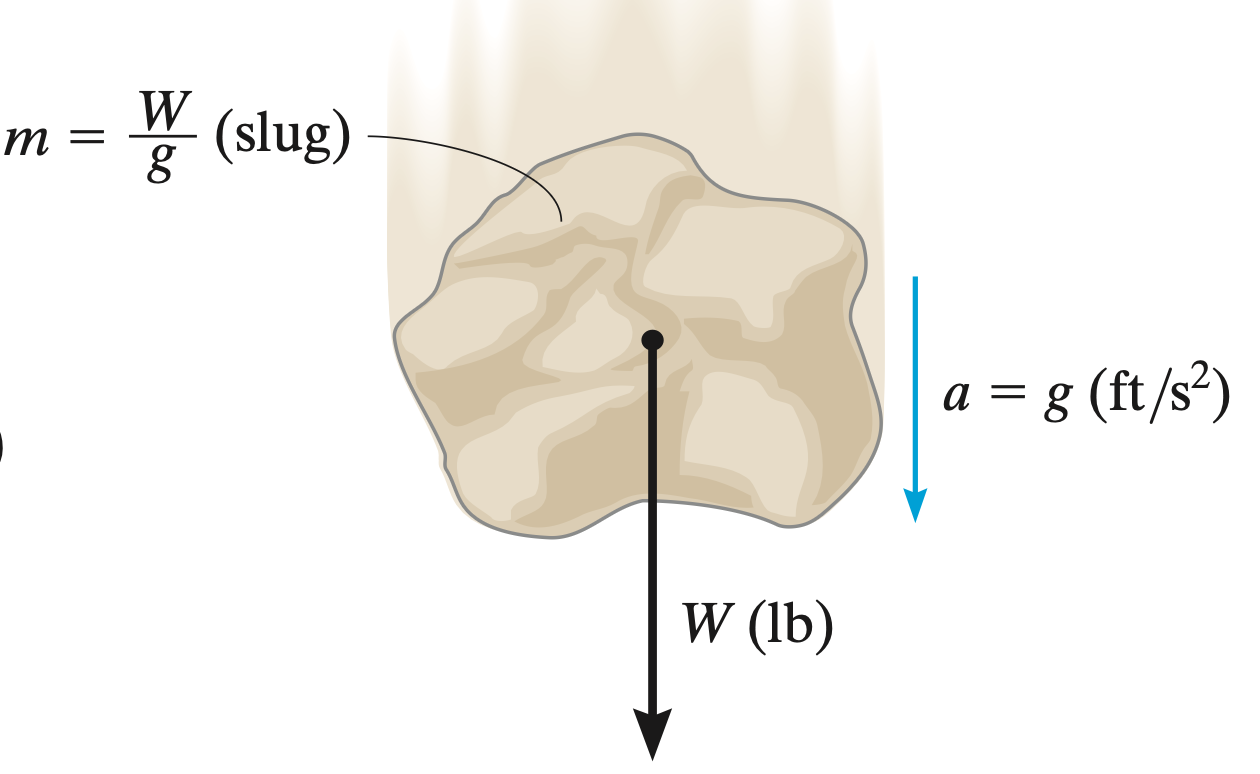
Weight () acts vertically down. is in units of or , and is in units of or
Normal forces () act perpendicular to contact surfaces.
Static friction:
Kinetic friction:
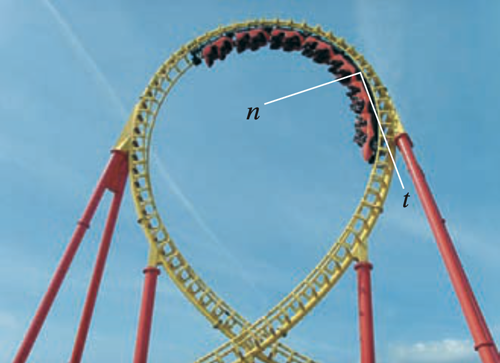
Normal-Tangential (Curvilinear) Components
For motion along a curved path:
Tangential (along direction of motion):
Normal (toward center of curvature):
Radial-Transverse (Cylindrical) Components
For particles moving in polar or cylindrical coordinates:
Radial Direction:
Transverse Direction:
For 3-D Motion:
Common Procedure
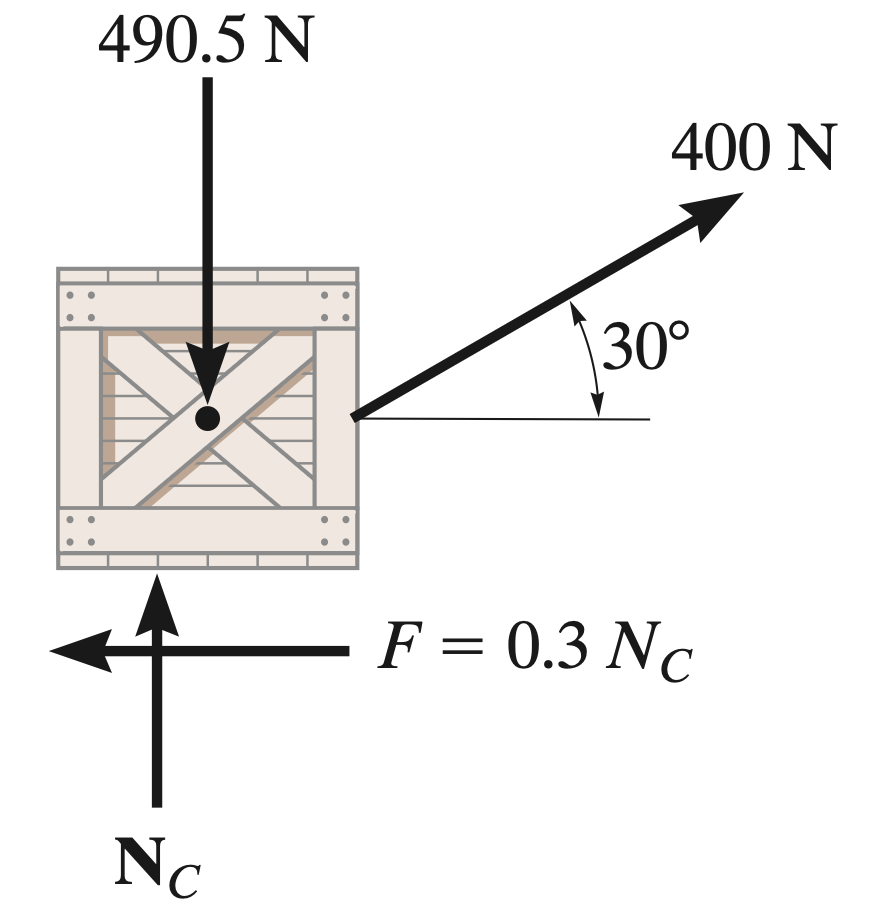
Draw a free-body diagram, choose the appropriate coordinate system (, determine corresponding acceleration components (, and apply in each coordinate direction to solve for unknowns.
Example 1:
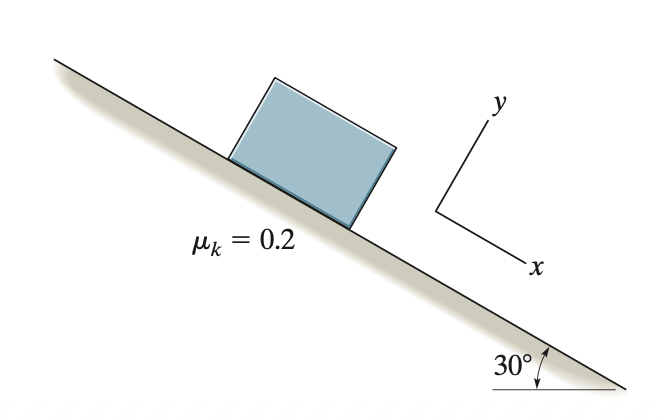
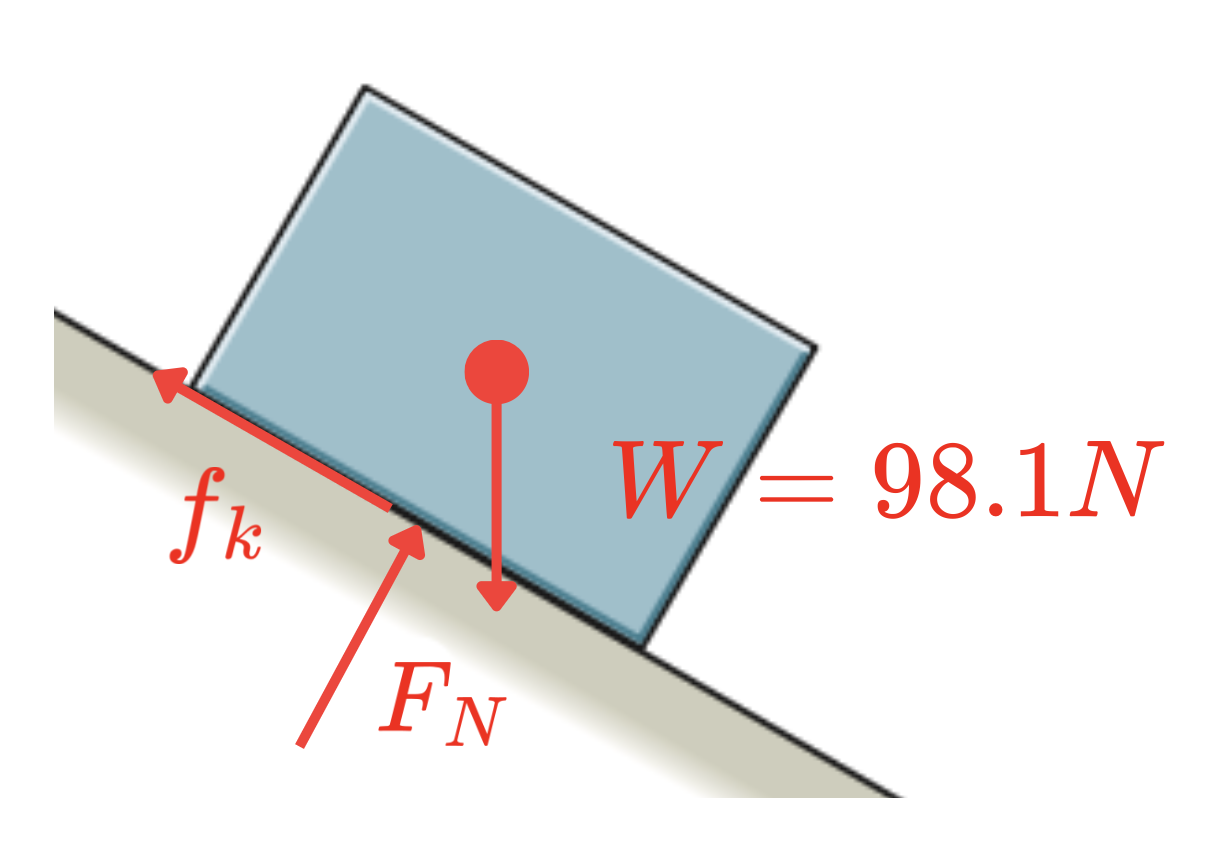
Find the velocity of 10-kg block after 5 seconds (block starts from rest).
1) since the y axis is perpendicular to the slope.
2)
3)
4) After 5 seconds,
Example 2:
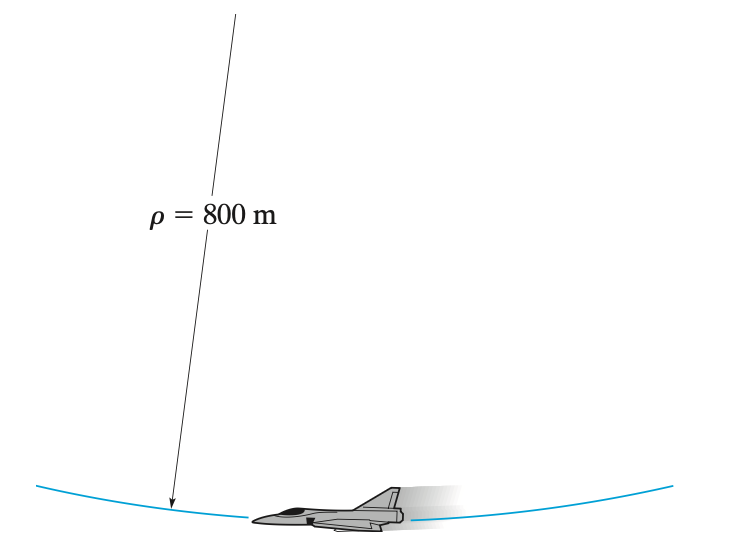
Find the max constant speed that a 70-kg pilot can travel so that he experiences a maximum acceleration of 78.5 m/s2 and the normal force he exerts on the seat when traveling at this speed and is at the lowest point.
Since speed is constant, . Therefore, .
Example 3:
Find the magnitude of resultant force acting on a 5-kg particle at t = 2s if the particle is moving along a horizontal path defined by the equations and .
1) Position and derivatives at : ; ;
2) Angle and derivatives at : ; ;
3) Radial acceleration:
4) Transverse acceleration:
5) Resultant acceleration:
6) Resultant force: