
Cultivating Connection through STEM Storytelling Event
Without a clear vision of what it is to be a STEM professional; students can struggle to develop their own identity. Using self-reflection and personal storytelling, Utah State University researchers are helping students not only communicate like a STEM practitioner but feel like one too.
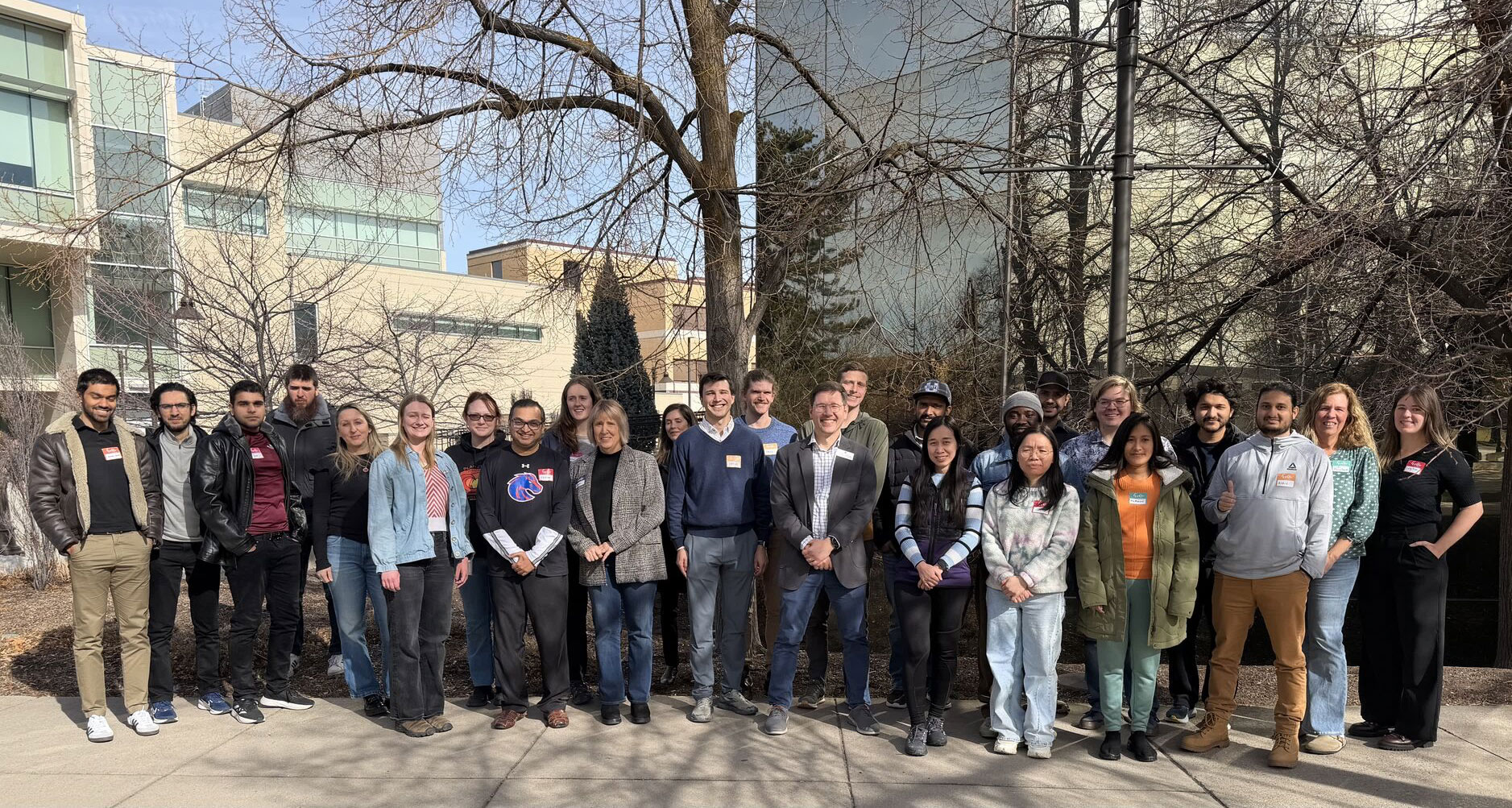
Attendees from the Utah State University STEM Storytelling Workshop. USU's first ever live storytelling show is on Oct. 27, from 6:30-8:30 p.m. and is open and free to the public.
In collaboration with The Story Collider, USU College of Engineering is hosting its first ever live audience storytelling show in the USU Huntsman College Perry Pavillion on Oct. 27, from 6:30-8:30 p.m. The event is free, open to the public, and features four USU engineering graduate students sharing their personal stories.
The ongoing research associated with the show indicates that reflecting, writing and performing personal stories can help graduate students understand and embrace their potential for success in science, technology, engineering and mathematics, or STEM, fields.
You can book your spot or livestream the event here.
"These students are telling their stories after a workshop process of reflecting and writing a narrative about a standout event, then sharing their story with other graduate students as they continued to refine their narratives," said Angela Minichiello, a USU engineering professor and event organizer. Minichiello secured a grant from the National Science Foundation to bring the event to Logan.
Minichiello and Uyen Nguyen, a USU engineering education PhD student, work with researchers from Boise State University to examine how personal storytelling can help students in STEM fields feel more accepted and empowered during their graduate education.
"We are the stories we tell ourselves," said Minichiello. "I really gravitated to this project because I think you can understand a lot more about people and their experiences through narrative."
Before and after the show, the research team asks for volunteer audience participation in a short online survey to see how their perceptions of STEM researchers may change by listening to the personal stories.
In addition to understanding the impact on the audience, researchers are seeing several ways the process benefits the participating students.
"A lot of graduate students have said the workshop was beneficial for them, not only in feeling more competent as STEM researchers, but also in their ability to communicate their work with various audiences," Minichiello said.
One of the USU storytellers is Senorita Sarker, a PhD graduate student studying mechanical engineering. Her story centers on her research of the reflection of light by grains of metal and combining it with her journey from Bangladesh to her PhD program here at USU.
"My biggest takeaway is how correlated life and research are," said Sarker. "The storytelling workshop helped me see that we can show that relationship to share our research in an effective way with friends, family and community."
Minichello said the data shows how using storytelling as an intervention is linked to the construction of identity and self-efficacy in STEM. The research team is also hypothesizing that students may start to experience their need to belong differently after hearing that other students feel isolated, too.
The team is collaborating with The Story Collider to develop an open-source workbook to support other institutions implementing STEM storytelling. This New York City-based nonprofit shares personal stories about science through podcasts and live event shows.
###
Writer: Libbie Anderson, 435-797-8361, libbie.anderson@usu.edu
Contact: Angela Minichiello, 435-797-6370, angie.minichiello@usu.edu