Welcome to the FestMat Laboratory at Utah State University
The Functional and Structural Materials (FestMat) Laboratory at Utah State University is dedicated to developing next-generation materials capable of operating in extreme environments. Our research spans the design, processing, characterization, and performance evaluation of advanced metallic materials for energy, aerospace, transportation, and manufacturing applications.
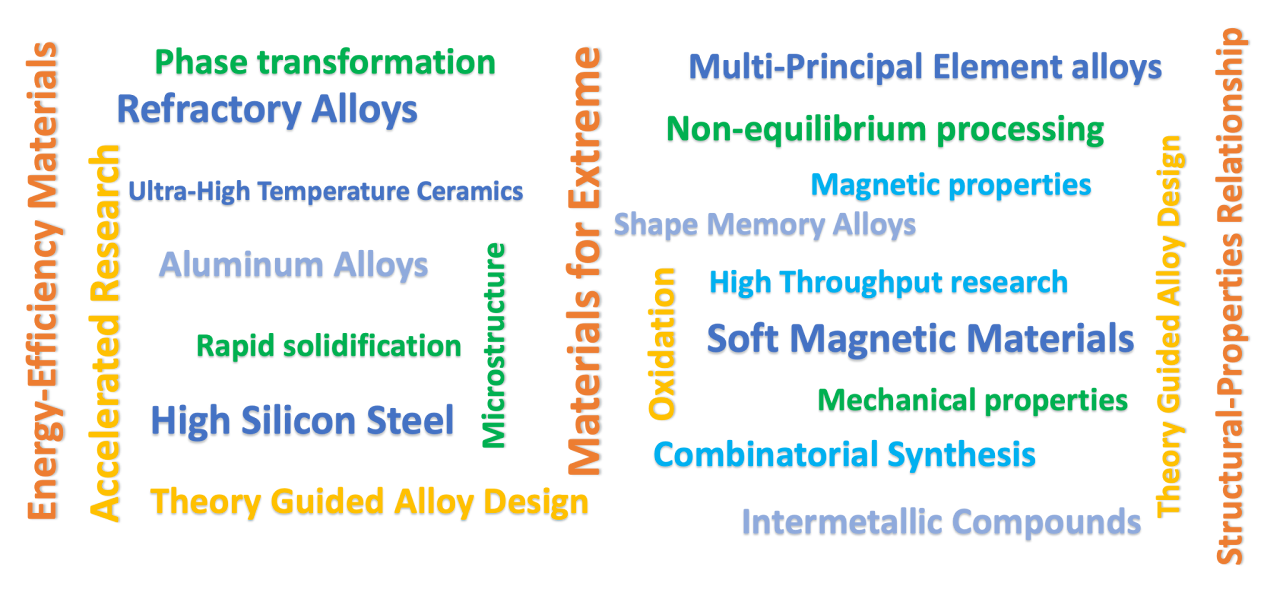
We combine computational alloy design, advanced processing techniques, multiscale characterization, and mechanical and functional property testing to establish fundamental relationships between composition, processing, microstructure, and performance. Our current research focuses on complex concentrated alloys, refractory alloys, soft magnetic materials, electrical steels, and rapid solidification processing, with the goal of creating materials that exhibit exceptional mechanical, magnetic, and thermal properties under demanding service conditions.
Our laboratory values curiosity, collaboration, and innovation. We work closely with universities, national laboratories, and industry partners to address fundamental scientific challenges while developing practical solutions for next-generation technologies.
We are always interested in working with motivated undergraduate and graduate students, postdoctoral researchers, and collaborators who share our passion for advancing materials for extreme environments.
NEW 2026/2027: We are actively hiring PhD students with full assistantships and undergraduates to join our research group in fall 2026 and Spring 2027. Please check the "Openings" page for opportunities to join our team.
Mission
To discover, design, and engineer advanced materials that enable future technologies and perform reliably in extreme environments.
Vision
To advance materials innovation through fundamental research, interdisciplinary collaboration, and the education of future scientists and engineers.
Core Goals
- Design next-generation functional and structural materials.
- Understand processing–microstructure–property relationships.
- Develop materials for energy, aerospace, and manufacturing.
- Integrate experiments with computational and data-driven methods.
- Train the next generation of materials researchers.