Saltwater can be purified by freezing it because the salts are expelled from the ice.
Team: Adam Rasmussen and Dr. Hailei Wang
Background
Freeze Desalination systems are designed to use the microscopic ion rejection phenomenon where salts get pushed out of ice as it freezes to generate drinkable water from saltwater. Despite decades of research, many of the properties and functionality of water and salt interactions are not fully understood.
This research uses Molecular Dynamics (MD) Simulations –a numerical approximation technique using classical Newtonian physics –to analyze differences in energy and structure characteristics of different salts in a ice-water solution..
Methods
Natural ice on Earth has a large amount of random configurations in its lattice. Thus, to produce the system, we have to generate a “proton-disordered” ice lattice and then combine it with a large solution system.
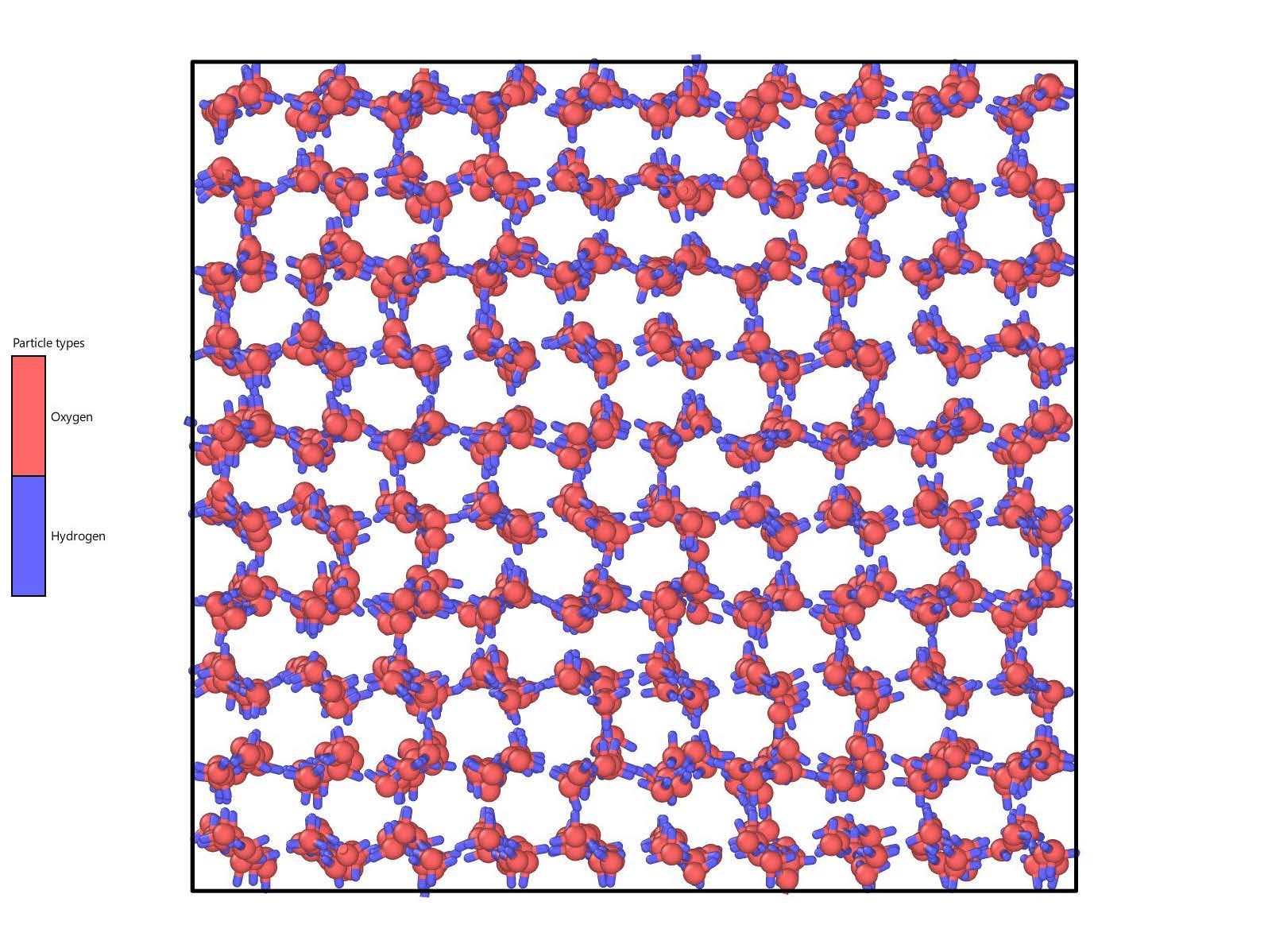
Once the system is built, the temperature and pressure can be controlled to allow the system to evolve towards equilibrium. If the temperature is low enough, the ice will freeze, pushing the system towards a new equilibrium while showing the dynamic characteristics.
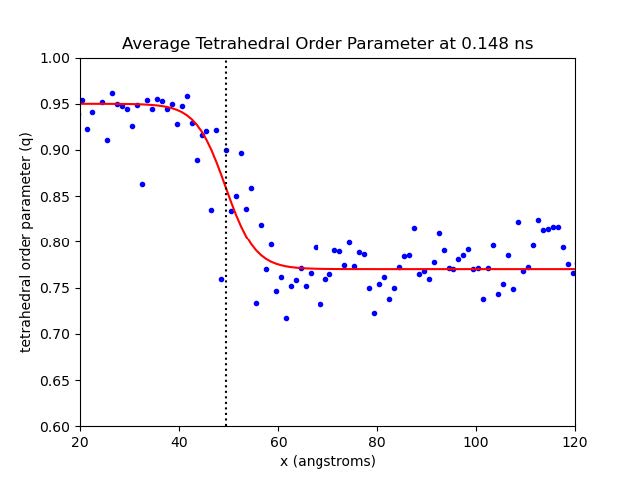
In order to analyze the system, the location of the ice front must be tracked throughout the simulation. A parameter called the “tetrahedral order parameter” can be used to track the front. Once the front is dynamically located, further analysis can be performed to characterize the energy and structure
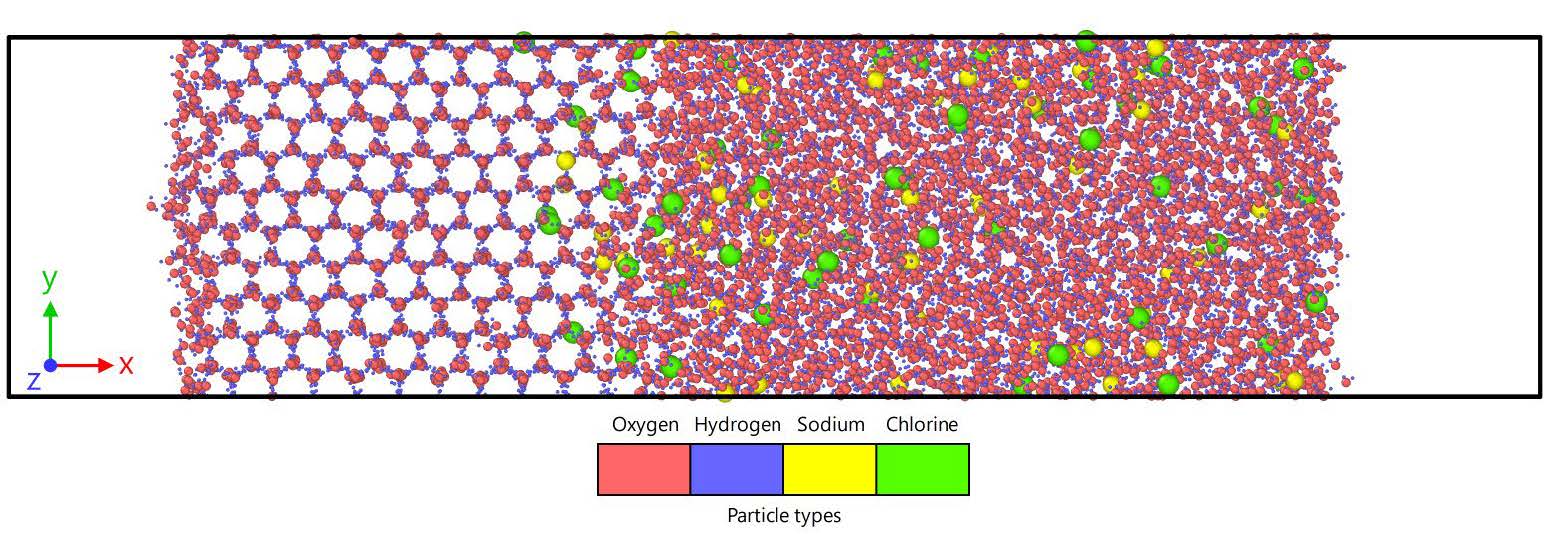
As the saltwater-ice system evolves at low enough temperatures, the ice will grow, causing the majority of the salts to migrate away from the ice front.Though some ions get trapped, the ice that is produced is much cleaner and less contaminated than the original solution.
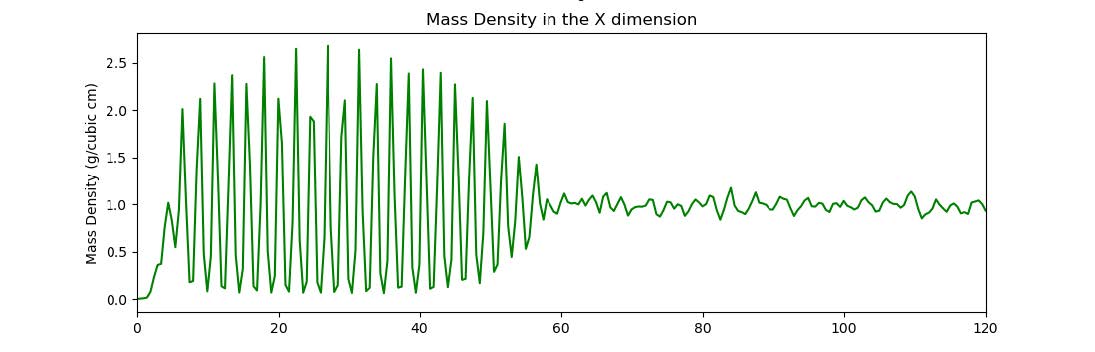
MD simulations rely on mathematical models to correctly predict the motion of atoms. Thus, it is important to check key values, such as density, to show the system is correctly modeling the natural world.
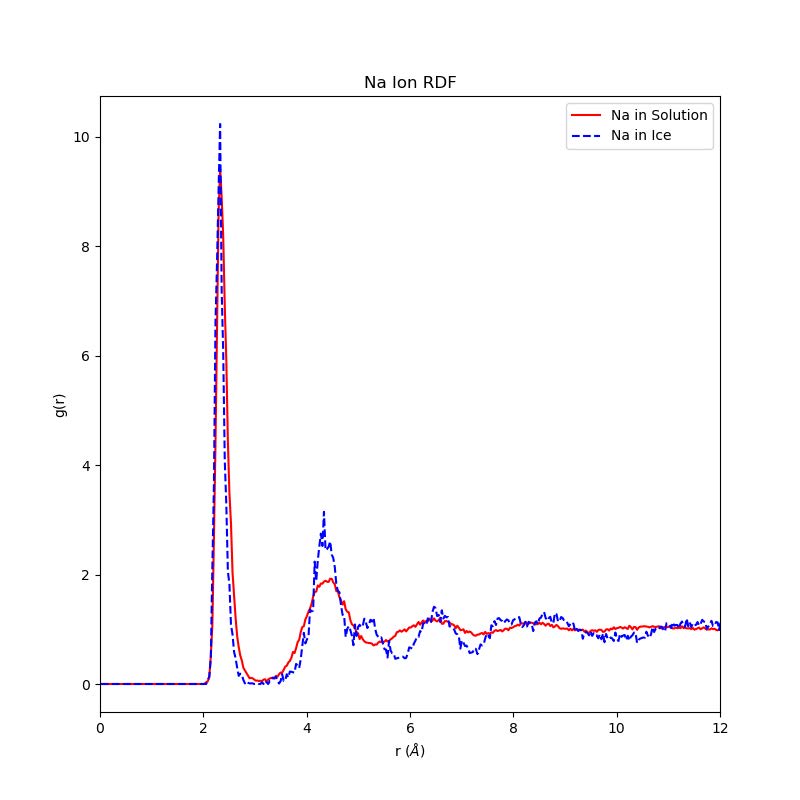
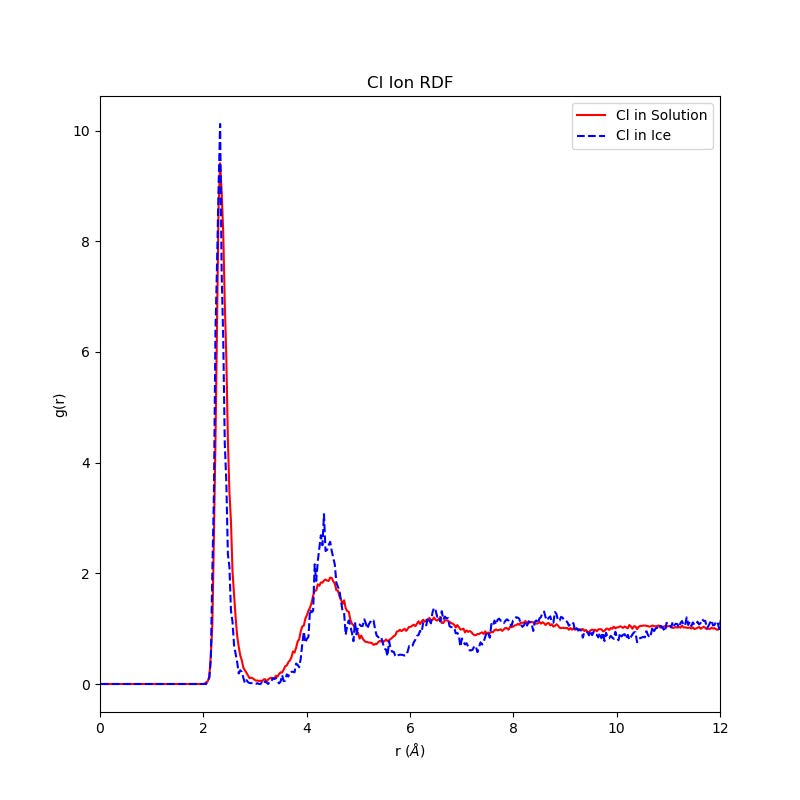
Statistical values such as the Radial Distribution Function provides information on the structure differences between ice and water at the molecular scale