
Pumped Thermal Energy Storage with Variable Loads
Team: Kaeden Teague and Dr. Hailei Wang
Objectives
The purpose of this work is to investigate:
- The effect of a variable load on PTES charge and discharge times
- The effect of a variable load on PTES round-trip efficiency
- The performance of a simultaneous charge and discharge PTES system
Introduction
Pumped thermal energy storage (PTES) is a cost-effective way to store large amounts of electricity. PTES systems convert electricity into thermal energy with a heat pump cycle. The thermal energy is stored in the hot tank until the electricity is needed. Then, a heat engine cycle converts the thermal energy back into electricity. Fig. 1 illustrates the heat pump and heat engine processes.
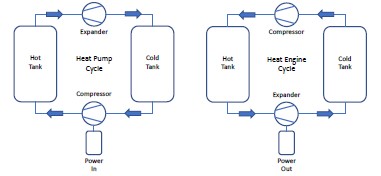
Figure 1. Heat pump and heat engine cycles of a PTES system
Applications
- Stabilizing the power output of volatile energy sources such as wind, solar, geothermal, and nuclear energy

Figure 2. Solar and wind farm.
Advantages
- More cost-effective than lithium-ion batteries
- No geographical constraints like pumped hydro storage used in hydroelectric dams

Figure 3. Hydroelectric dam.
Much of the current research assumes a constant load to isolate other parameters. This work focuses on variable load conditions to support control strategies and practical operation of multi-PTES networks [1].
Methods
To investigate the system response of PTES to variable power loads, a dynamic model is created in MATLAB and Simulink.
The model simulates:
- heat produced by the heat pump cycle
- power generated by the heat engine cycle (Brayton cycle)
- temperature change of the hot and cold thermal stores
The variable loads are:
- wind power generation during the charge phase (energy storage)
- power demand during the discharge phase (energy generation)
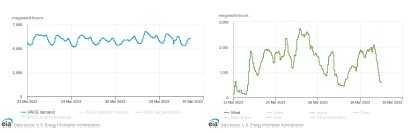
Figure 4. Grid demand (left) and wind power (right) data from the U.S. Energy Information Administration.
The PTES system components are modeled with the appropriate thermodynamic and heat transfer equations. To model the hot thermal store, a transfer function is developed from the energy balance equation, shown in Eq. 1. The Simulink model of the hot thermal store is shown in Fig. 5.
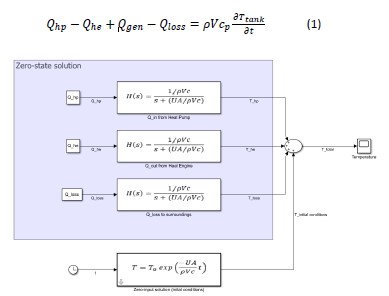
Figure 5. Simulink model of hot thermal store
Preliminary Results
The hot thermal store model was tested with both a constant load and a variable load. The PTES system parameters are shown in Table 1 and are based on a model used by another researcher [2].
The first simulation tested a constant power input of 8 MW for 24 hours. The temperature change of the hot thermal store is shown in Fig. 6.
Table 1. PTES system parameters.
| Parameter | Value |
|---|---|
| Volume, V | 400 𝑚3 |
| Specific Heat (Therminol VP-1), C | 2392 𝑘𝐽/𝑘𝑔 𝐾 |
| Density (Therminol VP-1), ρ | 775 𝑘𝑔/𝑚3 |
| Surface Area, A | 200 𝑚2 |
| Overall Heat Transfer Coefficient, U | 5 𝑊/𝑚2 𝐾 |
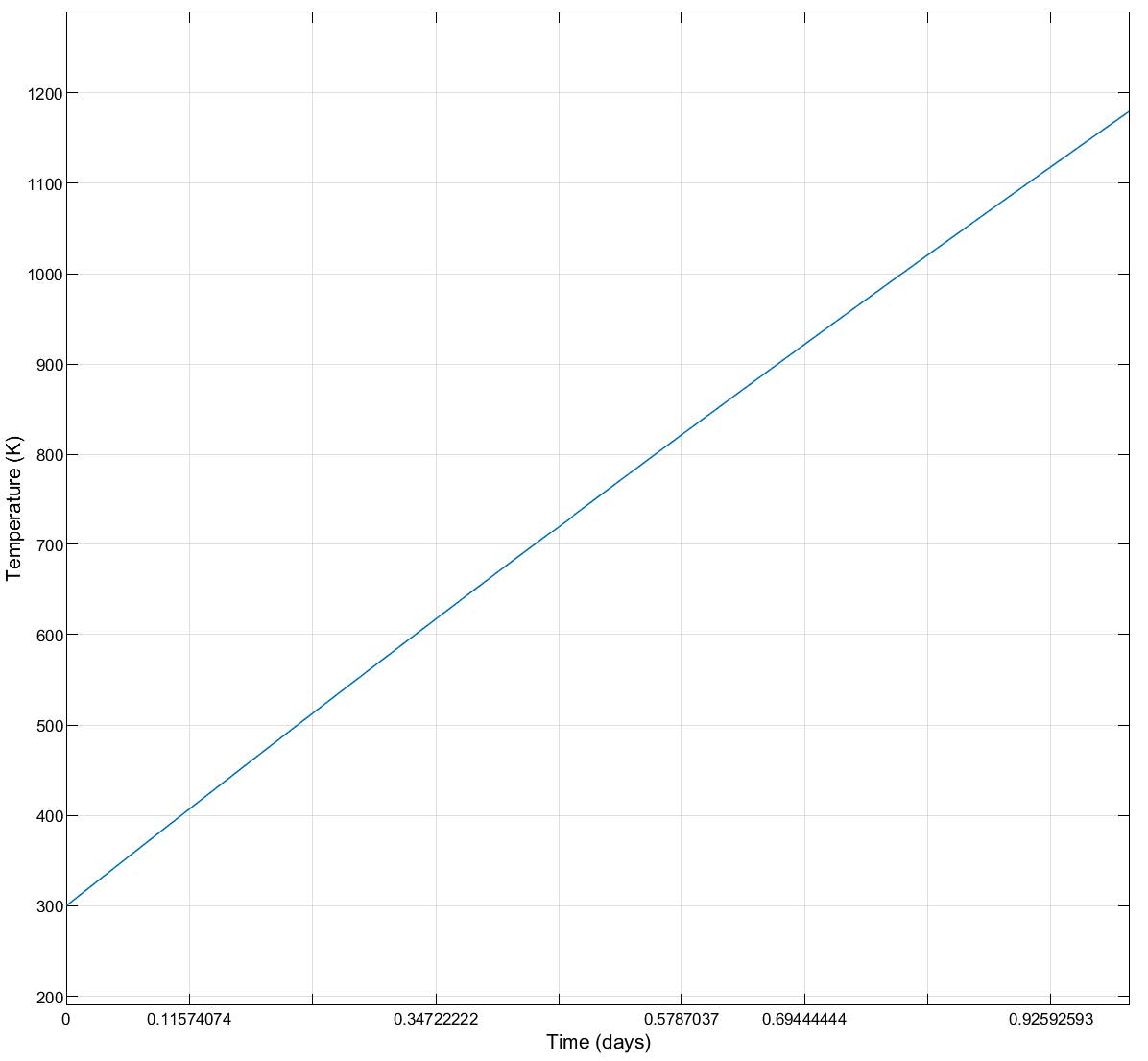
Figure 6. Change in temperature of the hot thermal store due to a constant 8 MW power input for 24 hours.
The second simulation tested a sine wave with an amplitude of 8 MW and a period of 24 hours as a variable power load. The positive portion of the sine wave represents a power input, and the negative portion represents a power output. Fig. 7 shows the variable load, and Fig. 8 shows the change in temperature of the hot thermal store due to the variable load.
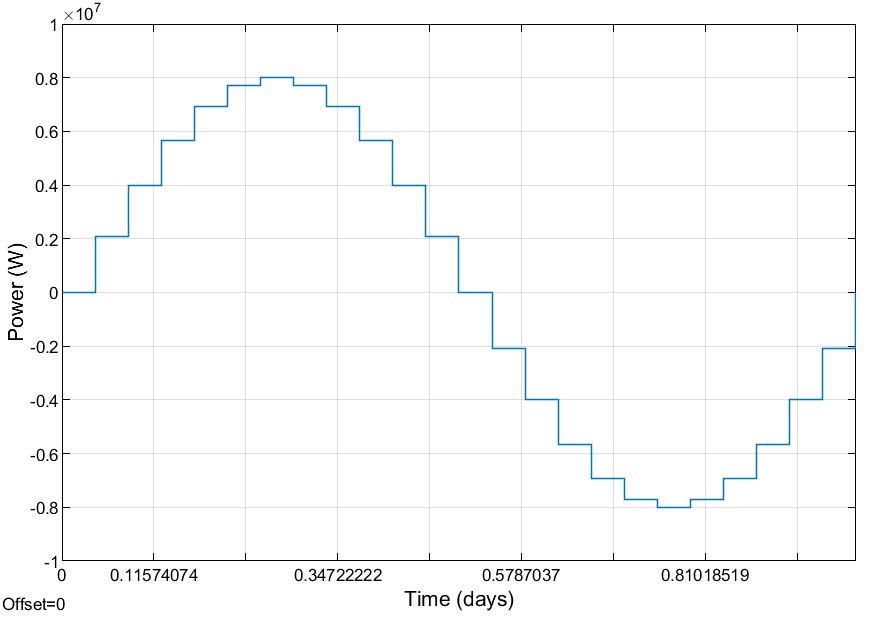
Figure 7. Variable power load to test the hot thermal store model. The load is a sine wave with an amplitude of 8 MW and a period of 24 hours.
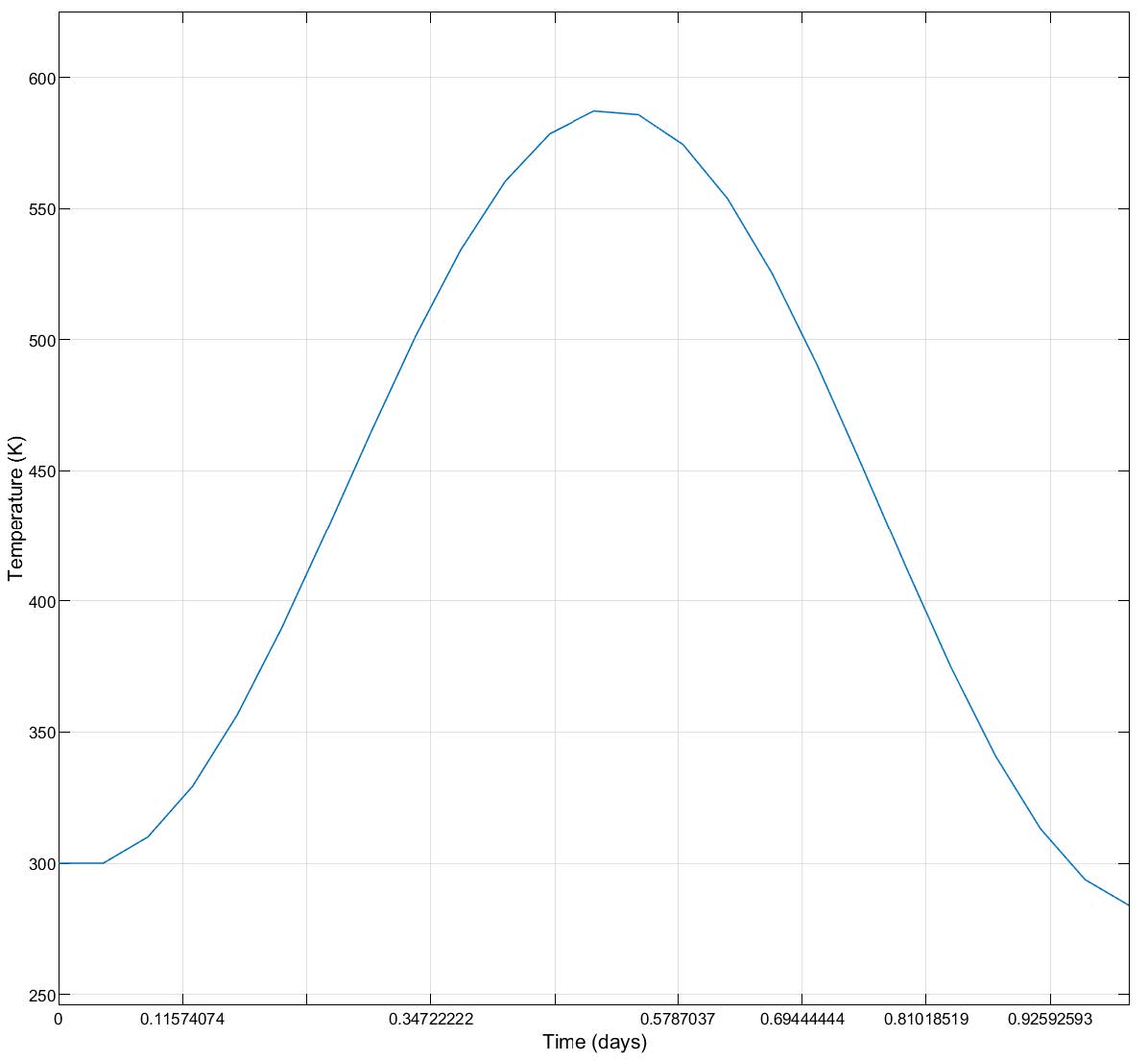
Figure 8. Change in temperature of hot thermal store due to the variable load shown in Fig. 7.
Observations
- The temperature change lags the variable load due to thermal inertia.
- The temperature at the end of the cycle is lower than the initial temperature due to heat loss to the surroundings.
References
[1] M. Albert, Z. Ma, H. Bao, and A. P. Roskilly, “Operation and performance of Brayton pumped thermal energy storage with additional latent storage,” Applied Energy, vol. 312, p. 118700, 2022.
[2] R. Hovsapian, J. D. Osorio, M. Panwar, C. Chryssostomidis, and J. C. Ordonez, “Grid-scale ternary-pumped thermal electricity storage for flexible operation of nuclear power generation under high penetration of Renewable Energy Sources,” Energies, vol. 14, no. 13, p. 3858, 2021.