
Dynamic Modeling and Simulation of Natrium System
Team: Seth Dana, Aiden Meek, Jacob Bryan, Manjur Basnet, and Hailei Wang
Sponsor: NEUP Nuclear Energy University Programs U.S. Department of Energy
Introduction
With the effects of global warming starting to become present, countries around the world are trying to shift electricity generation away from fossil fuels toward cleaner, renewable alternatives. In recent years the cost of some renewable technologies have decreased significantly, photovoltaic (PV) solar panels are an example of this [1]. The reduction in cost and improvmeent of solar technology ahs increased the deployment of PV solar panels globally from 0.26 GW in 2000 to 16.1 GW in 2010 [2]. The increase in PV deployment and other renewables have intensified the fluctuating energy demand to be met by power providers as shown in figure 1.
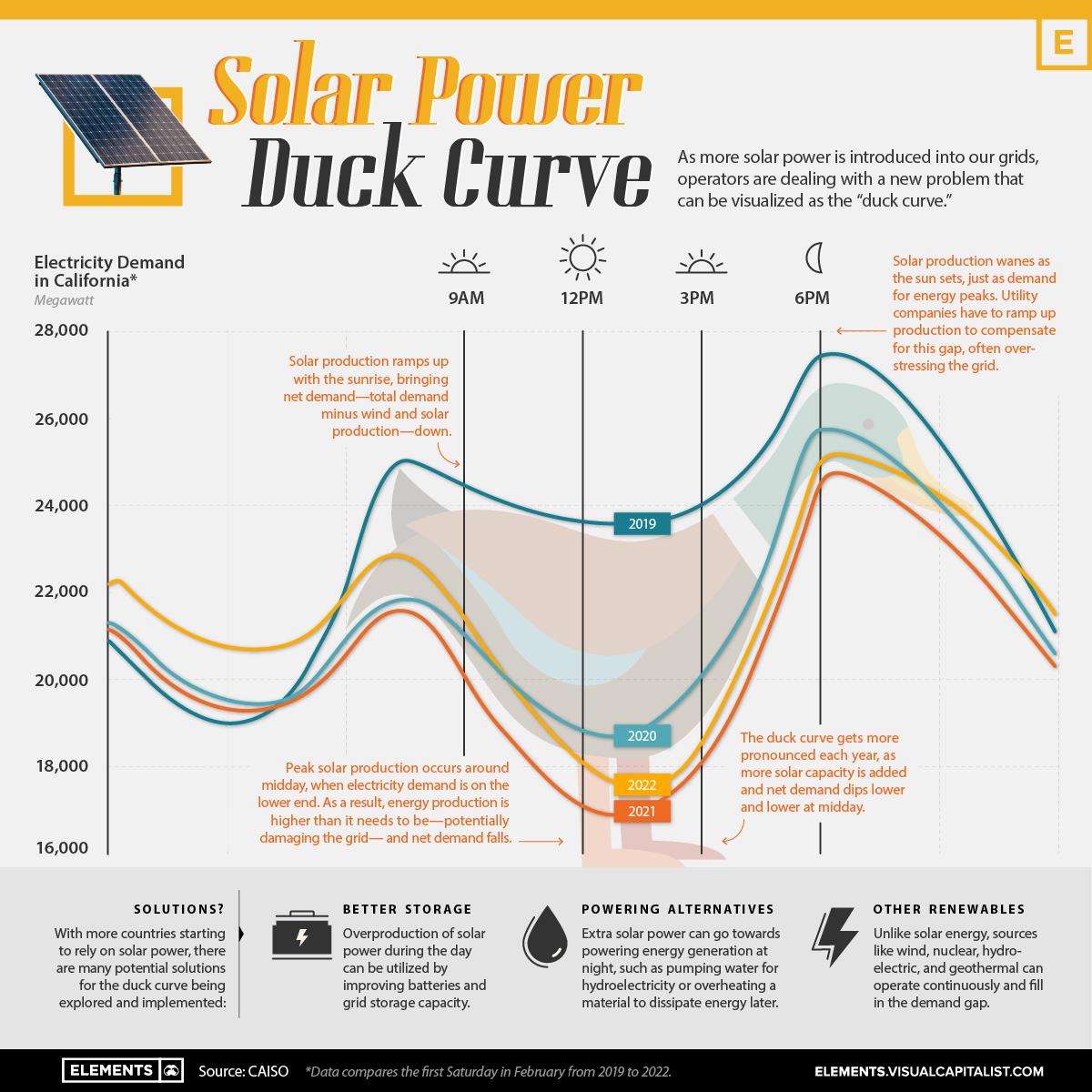
Figure 1 Duck curve showing how solar penetration affects the power demand throughout the day.
Objectives
This study will investigate the capability and response of Natrium, a nuclear hybrid energy system (NHES), in an energy market by
- Developing a dynamic model of the Natrium NHES
- Analyzing market data and renewable penetration
- Demonstrating the load following capability of a NHES with thermal energy storage
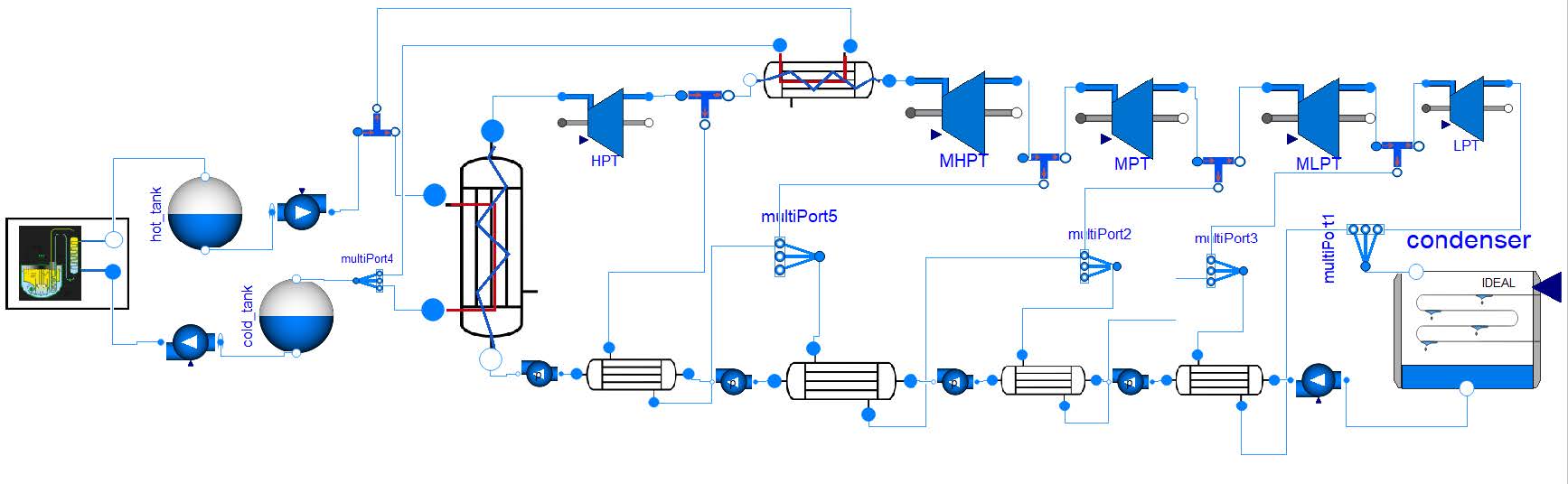
Figure 2 Dymola model 1. Heat source 2. Energy storage 3. Reheat 4. Feedwater regenerators
Methodology
The Natrium system is a NHES with a sodium fast reactor design by TerraPower and GE Hitachi.
The dynamic model is developed in the Modelica language using Dymola to simulate with historical and synthetic data at optimal design points. A steady state model in python optimized the states of the power. cycle. The dynamic model includes:
- A heat source to represent the sodium fast reactor
- Molten salt thermal energy storage loop
- Steam reheat after first turgbine expansion
- Feedwater regenerators (preheaters).
The design has a thermal efficiency of 42%. The model leverages several components from Idaho National Lab HYBRID and Oakridge National Lab TRANSFORM libraries. Figure 3 shows the temperature vs entropy (T-s) diagram of the Rankine cycle.
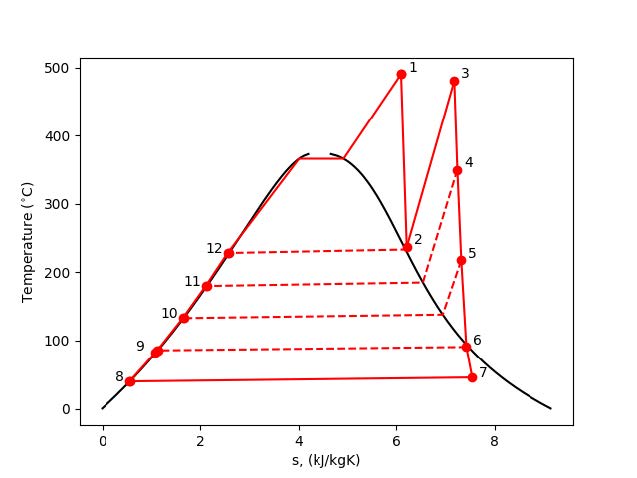
Figure 3 T-s diagram of the Rankine Cycle
Results
This section includes a case study of a 7-day operation of the Natrium System. The input demand is from Texas (ERCOT) 2021 summer. The demand takes into account solar and wind penetration. The renewable production is subtracted off the total demand before going into the model.
Figure 4 shows the demand and system response and the storage capacity during the week.
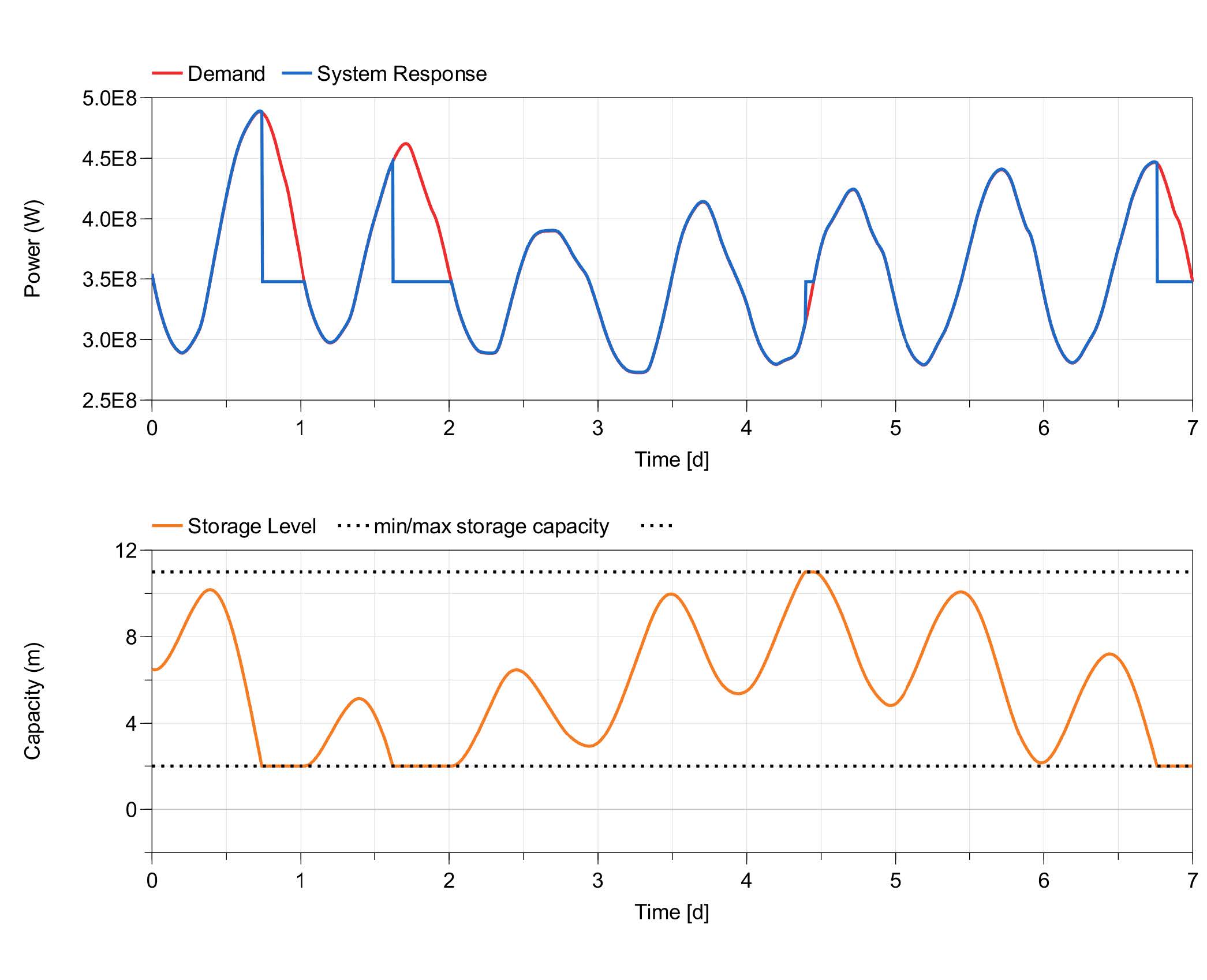
Figure 4 Top: demand and system response.
Bottom: TES State of Charge.
The simulation shows the dynamic response of the system and how the demand profile has a periodic nature. Sometimes the system cannot boost for long enough to meet all of the demand. This response means there is an optimal size of storage for a given energy market. For best economic viability the system would be optimized to boost when the price of electricity is the highest and charge when it is low.
Conclusion
A Dymola model has been developed to analyze the Natrium NHES with molten salt thermal energy storage. The case sstudy showed that the energy storage allows the system to store energy during off peak times to boost power during high demand. The sodium reactor operates at a steady state which will reduce strain on the plant over the lifespan of the reactor.
In future work the model electricity dispatch will be optimized with the price of electricity. Figure 5 shows how the electricity price is related to the electricity demand. Energy storage in a NHES will boost the economic value of the NHES.
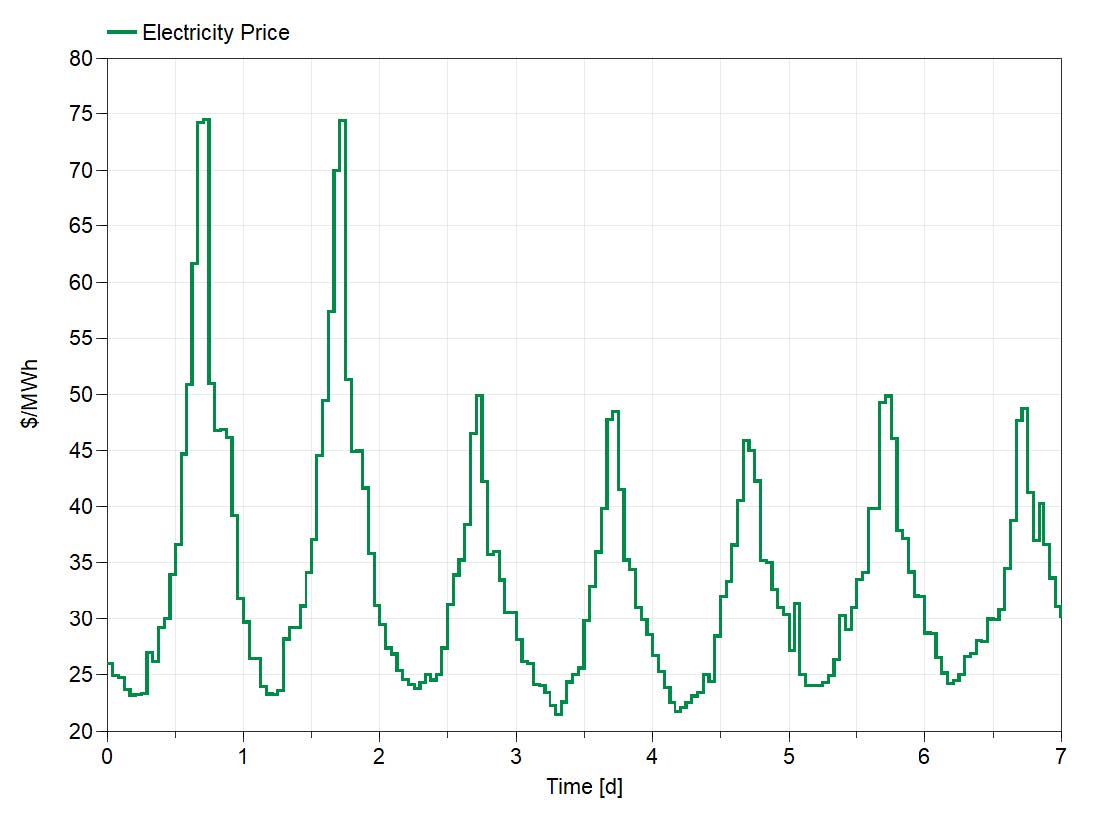
Figure 5 Price of electricity $/MWh
References
- A.R. KALAIR, N. ABAS, M. SEYEDMAHMOUDIAN, S. RAUF, A. STOJCEVSKI, and N. KHAN, "Duck curve leveling in renewable energy integrated grids using internet of relays." Journal of Cleaner Production, , 294, 126294 (Apr. 2021).
- K. BRANKER, M. PATHAK, and J.PEARCE, "A review of solar photovoltaic levelized cost of electricity," Renewable and Sustainable Energy Reviews,15, 9, 4470-4482 (Dec. 2011), number: 9.
Acknowledgements
This project is funded by the DOE Nuclear Energy University Program (NEUP)