
USU BAJA SAE
Team: Ethan Black, Colton Carter, James Clark, Dylan Cozzens, Christian Dye, Caden Keyes, TJ Leavitt, Cristhian Nolasco, Porter Seegmiller, Dallin Smith and Hyrum Teasdale
Project Description
Our purpose is to design and build a single-seat off-road vehicle that can be produced for the average weekend off-road enthusiast and is capable of driving in harsh conditions which we will test at the Baja SAE Oregon 2026 national competition in May.
Design Description
Frame
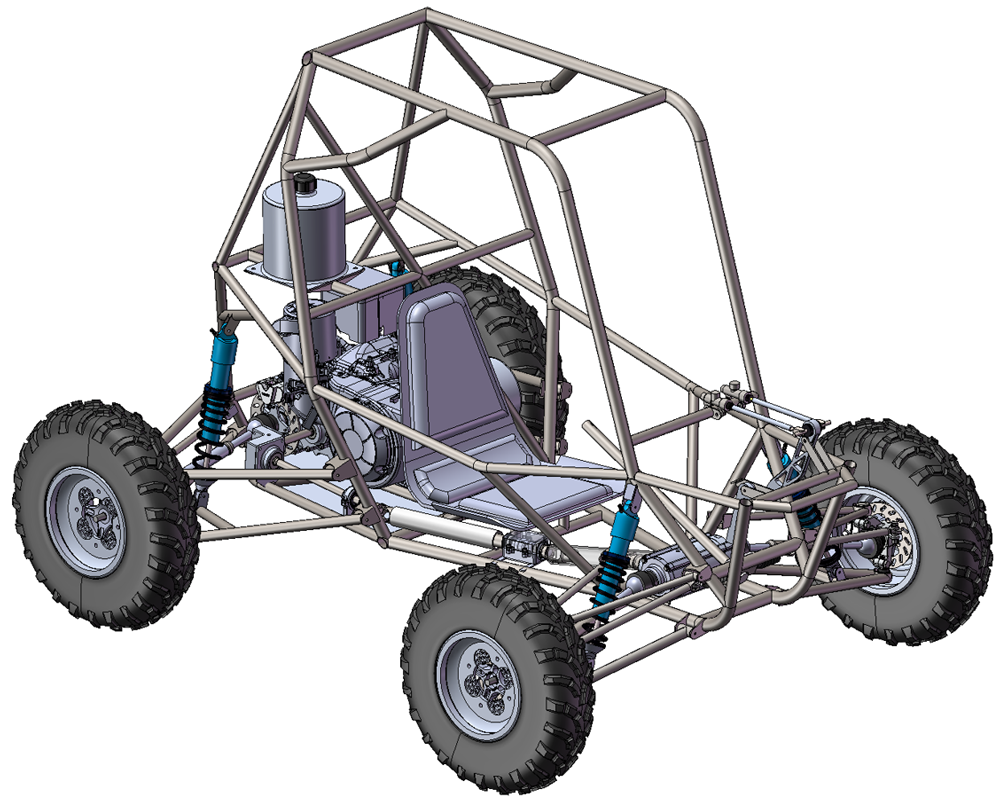
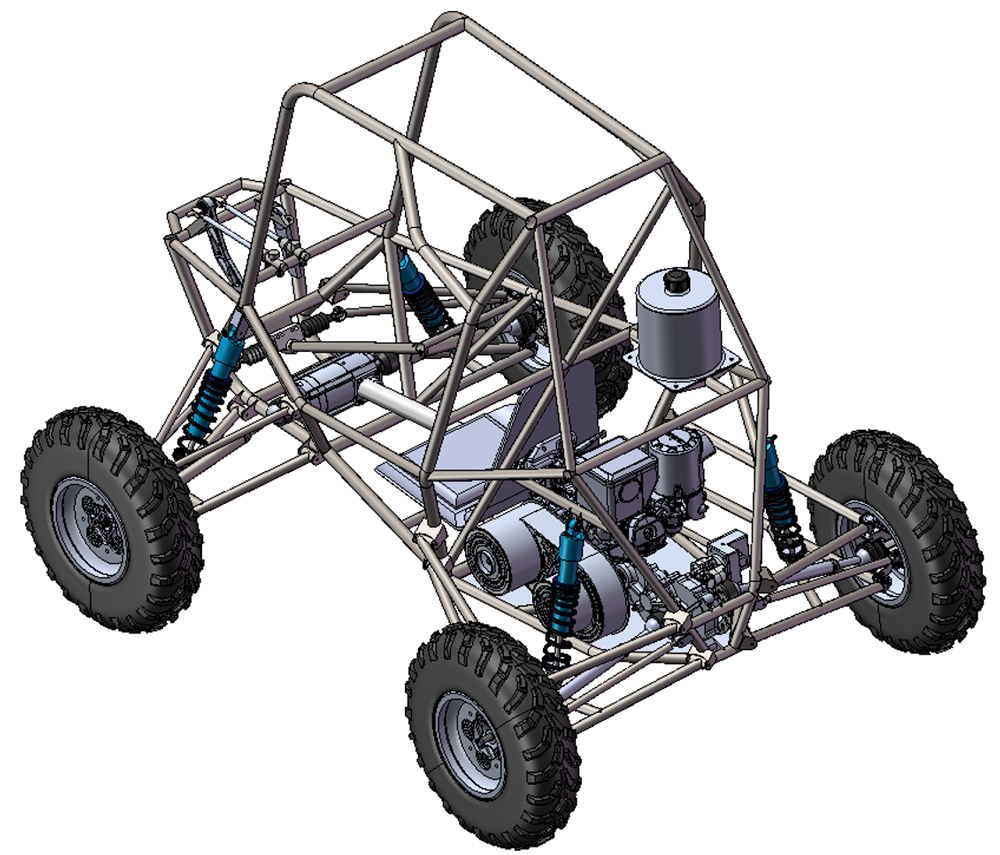
Built from high-strength 4130 chromoly steel, this subsystem provides the load-bearing foundation for all vehicle components. Recent optimizations include a narrowed toe box and diagonal bracing, which FEA testing confirmed reduces weight while improving overall stress distribution.
Suspension
Utilizing a front double A-arm and rear semi-trailing arm configuration, this system isolates the driver from extreme terrain forces. The latest design features straight-member control arms to increase reliability and simplify manufacturing, while maintaining precise geometry to minimize bump steer.

Steering
The rack-and-pinion steering uses Ackermann geometry to provide the driver with smooth, mechanically advantaged directional control. By optimizing the tie-rod mounting points, the designed maximum steering angle was increased to 40°, therefore reducing the vehicle’s turning radius from 9 feet to just 7.5 feet.
Drivetrain
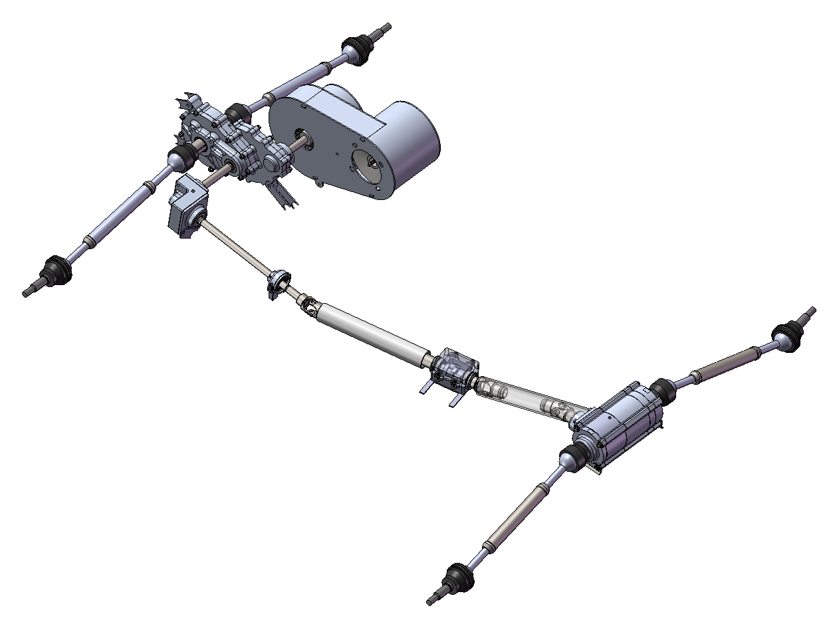
This system transmits 14 hp from a Rehlko engine through a CVT and an engageable 4WD dogbox for maximum efficiency. A redesigned open front differential reduces weight by 1.77 lbs and eliminates tire chirping and scrubbing, which provides improved steering and maneuverability during tight cornering.
Performance Overview
| Requirement | Target | Threshhold | Method | Predicted Performance | Actual Performance |
| Max Weight of Buggy | 400lb | N/A | SolidWorks | 415 lbs | |
| Wheel Travel | 10 in | N/A | Kinematics | 10 in | |
| 0-100 Ft Time | 5.0 seconds | 5.5 seconds | Testing | 5.1 seconds | |
| Turning Radius | 7.5 ft | N/A | SolidWorks | 8.0 ft |
Conclusion
The requirements and constraints were important metrics that influenced our design decisions and the resulting buggy. We learned the complex system of off-road vehicles and how dependencies between subsystems affect the design and performance of other components. We learned that although detailed design is important, it should not override the importance of starting the build phase on-time when working within a strict timeframe. For future iterations upon this design, we recommend adopting a "build early, fail fast" mentality to allow the opportunity to test and troubleshoot. Another recommendation is to assign subsystem leaders who are responsible for the progress and completion of their respective milestones, this will create more accountability and allow the subsystems to be designed and built concurrently.