
The Supersonic Experience - Pilot Control Panel
Team: Justin Bailey, Ryan Christensen, Josh Fugal and Spencer Johnson
Project
The Supersonic Experience offers users an educational and interactive flight simulator experience. Our goal is to inspire curiosity among children, youth, and adults alike.
- Our task is to design, manufacture, and deliver a professional control station for an accurate and fun user experience.
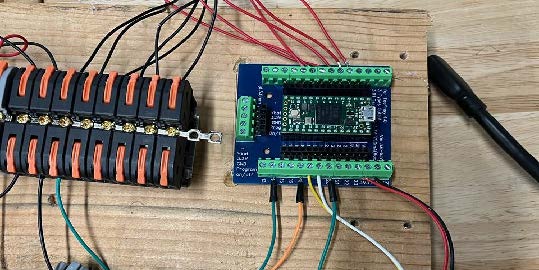
- The console must contain all the needed hardware, such as a pilot’s yoke, thrust, landing gear, etc., with sensors to transmit all input data to the flight simulator.
- The console and its components must be capable of enduring constant use and abuse from patrons.
Design Description
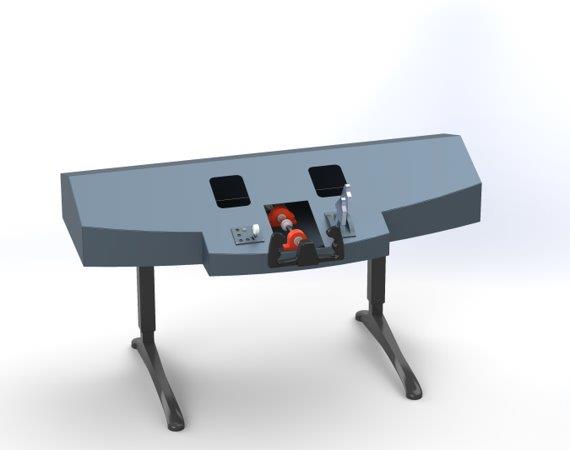
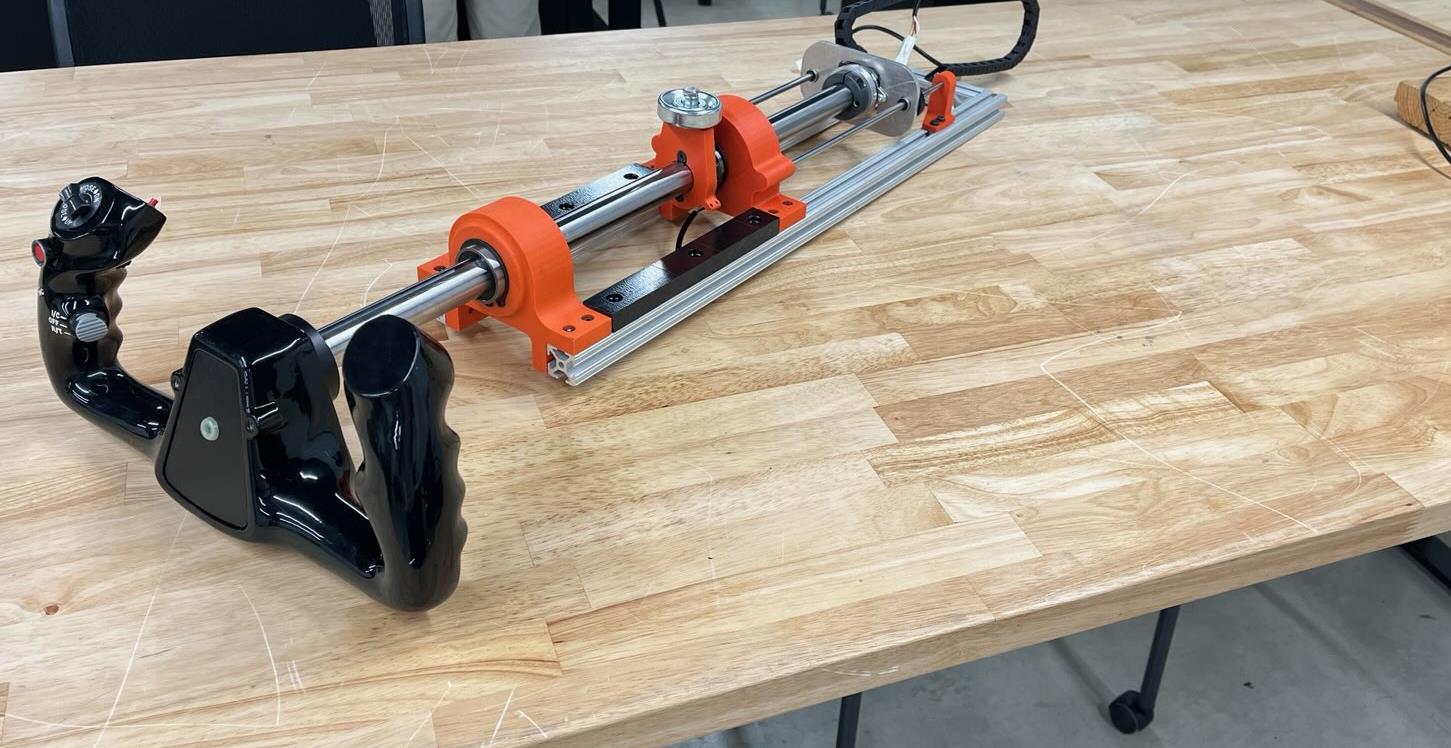
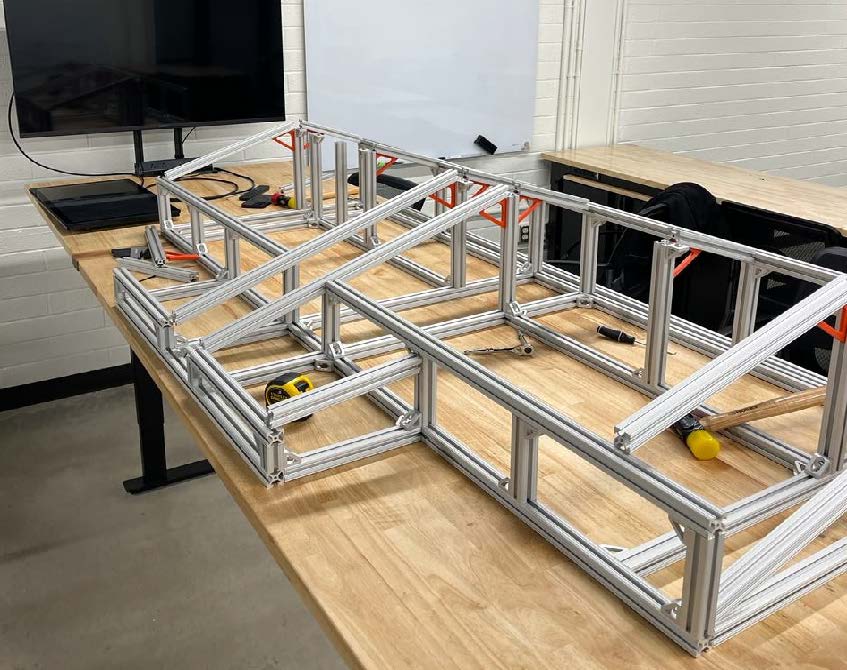
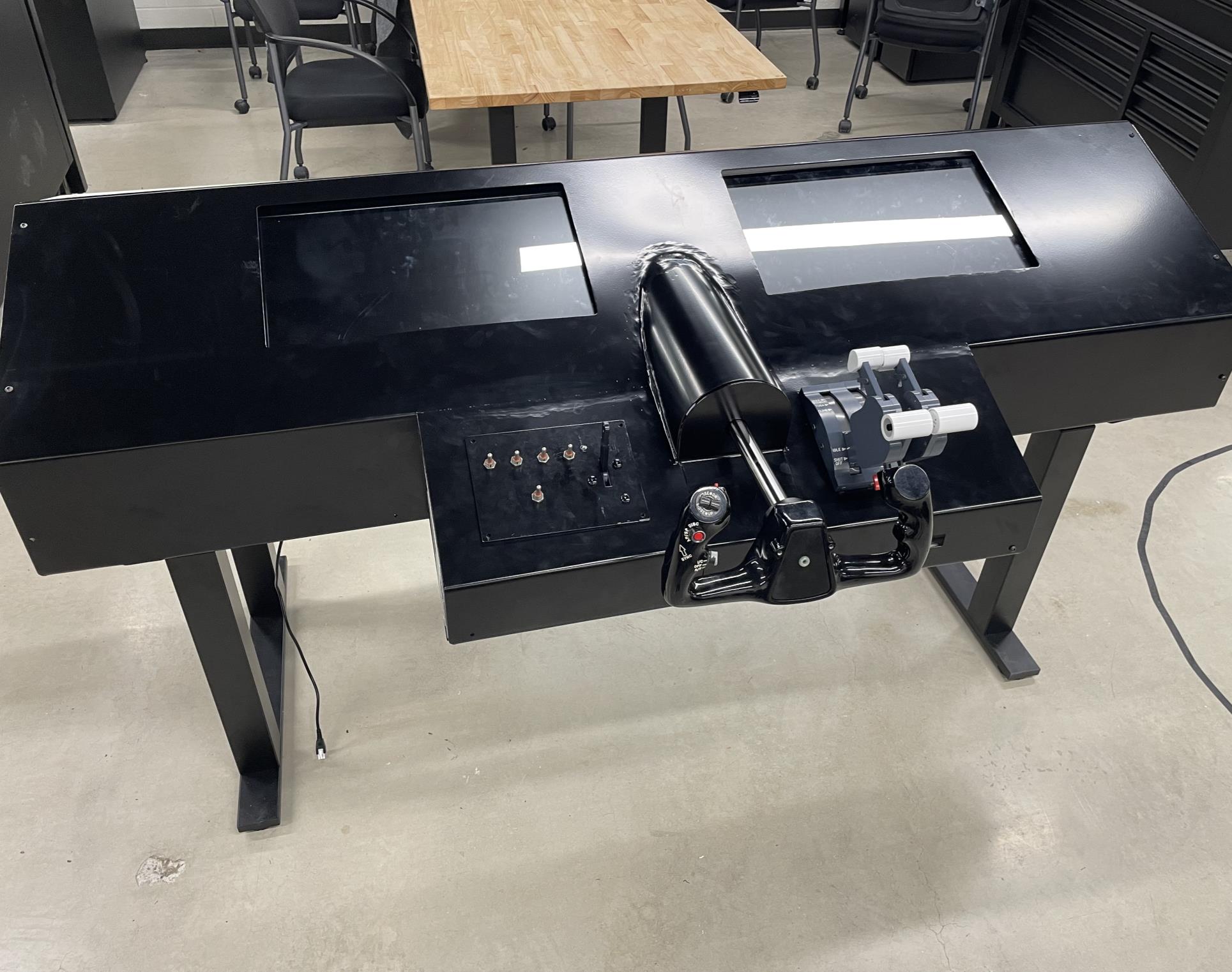
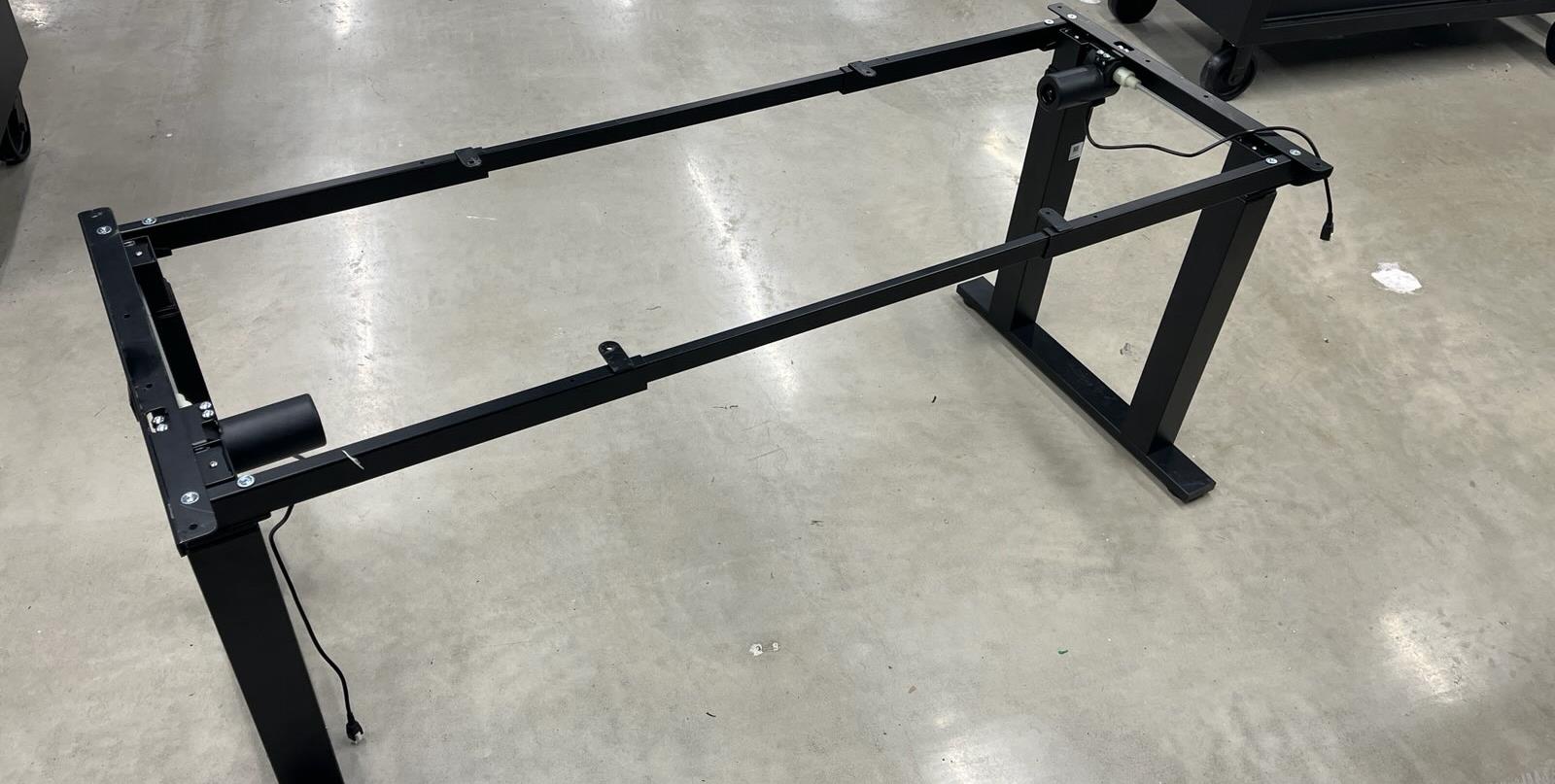
The Pilot Control Panel is made of a powder coated steel shell with an aluminum frame. The central control yoke features axial and rotational resistance with centering capabilities. The panel is equipped with height adjustable legs, throttle, landing gear, and light switches for the various applications.
Performance Review
To verify our design met requirements, we measured, weighed, and reviewed each element of our control panel.
| Requirement / Constraint | Target | Threshold | Actual |
|---|---|---|---|
| ADA Compliance | >26" Vertical Clearance >36" Horizontal Clearance |
>26" Vertical Clearance >36" Horizontal Clearance |
26" Vertical Clearance 60" Horizontal Clearance |
| Height Adjustability | 26" < Vertical Clearance < 48" | 26" < Vertical Clearance < 44" | 26" < Vertical Clearance < 51.6" |
| Control Panel Footprint | 68" × 28" | 72" × 28" | 72" × 34.5" |
| Convenient Control Placement | <24" × 20" Control Footprint | <28" × 24" Control Footprint | 22" × 18" Control Footprint |
| Yoke Range of Motion | ±4" Axial Motion ±85° Rotational Motion |
±3" Axial Motion ±45° Rotational Motion |
±3" Axial Motion ±90° Rotational Motion |
| Display Screens | 3 Screen Displays | 2 Screen Displays | 2 Screen Displays |
| Console Weight | <250 lbs | <300 lbs | 313 lbs |
| Number of Input Switches | 3 Buttons | 2 Buttons | 6 Buttons |
Conclusion
Our design met most requirements with the few alterations made to improve user experience. We learned that translating 3D models to physical items require certain alterations. We recommend future teams build on the current design by adding more flight controls, switches, and simulator capabilities.
The team would like to give special thanks to our sponsor the USU College of Engineering, Matt Jensen, Tyler Jones, Madeline Buskirk and Jackson Graham for their input and support during this project.