
L3 Harris Haul Drone
Team: Tyler Black, Jared Ferguson, Cayden Leary, Carson Monfredi, Jacob Nobili, Kyle Peterson and Austin Soelberg
Sponsor: L3 Harris
Project Description
- The purpose of this vehicle is to provide a remotely operated from a Starlink, off-road hauling platform that supports soldiers on foot. With the mobility of an ATV and the cargo capacity of a utility trailer, it can carry heavy equipment across rugged terrain.
- Its all-electric drivetrain and all-aluminum chassis make it quieter, lighter, and more efficient, with extended operation and simple onehand remote control.
- This vehicle reduces fatigue, increases mobility, and improves safety.

Design Description

Wiring Schematic

Performance Review
| Requirement | Target | Actual | Met? |
|---|---|---|---|
| Payload | 300 lbs | 650+ lbs validated | Yes |
| Vehicle Weight | < 200 lbs | 300 lbs | No |
| Max Length | 4 ft | 4 ft | Yes |
| Night Vision | 180° view | 130° view | Yes |
| Day Vision | 360° / 180° | 130° view | No |
| Starlink Mount | Present | Location Present | Partial |
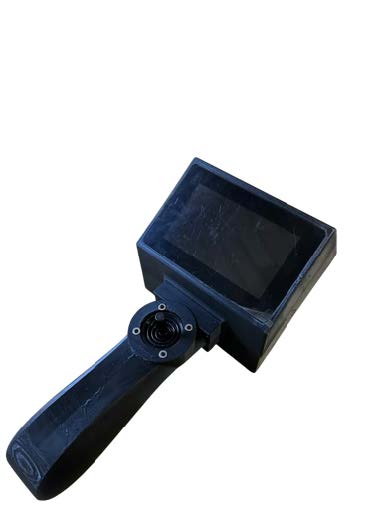
| Controller | One-hand operable | One-hand | Yes |
| Controller Screen | Required | Included | Yes |
| Cargo Volume | 8 ft³ | 10.27 ft³ | Yes |
| 30° Slope | Operable | Designed / Partial | Partial |

- Load Testing — Vehicle successfully supported 650+ lbs without structural failure.
- FEA Simulation — SolidWorks analysis confirmed acceptable stress and displacement under full load.
- Stability Testing — Verified safe operation at 30° lateral tilt.
- Waterproofing Review — Electrical systems sealed to 14 in water depth.
- Control Testing — Remote controller and onboard electronics successfully operated skid-steer drivetrain.
Conclusion
The final design met many major requirements and goals, including payload capacity, cargo volume, night vision, and controller usability. Due to delays in fabrication and integration, the team was unable to complete as much full-system testing as planned.
The team learned valuable lessons in motor selection, battery design, controls, fabrication, and scheduling. Future work includes improving the battery system, refining the software and controls, and completing additional field testing.
We would like to thank our sponsors, L3Harris Technologies, and the College of Engineering for their mentorship, support, and invaluable project experience.