
Design Build Fly 2025
Team: Scott Ellis, Zach Jenkins, Nash Johnson, Nathan Jones, Maxwell Koch, Jacog Wiberg
Sponsor: USU COE
Overview
The objective for this year's competition was to design and build an RC plane that satisfied the 2025 Design, Build, Fly rules. The competition consisted of designing an aircraft and X-1 glider which is dropped from the main aircraft. The airplane had to carry two fuel tanks, be capable of stable flight, and drop the X-1 glider from a height of 200 ft. The plane’s capabilities were shown during multiple test flights, three flight missions, and one ground mission.
Flight Missions
Mission 1 –Delivery Flight: Complete three laps and land successfully without payloads. Full points are earned for completing the mission.
Mission 2 –Captive Carry Flight: Fly three laps as quickly as possible with the X-1 glider and fuel tanks attached. The score is determined using mission time and fuel tank weight.
Mission 3 –Launch Flight: Fly with as many laps as possible in five minutes. At the end of the final lap, the X-1 glider is dropped from 200-400 ft into a target zone. Score is calculated using number of laps flown and the X-1 landing location.
Ground Mission: Attach the X-1 glider and and load all payload configurations as quickly as possible. The score is calculated using the total time needed to configure the plane.

Figure 1: Flight Path

Figure 2: X-1 Drop Mechanism

Figure 3: Pylons and Fuel Tanks
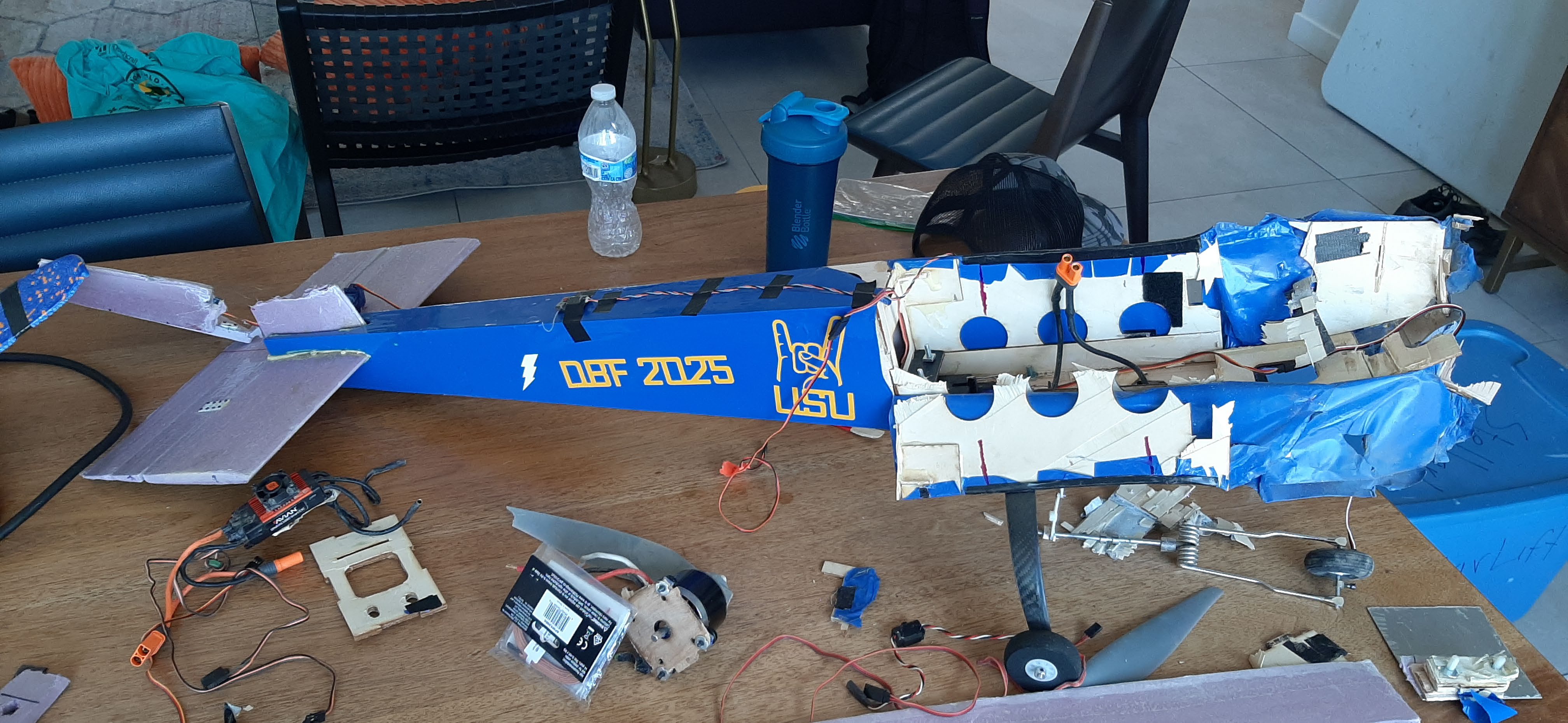
Figure 4: “Slipstream” after crashing at competition
Design Description
The design of the plane primarily focused on optimizing the plane’s top speed to decrease the lap time for Mission 2 and increase the number of laps flown on Mission 3. This resulted in a smaller plane with high thrust and large control surfaces. The plane’s aerodynamics were determined using MachUpX and XFOIL. In addition, the aircraft had the following aspects:
- 4.5 ft. XPS/fiberglass wings
- 3.5 ft. balsa wood fuselage
- Mechanically controlled X-1 drop mechanism
- Single two blade 18x10 in. propeller
- E-Flite Power 90 Brushless Motor
- 3300mAh 8S 70C LiPo Battery
- Removable wing for battery/ controls access.

Figure 5: “Slipstream” during Mission 2 of competition
Competition Constraints
Aircraft Constraints:
- 6 ft. maximum wingspan
- X-1 wings must have 0.25 inches of clearance from the fuselage
- Commercially available fuel tank bottles
- All fuel tanks are attached with pylons
X-1 Constraints
- The X-1 vehicle must be capable of autonomous flight
- After drop, the vehicle must transition to steady flight, execute a 180 degree turn, then fly into the bonus box
- The X-1 vehicle must have flashing strobe lights after launch
| Requirement/Constraint | Target | Threshold | Performance Values |
|---|---|---|---|
| Flight Mission Time | 3 minutes | Maximum of 5 minutes | Approximately 7 minutes of cruise flight |
| Number of Laps with Payload | N/A | Minimum of 3 laps | 3 laps |
| Number of Laps Without Payload | 8 laps in 5 minutes | Minimum of 3 laps | 8 laps in 5 minutes |
| Payload Weight | 2 lbs | N/A | 2.55 lbs |
| X-1 Weight | 0.4 lbs | 0.55 lbs | 0.256 lbs |
Table 1: Design constraints and performance values
Performance Review
| Mission | Score |
|---|---|
| Mission 1 | 1 |
| Mission 2 | 1.08 |
| Mission 3 | N/A |
| Ground Mission | 0.15 |
Table 2: Final Mission Scores
The aircraft’s aerodynamics simulated using MachUpXand the first vehicle prototype. Solidworks FEA, a wing tip test, and a second prototype were utilized to evaluate the wing and fuselage structure. Both prototypes were build with competition ready features to improve feedback.This design allowed for the prototype to be used during competition in the case of crashes. The propulsion system was tested using a thrust test stand to evaluate forces and currents at varying throttle speeds to determine the optimum propeller/throttle combination. The design is capable of completing all of the competition missions, completing the Ground Mission in 58 sec, Mission 2 with a 2.55 lbpayload, and completing 5 laps before dropping the X-1 vehicle.
Conclusion
The final plane met all of the design requirements for the 2025 Design, Build, Fly competition, placing 42nd out of 110 competitors. Additionally, through the design process, the team developed skills in aircraft design, manufacturing, time management, and budgeting. With these new skills, the current design could be improved by improving the plane’s pylon connection, landing gear, and adding a monokotefinish to the wings. Overall, the team is satisfied with the performance of the plane and learned the basics of aircraft design and manufacturing.

Figure 6: The senior design team
Acknowledgements
The team would like to thank the following:
- Jackson Graham -Project Manager/ Advisor
- Space Dynamics Laboratory-Sponsor
- Thunderpower RC -Sponsor
- Reefs RC -Sponsor
- Scorpion Motors -Sponsor
- PowerHobby.com -Sponsor