
Propulsion Research Laboratory
About
The Propulsion Research Lab at Utah State University (PRL-USU) advances aerospace innovation using hybrid rocket engines. The PRL was founded in 2008 by MAE Professor Stephen Whitmore and was started to support student design projects for the NASA University Student launch Initiative (USLI), now called the "Student Launch Challenge." Named "the Chimaera Project," the USU student design teams were incredibly successful, winning the National USLI competition 4 times in 5 years (2008, 2009, 2011, and 2012).
Since 2012, the PRL has transitioned into a research laboratory with the express purpose of developing Hybrid rocket systems as reduced-hazard, environmentally friendly, "Green" replacements for solid-propellant launch stages and hydrazine-based in-space propulsion systems. The USU Propulsion Research Laboratory has all required in-house capabilities to support a wide swath of technology development and experimental testing. A key capability is the on-campus Battery Limits and Survivability Testing (BLAST) laboratory. To date, more than 1200 hot-fire tests of hybrid, solid, bi-propellant, and jet engine systems have been performed in the BLAST facility.
USU's patented High Performance Green Hybrid Propulsion (HPGHP) technology is enabled by recent advances in 3-D printing and leverages unique electrical breakdown characteristics of printed plastics like acrylonitrile butadiene styrene (ABS) and polyamide. Additive manufacturing changes the electrical breakdown properties, and when printed materials are presented with an inductive electrical potential, electrical arcing along the layered surface pyrolyzes material and seeds combustion when an oxidizing flow is introduced. Multiple prototype units with thrust levels varying from 0.5 N to 1000 N have been developed and tested. HPGHP systems are “on-demand” restartable and can be deep-throttled without inducing combustion instability.
Why Hybrids?
Hybrid rocket engines have many advantages, including:
- On-demand start/stop capability
- Deep throttling
- Low safety risks because of non-toxic and stable propellant nature
- Significantly less expensive than solid or liquid engines
- Excellent academic tool for understanding physical phenomenon in all types of rocket engines – liquid, solid, and hybrid
Why USU
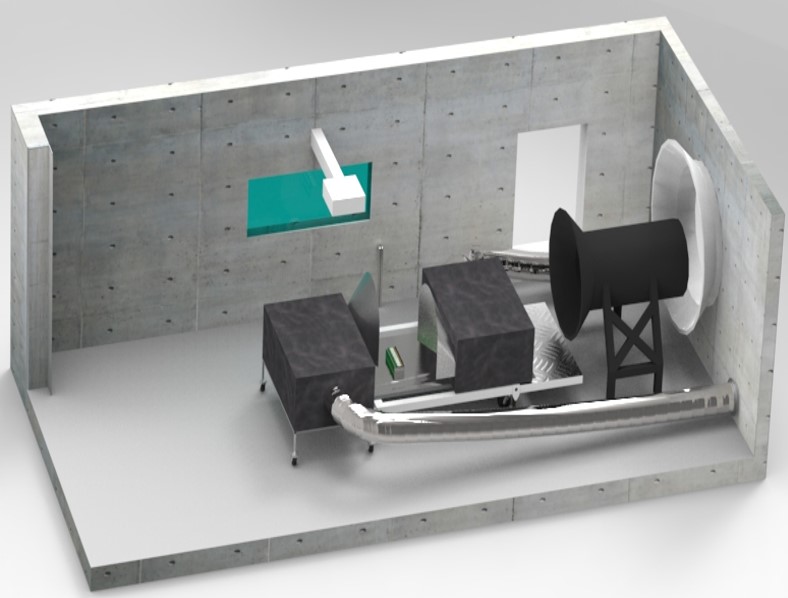
- State of the Art Test Facility, BLAST Lab
- Proximity to many aerospace companies
- Strong relationships with NASA
- Connection with UARC SDL
Stats
- 200+ conference papers
- 80+ peer-reviewed journal articles
- 30+ NASA technical papers
- 3 book chapters
- 15+ patents
- 3,300+ citations
- $5 million in award funding since 2015