
Pellet Stove Remote Controller
Team: Nathan Wiegman
Project
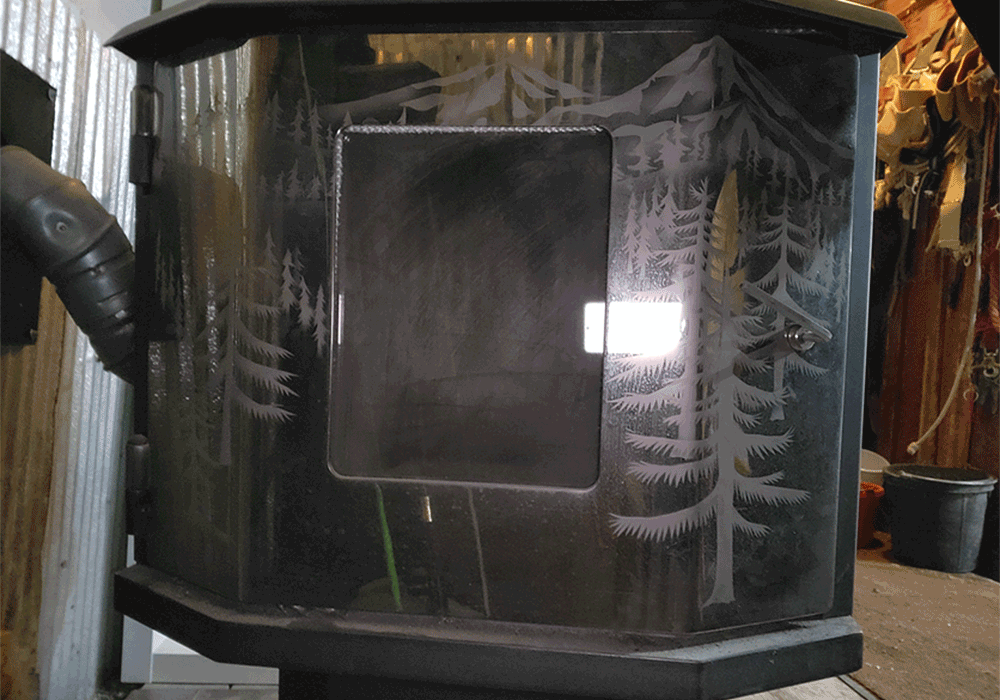
Pellet stove heaters are an older style of providing heat to an enclosed space. As such, upgraded parts or repair materials are often hard to find, expensive, and difficult to find.
The Pellet Stove Remote Controller solves this problem by providing a controller that replaces broken or antiquated hardware with an affordable and functional option.
System

Functional Block Diagram

Software Design Diagram
Methods
The Pellet Stove Remote Controller utilizes a collection of Adafruit Featherwing Solid State Relays (SSR) to control high voltage motors which provide venting and fuel for the pellet fire. These SSRs are turned ON/OFF at regular intervals to control the pellet flow, which controls the temperature. Refer to the Functional Block Diagram in the System section for a representation of this process.
The temperature is them measured using a thermistor and compared to a desired temperature set by the user. If the temperature is too low, the SSR used to feed the pellets into the fire is triggered more frequently, providing more fuel to the fire, heating up the space more. If the temperature is too high, the SSR trigger is delayed, causing the fire to cool off, reducing the external temperature.
All control for the desired temperature is indicated using the 4-button remote, with a default temperature set to 70 degrees Fahrenheit.
Conclusion
The primary goals of the Pellet Stove Remote Controller were to create an effective replacement controller for a pellet stove and to do so for an affordable cost. By using readily available controllers to program the device as well as the Adafruit Featherwing SSRs the controller was proven to not only be a functional replacement, but was built using under $80, significantly lower than other replacements, which typically cost between $500 and $2000.
Some design improvements that could be utilized in the system could include a noise response from the controller to indicate when a button is pressed. This would prevent accidental overshoot of the intended temperature. Additionally, a level indicator would be useful to indicate the current temperature setting. While not necessary for operation, these would significantly improve the overall user experience.