
Child Guard
Team: Jennifer Ravenberg and Tyler Squire
Project

The Child Guard aims to prevent tragedies of heat related injuries caused from leaving children in the car.
- The US averages 38 pediatric vehicular heatstroke deaths annually.
- 96.4% of pediatric vehicular heatstroke deaths are 5 years old and younger.
- Vehicles left in direct sunlight can expect a 40 40°F increase within an hour.
The Child Guard creates a system that alerts parents to prevent these tragedies.
System
Methods
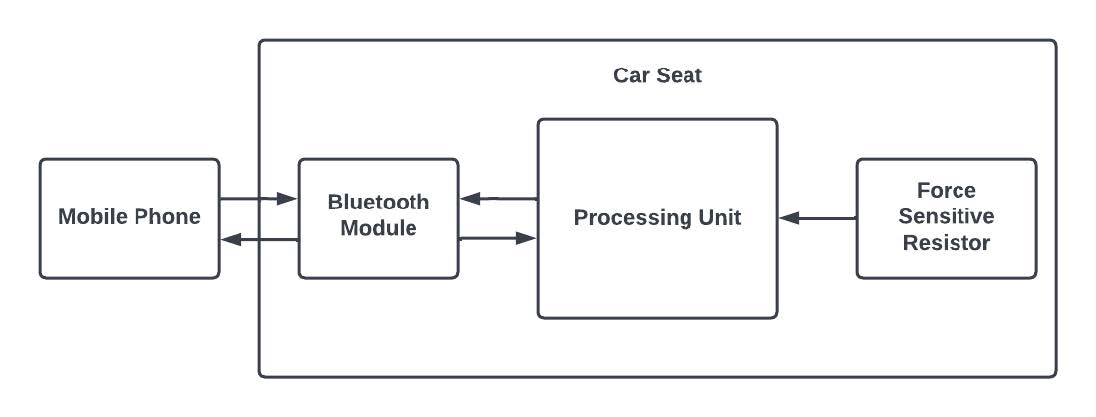
- The Child Guard detects if a child is present in the car seat by using a force sensitive resistor. The Child Guard will not detect anything less than 4 lbs.
- The Child Guard has a mobile device app to connect to the car seat.
- A Bluetooth module is connected to the CPU and communicates with the Child Guard app sending notifications to alert parents.
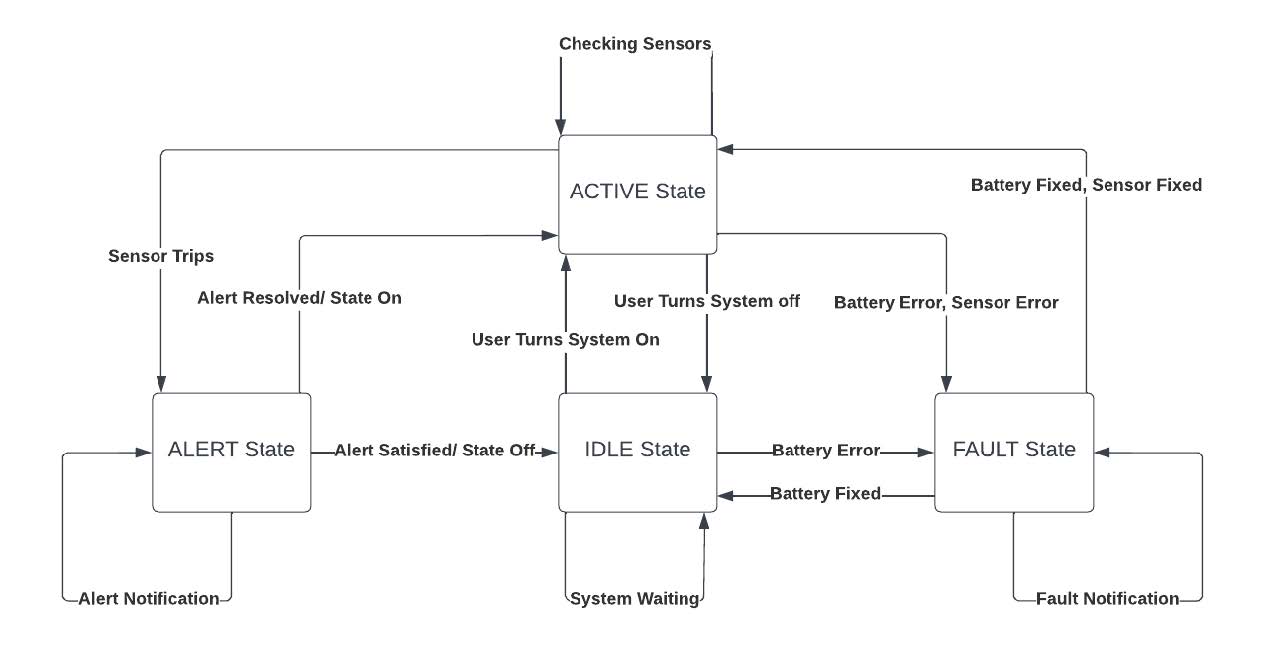
- Notifications are sent when conditions are met. The diagram below shows the state machine used to determine if conditions have been met.
Conclusion
- The Child Guard system has been tested to provide notifications to users when they are far enough away from the car seat and there is weight in the car seat.
- Further Research will show whether the system will be effective in helping parents remember their children.
- The Child Guard project is a steppingstone in helping protect the future generations from heat related injuries from being left in the car.