Regression Tree Predictive Filter
Project
Background
There are many engineering problems that are solved by using past samples of a signal to predict a future value of a signal. This is used in applications like active noise cancelation headphones or playing the stock market.
Problem
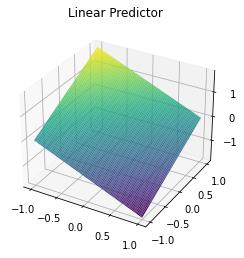
Efficient algorithms have been created for linear signals. However, not every signal is linear. Modern linear predictors perform poorly when predicting these non-linear signals.
Objective
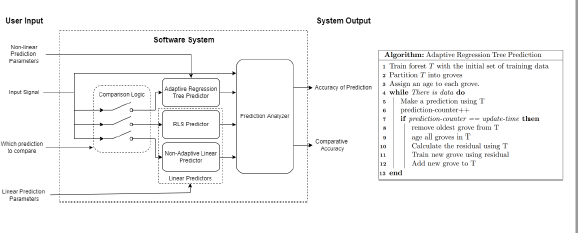
Our objective was to create a general algorithm that would be capable of predicting non-linear signals. Since non-linear systems vary, this algorithm would need to be put into a software system that allowed for different parameters to be changed so that the best parameters could be tested on different systems.
System
Methods
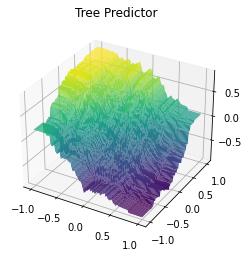
- Using a forest regression trees we were able to create a predictor by using samples of an input signal as training data.
- By scaling set of trees so that they contribute less over time and adding new trees to replace old trees we developed an adaptive algorithm.


Conclusion
Results
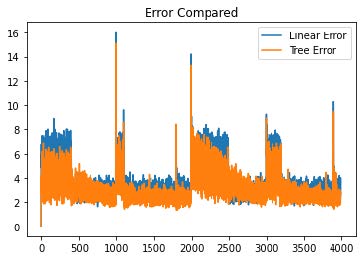
- The predictor was shown to perform better than a linear predictor on certain classes of non-linear signals.
- The algorithm was able to adapt to changing systems while retaining some information about the past system.
Future Research
- We will study what properties dictate if the regression tree filter would be a better fit than a linear filter.
- We will make the algorithm more efficient so that it might be able to run in real time.