
Project
Existing cable camera systems are limited in the number of options and the excessive costs. CableCam seeks to provide smooth linear motion control at an affordable price. Channeling inspiration from making amateur videos with a desire for improved quality, this team has created an inexpensive cable camera system with professional features such as 3-axis stabilization and automatic motion control.
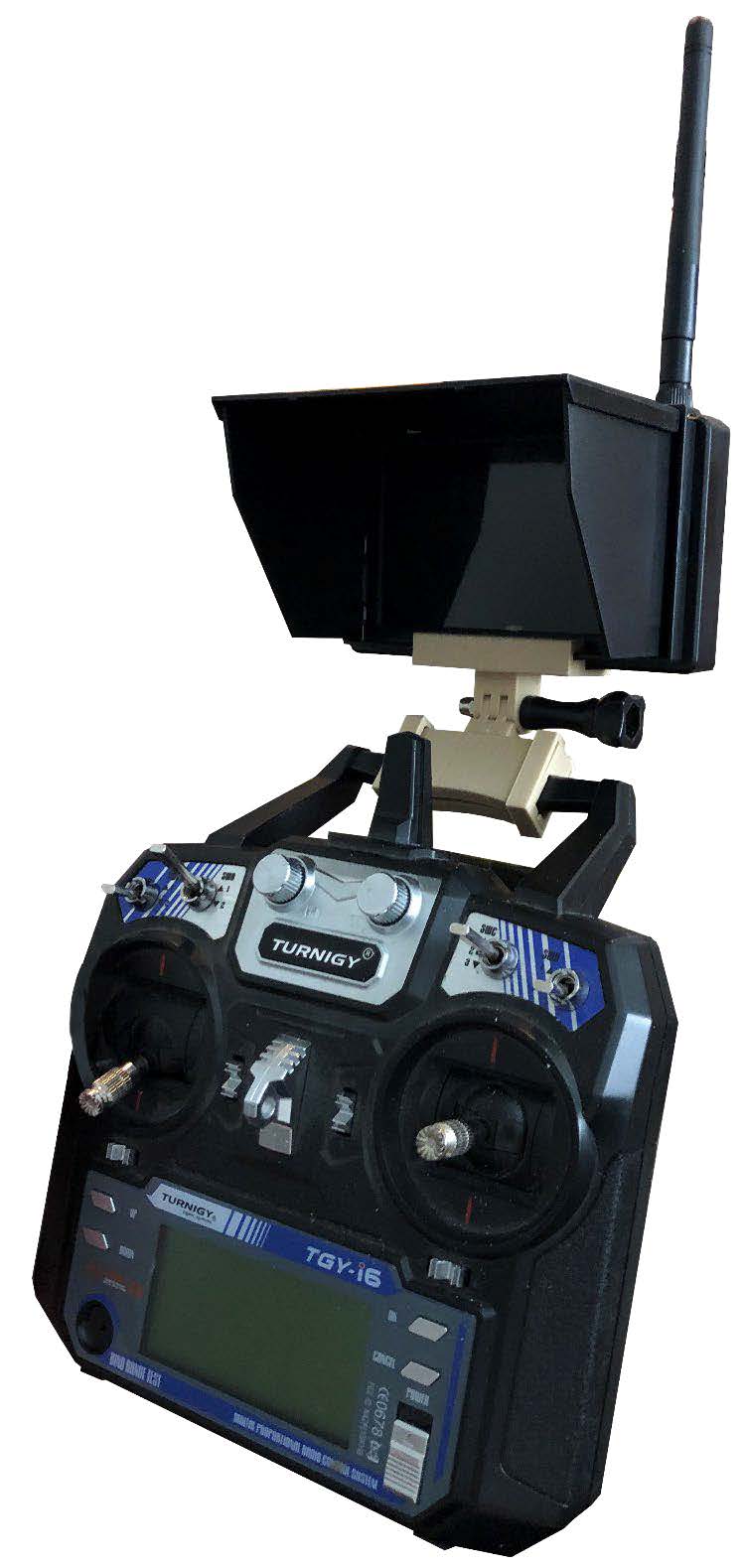
The initial prototype utilizesa3D printed structure. Rapid prototyping allows for refinement that has been crucial in ensuring the project’s goals. Attention to the user experience while operating the CableCam has been a driving force. A remote controller with live video feedback creates a simple and intuitive interface for the videographer to capture their perfect shot. CableCam offers unrivaled features that seamlessly nurture creativity.

CableCam System Diagram

CableCam structure printed with fused deposition modeling (FDM) 3D printer. ABS plastic provides strength while reducing the infill decreases the overall mass of the system. M3 bolts and hardware make assembly and maintenance a painless task.
An electronic speed controller (ESC) controls the 800 KV brushless drive motor. The motor is geared with a 3:1 ratio to increase torque while maintaining quick speeds. The system is powered by a 3S LiPo 5200mAh battery capable of a high discharge rate while powering the system for more than 30 minutes.
The small first-person-view (FPV) camera provides live feedback to the user controls via a multichannel video receiver. GoPro camera allows for 4k video recording and remote control from a smartphone app. Custom 3D printed 3-axis gimbal provides motion for each camera. A Storm32 brushless gimbal controller (BGC) utilizes a tunable PID controller to stabilize the cameras. The Storm 32 BGC also monitors a UART bus for updates to the gimbal’s orientation.
A Hall effect sensor attached to the chassis measures the relative position along the cable. Permanent magnets, placed on the drive wheel, trigger the hall effect sensor when the CableCam is in motion.
At the center of the design is an Artix7 FPGA. The FPGA contains VHDL modules and a softcore processor to interact with all electronic peripherals and allow manual or automatic control.
Conclusion
Overall, the CableCam system successfully provided linear motion control at a fraction of the cost of existing products. Video shot from the device is comparable to professional counterparts. The 3-axis gimbal allowed the camera to lock onto the horizon. Furthermore, it enabled complete control of the pitch and yaw of the camera.
Further research will explore a custom brushless gimbal controller to bring costs down further. With more time and research, there will be improvements to the structure, electronics, and functionality. Additional sensors will allow for target tracking and improved automatic drive control. Ultimately, we are proud of the prototype we have produced and look forward to refining it beyond this first iteration.
Future improvements for development include creating a universal camera mount to provide a wide array of compatible cameras. Injection-molded parts will allow for mass production and a marketable item. There are plans to create a kit for sale to allow customers to build their own DIY CableCam. The kit will include or exclude 3D printed parts depending on a purchaser’s situation. We intended to make this project as modular as possible. Consequently, we will consider making the project open source with full access to 3D models and code.
