Knowledge-aided ML for wireless communication and networking
Edge computing/caching
Resource optimization
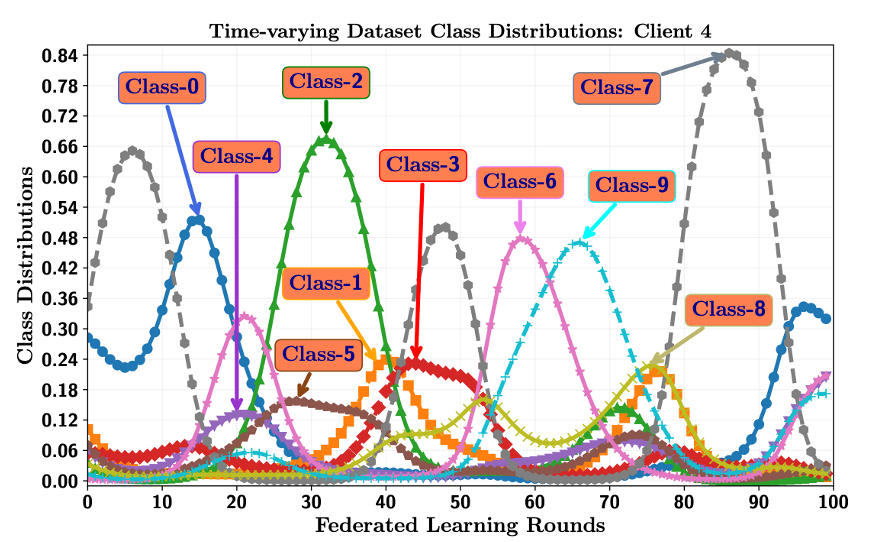
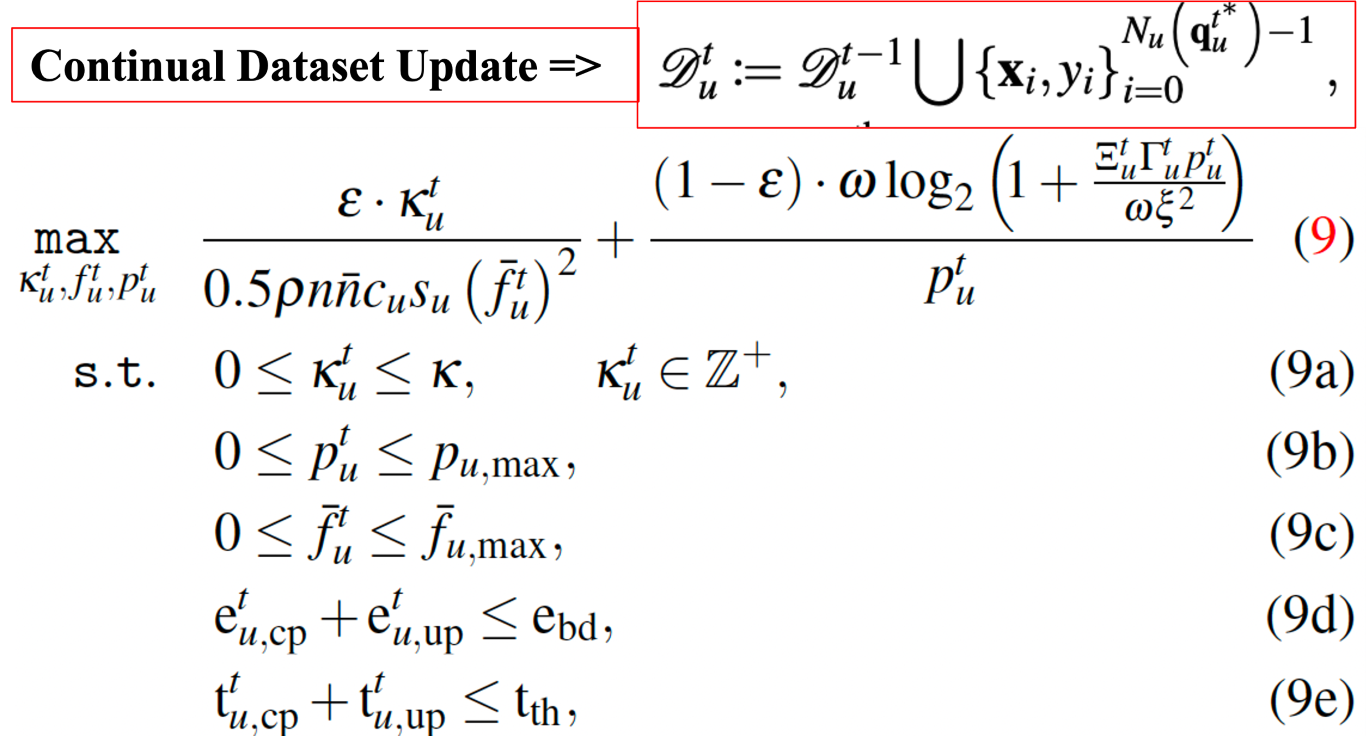
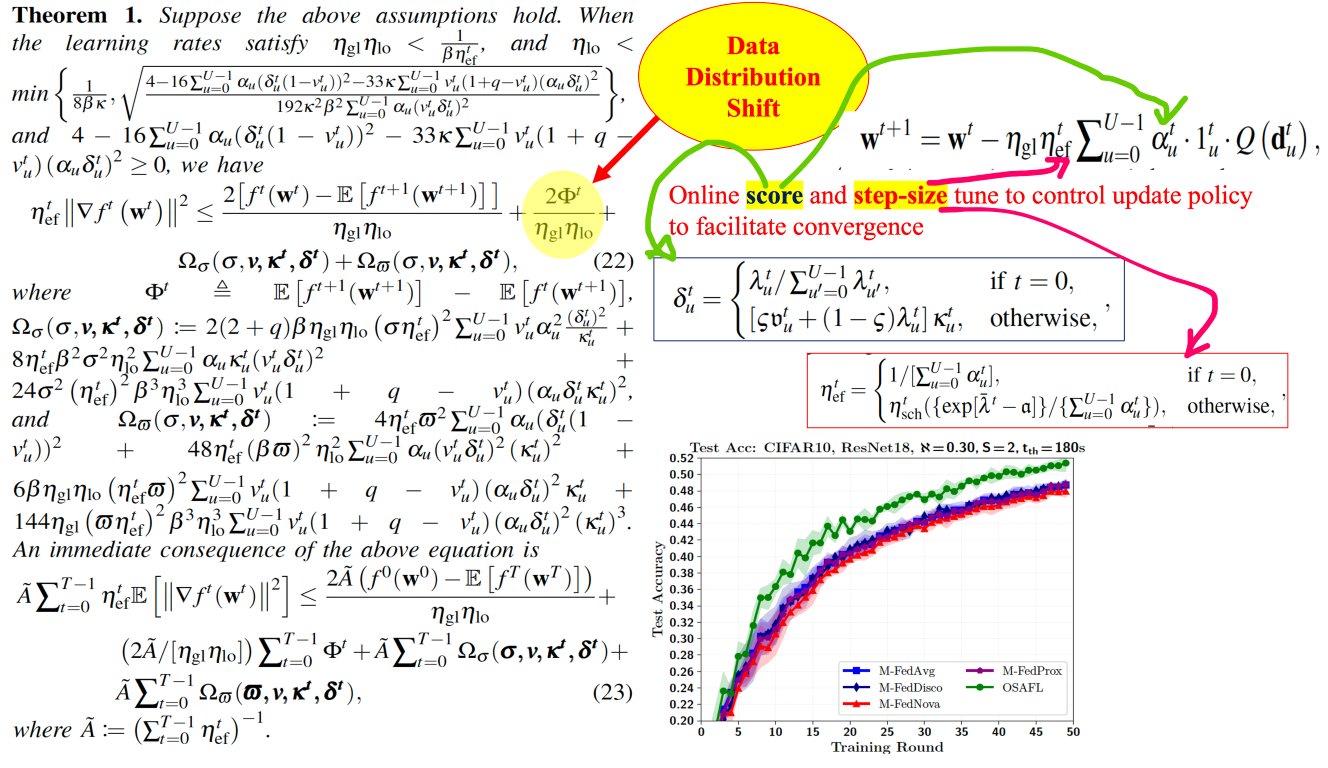
Continual Federated Learning for Resource-constrained Wireless Applications
Continual data arrival: delete old training samples to make space for new ones (fixed/limited storage)
Quantizes gradients for communication efficiency
Uses gradient-similarity and participation-based online score function and global update step size to control error due to data distribution shift
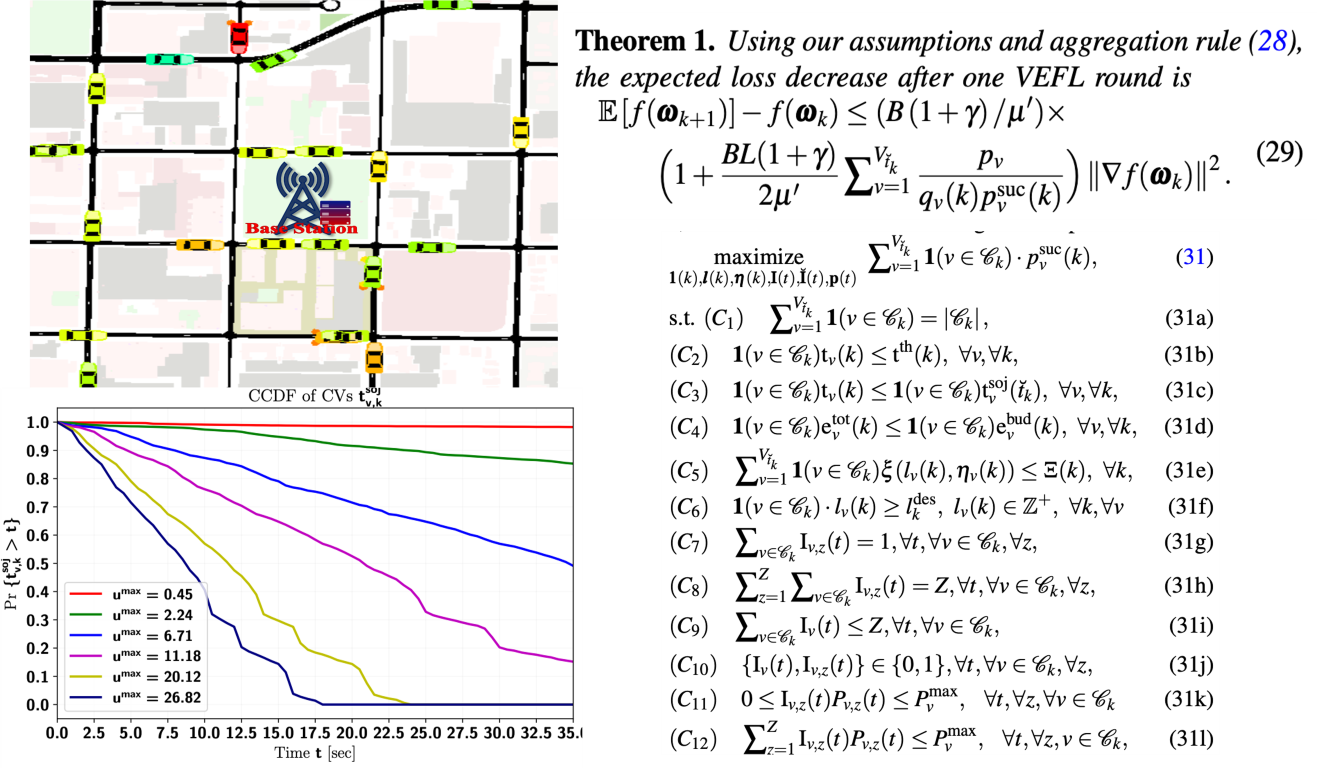
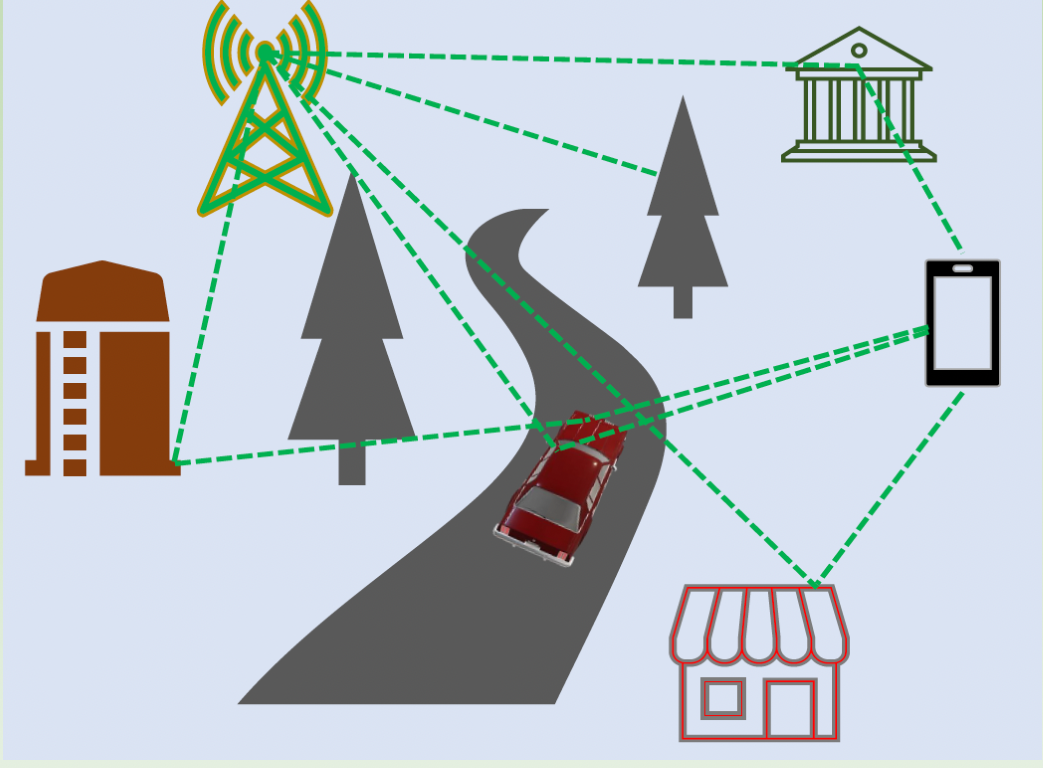
Federated Learning for Autonomous Ground Vehicles
Impact of mobility in vehicular edge federated learning: new aggregation rules - guided by mobility and sojourn time
Joint optimization of wireless (scheduling and power allocation) and learning parameters (client selection, CPU frequency, and local rounds) to facilitate the convergence
Federated Learning for Resource-constrained Edge Clients
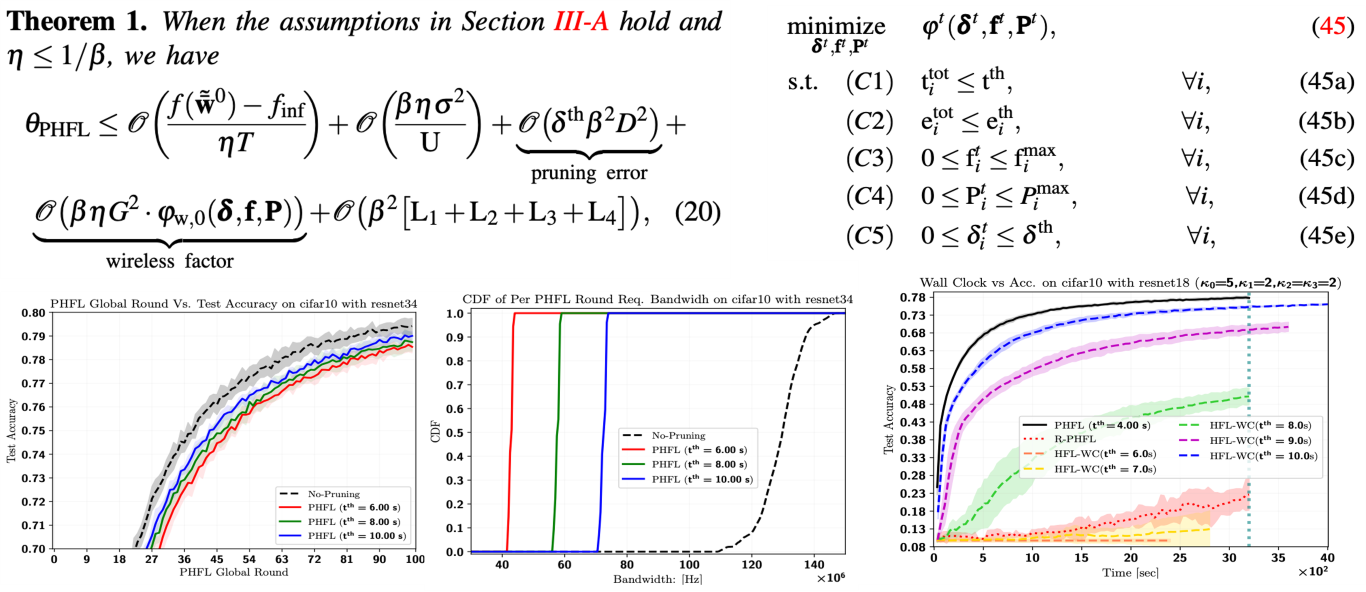
Moel pruning-aided hierarchical federated learning (PHFL) to address resource contraints
Optimize joint resources to facilitate convergence bound - optimize wireless resources to minimize pruning errrors
Comparable performance with non-pruned upper bound with significantly lower bandwidth and energy expense
Federated Learning for Resource-constrained Unmanned Aerial Vehicles (UAVs)
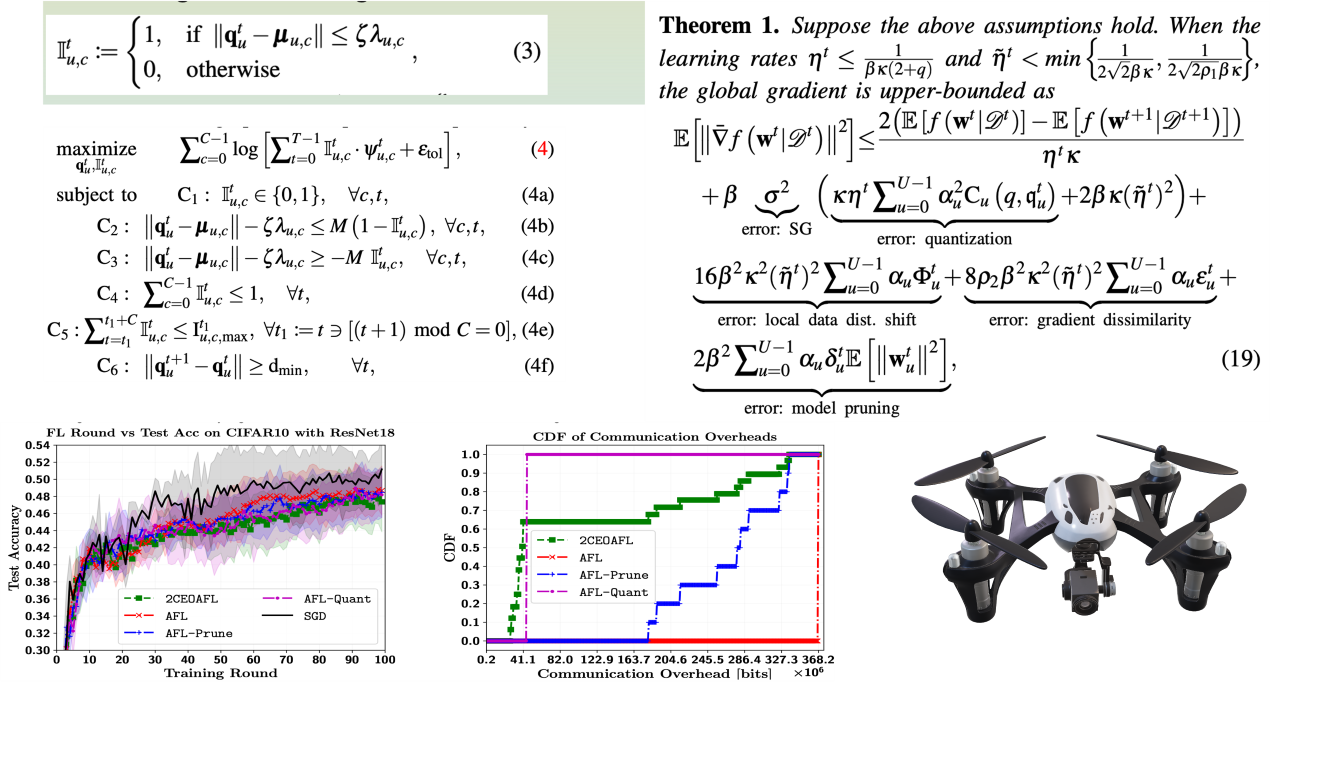
Communication- and computation-efficient online federated learning (C2EOFL) for resource-constrained UAVs
Uses model pruning and gradient quantization
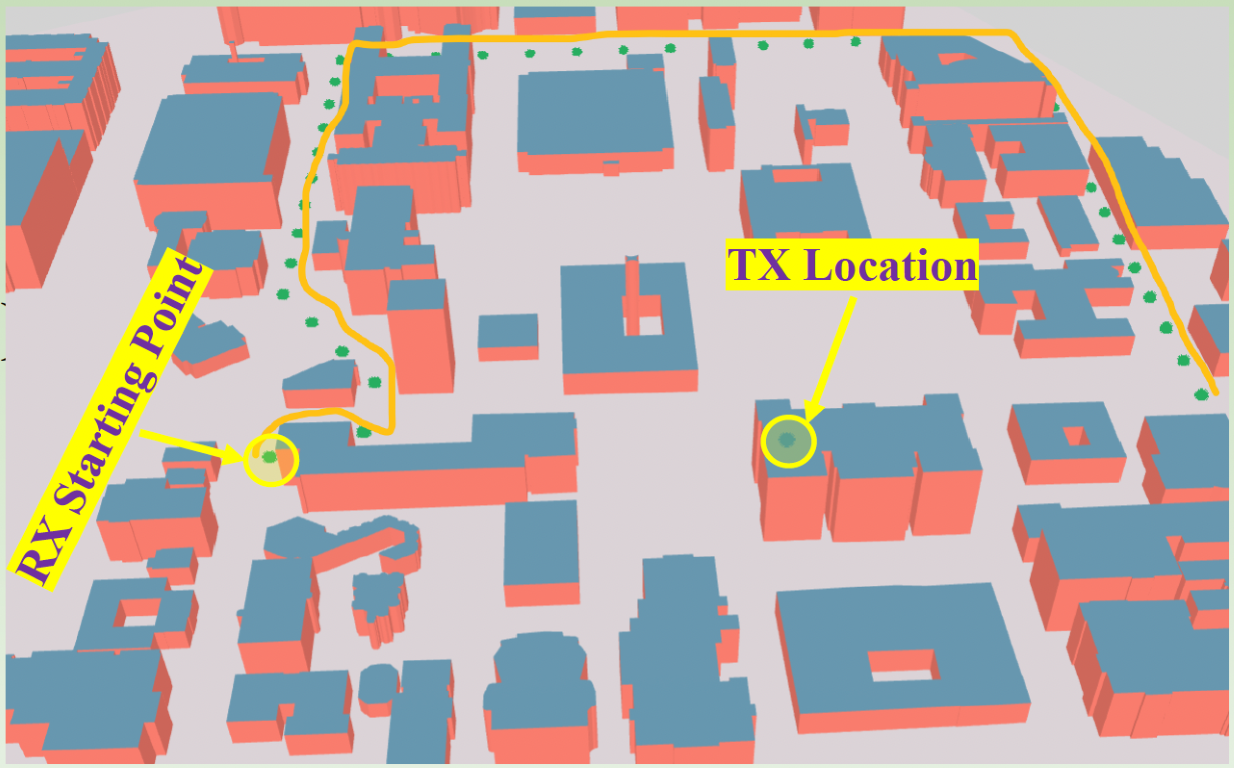
Domain-Informed Machine Learning for Wireless Channel Modeling
Uses small language models (built on Transformer) and learnable graphs (graph neural networks)
Injects propagation knowledge to update the optimizer
Distributed Machine Learning for Beam Management / CSI Compression
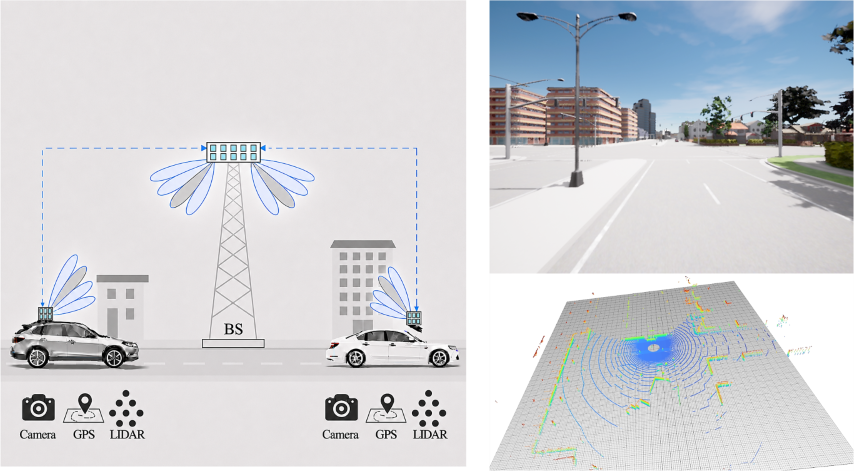
FL for Beam Management
Continual multimodal sensing with onboard sensors
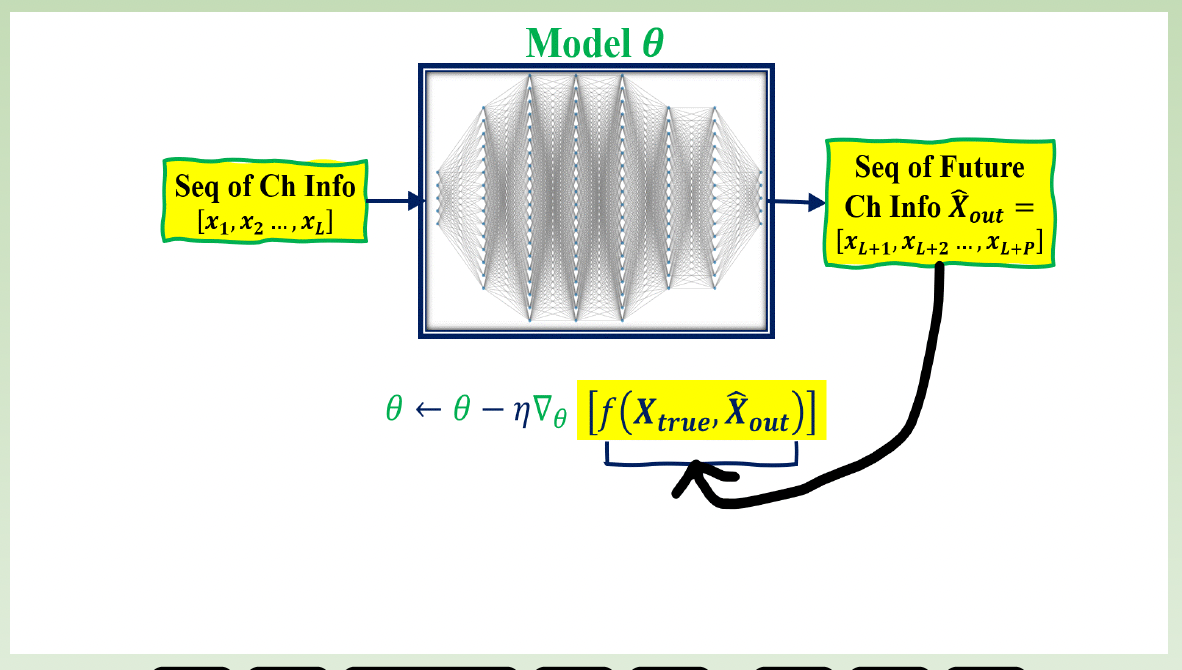
Continual federated learning for multi-step beam prediction
FL for CSI Compression
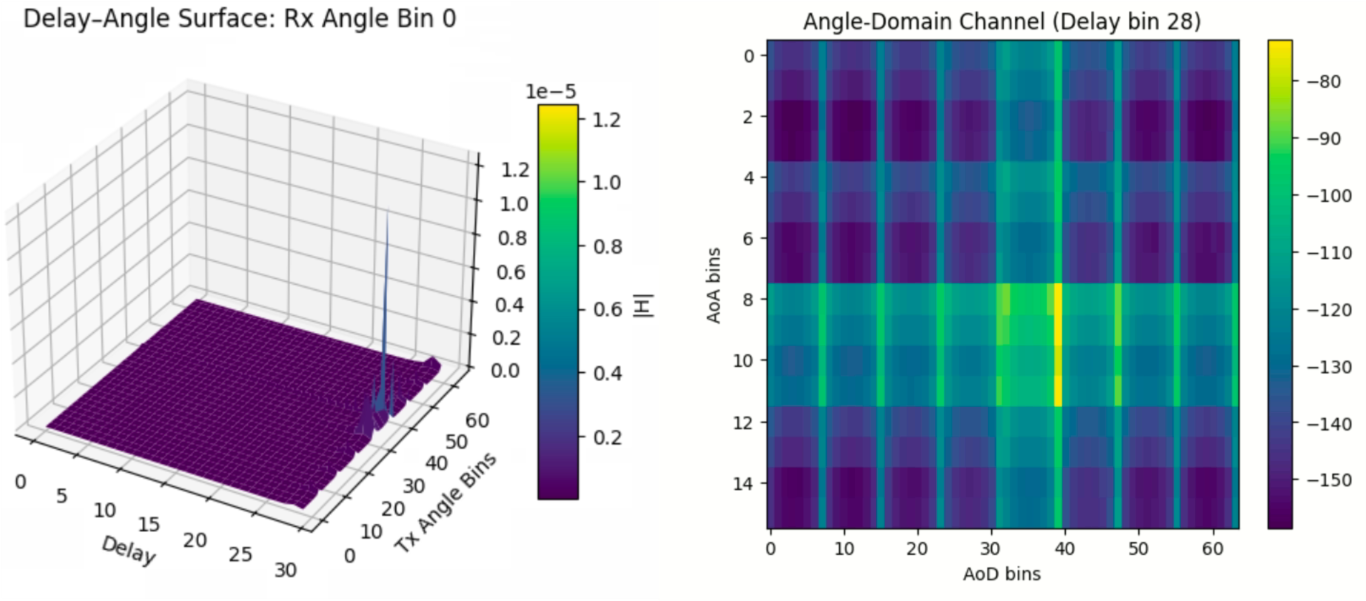
CSI compression from continual (multimodal) sensing data
Continual distributed learning for CSI compression
Domain-knowledge injection
Machine Learning for Content Caching
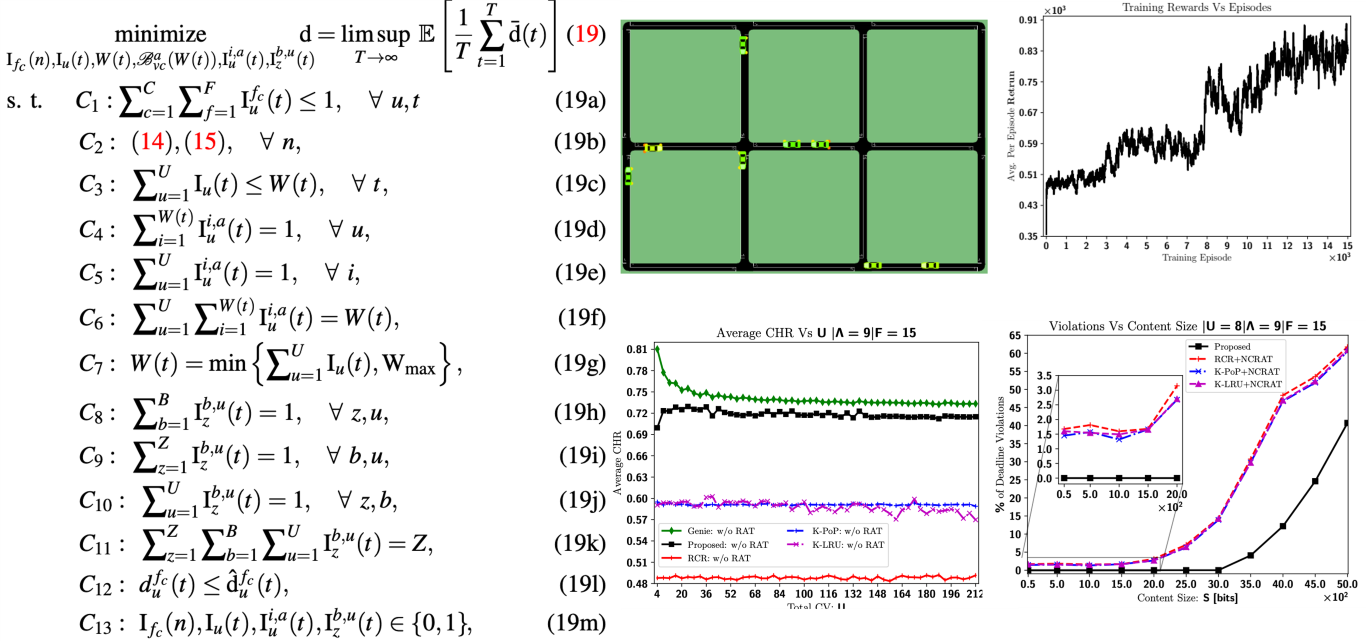
User-centric radio access technology (RAT) for delay-sensitive applications
Reinforcement learning (RL) for cache placement policy
Integrated solution for cache placement and content delivery to minimize long-term service delay
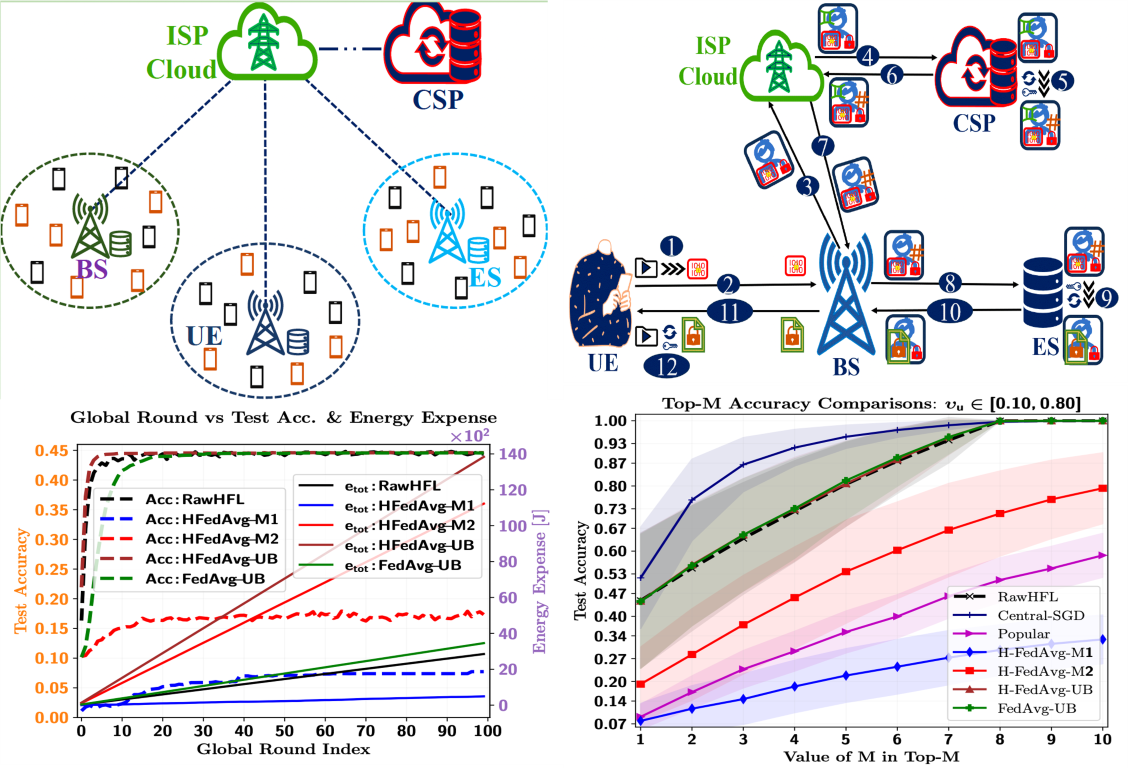
Hierarchical FL for Video Caching
Privacy-preserving 3-party (UE-ISP-CSP) collaborative solution for wireless video caching
Resource-aware hiearcharical federated learning (RawHFL) for content demand prediction