
Optimization of Endoscope Bending Section: Compressive Resistance and Articulation Ability
- Tyson Barnes |
- Emily Brothersen |
- Ellie Siddoway |
- Jessica Papenfuss |
- Dillon Weatherston
Introduction
Current endoscope bending sections are unable to resist strong compressive forces. The purpose of this design is to optimize an endoscope backbone to meet the following requirements:
- Bending requirement of 60° articulation
- Size requirements of 35 mm in length and an outer diameter of 19.5 French (~6.5 mm).
Design and Prototyping
- Prototypes were first designed in SolidWorks then scaled-up to be 3D printed.
- The final design consists of a series of joints held together by pins that allows for strength and articulation and was submitted to Biomerics, LLC and laser cut at their facility in Minnesota.
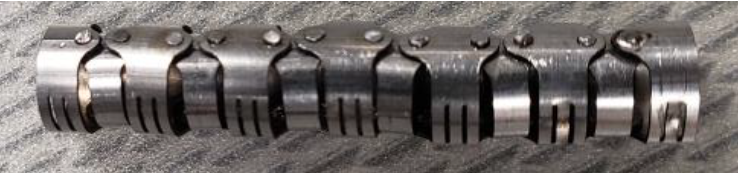
Figure 1: Final backbone laser cut from stainless-steel tubing
Articulation Testing
A series of articulation tests were performed to determine the force necessary to bend the backbone at the maximum angle. Complications arose from threading the angulation cable through eyelets in the backbone.
Figure 2: Out of plane observation of 7.92°


Figure 3: Without resistance, backbone reaches 113°. Snaking of proximal backbone occurs due to minimal eyelet use.
Compressive Testing
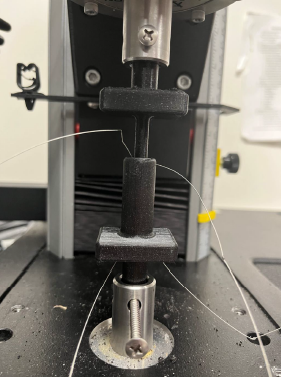
Figure 4: Direct compression test using Instron and 3D printed fixture.
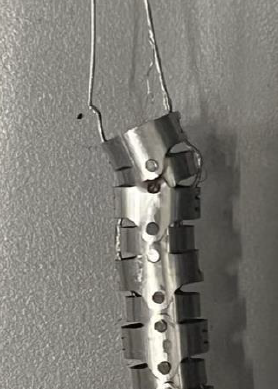 Figure 5: Damage incurred by backbone from compression testing
Using an Instron, the compressive force capacity of the backbone was tested to be 380 N before damage occurred to both the backbone and fixture.
Impact and Conclusions
An articulating endoscope that can withstand significant compressive forces will improve accessibility for the surgeon and minimize the number of incisions needed during surgery.*
This design and the test data collected will be useful to Biomerics, LLC as they continue the development of this endoscope.
In future iterations, longer eyelets for the angulation cable will help reduce friction from the system itself. This will allow for threading through all eyelets, which will reduce “snaking” behavior.
*Details of the backbone purpose cannot be disclosed due to intellectual property restrictions.
Acknowledgements/Contact
Biomerics, LLC
- Industry Advisor - David Van Ness
USU Biological Engineering
- Faculty Advisor - Dr. Anhong Zhou