
Bioremediation of Polluted Water via Algal Biofilm Systems
Team: Darren Fillmore, Tyanna Doran, Isaac Trejo, and Aaron Burt
Sponsor: WesTech
Background
Rotary Algae Biofilm Reactors (RABRs):
- Emerging technology in wastewater treatment.
- Rotating cylinder in wastewater enables algae to form a biofilm
- Yields more biomass than traditional planktonic algal growth
HTL Aqueous Phase (HTL-AQ) Challenges:
- Toxicity, typically from hydrocarbons, requires additional processing to neutralize.
- Contains valuable nutrients, notably nitrogen and phosphorus.
Methods
- Grow algae in four sets of three RABRs & Planktonic Ponds at concentrations 0%, 20%, 30%, and 40% of HTL-AQ.
- Water samples were taken at the beginning and end.
- At the end of the week 7, algae was collected to obtain the dry weight of the biomass.
- Quantified total nitrogen and phosphorus data using Hach Kits.
Results
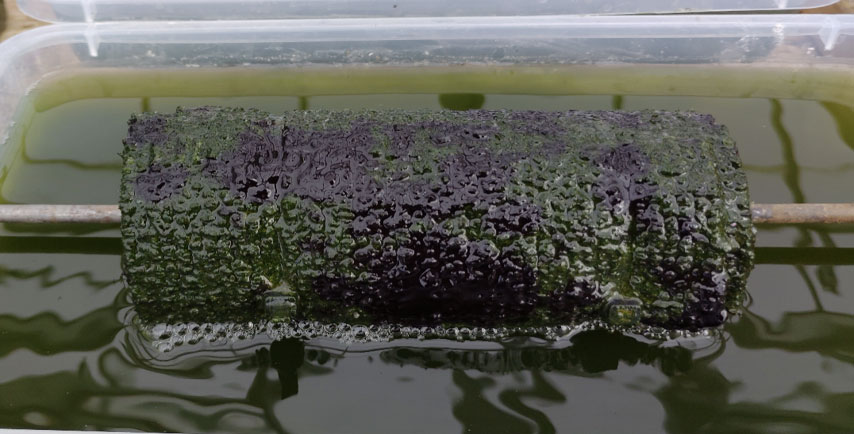
Control RABR – Initial Conditions
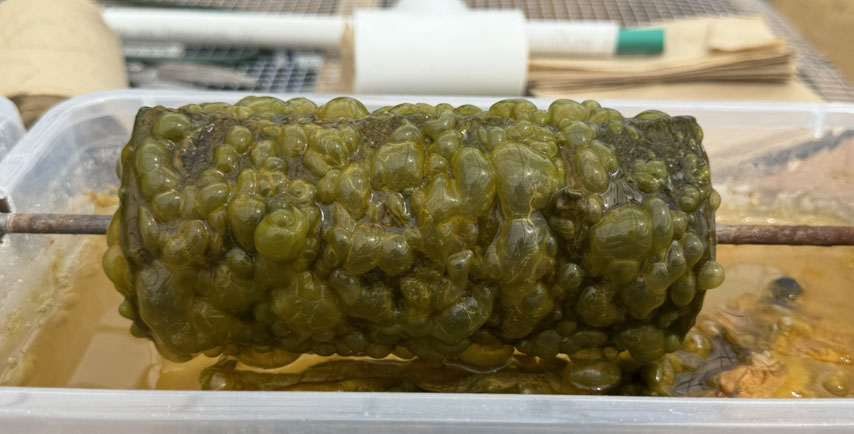
Control RABR – Week 9 Conditions
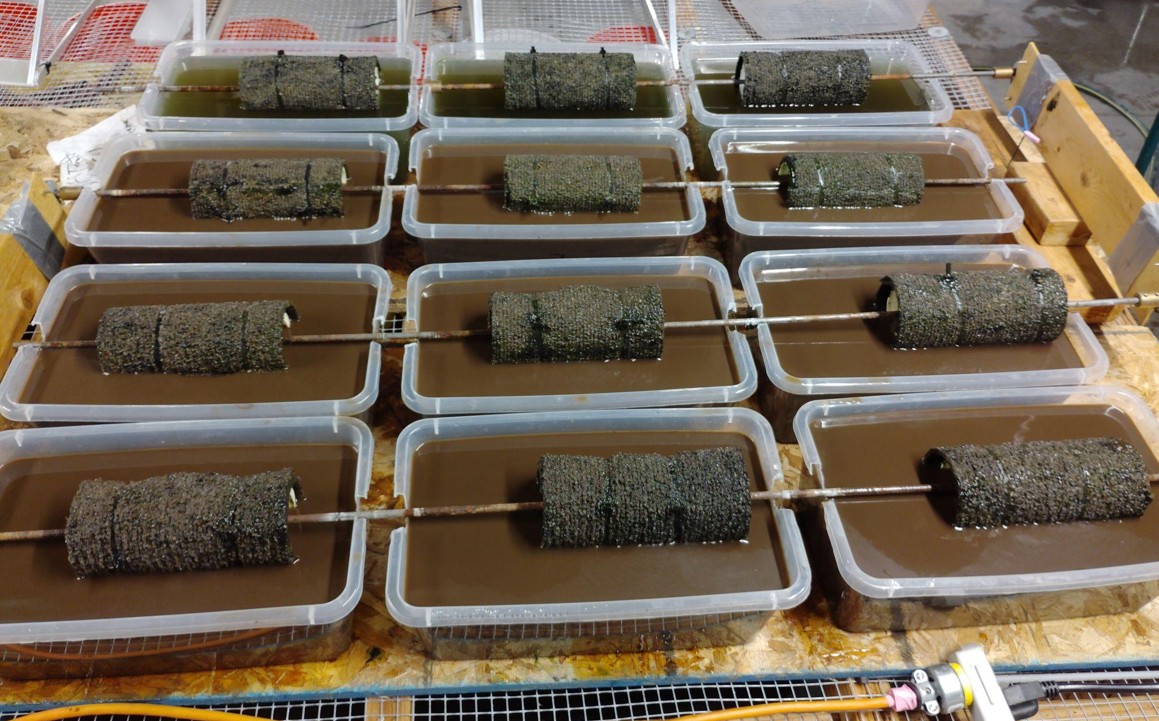
Initial Conditions
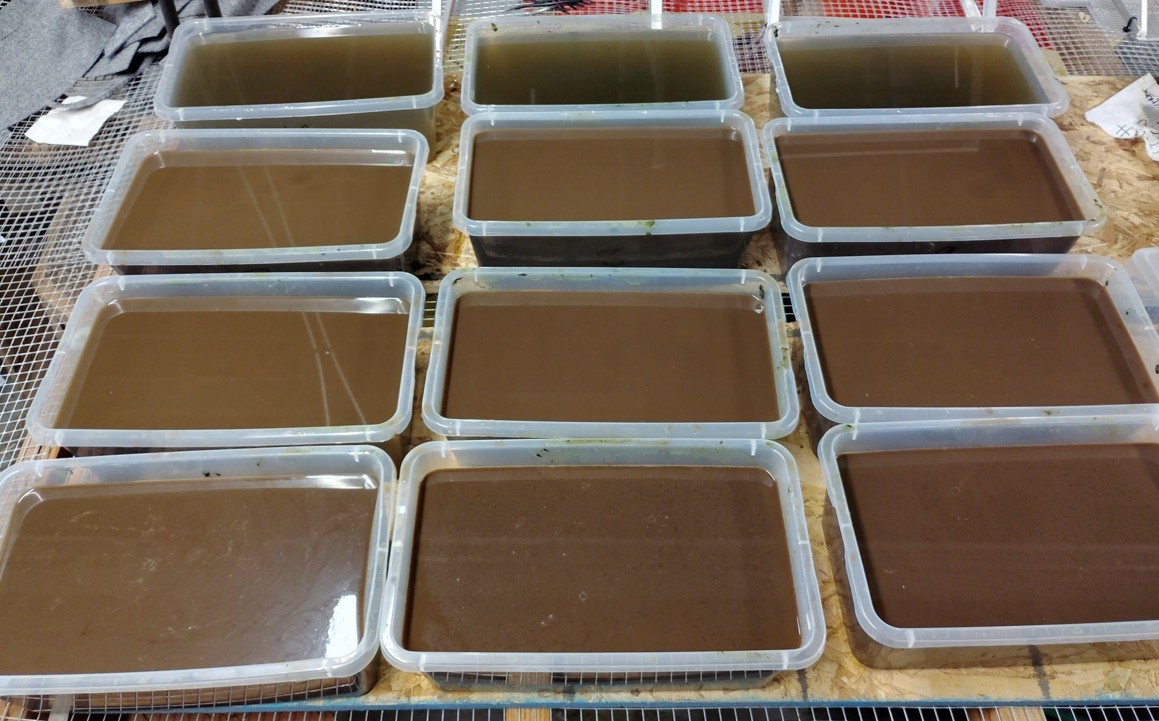
Week 9 Conditions
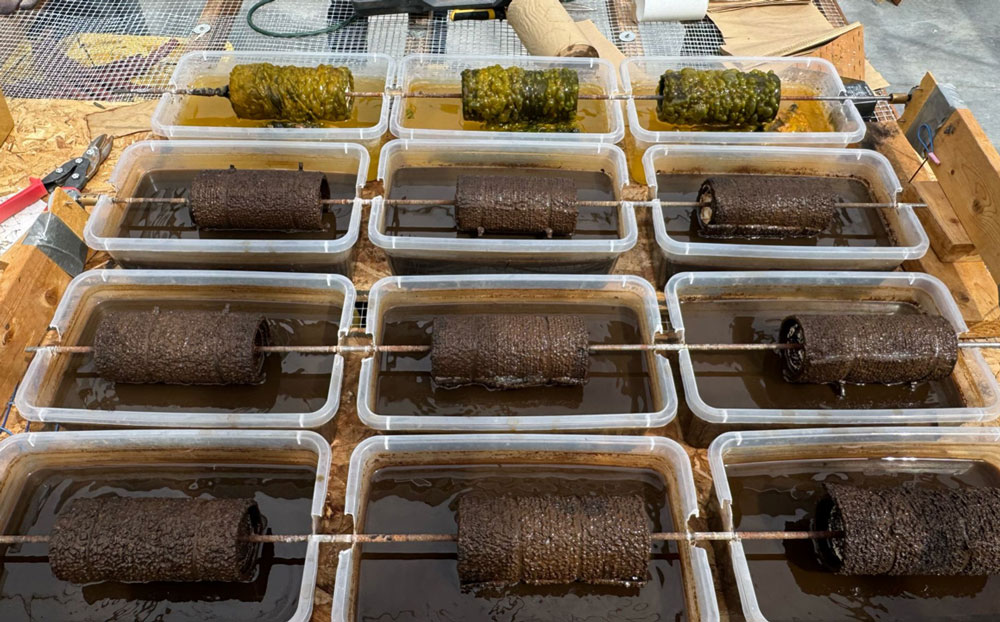
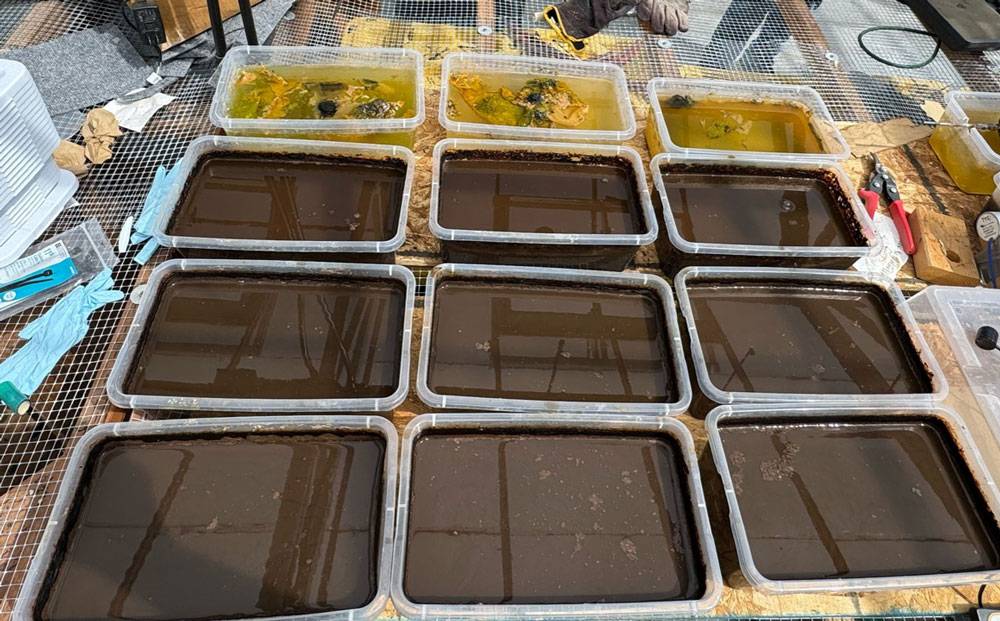
Figure 1. Algal growth in planktonic state and RABRs. Each row has the following concentration percent values of HTL-AP from top to bottom: 0%, 20%, 30%, 40%.

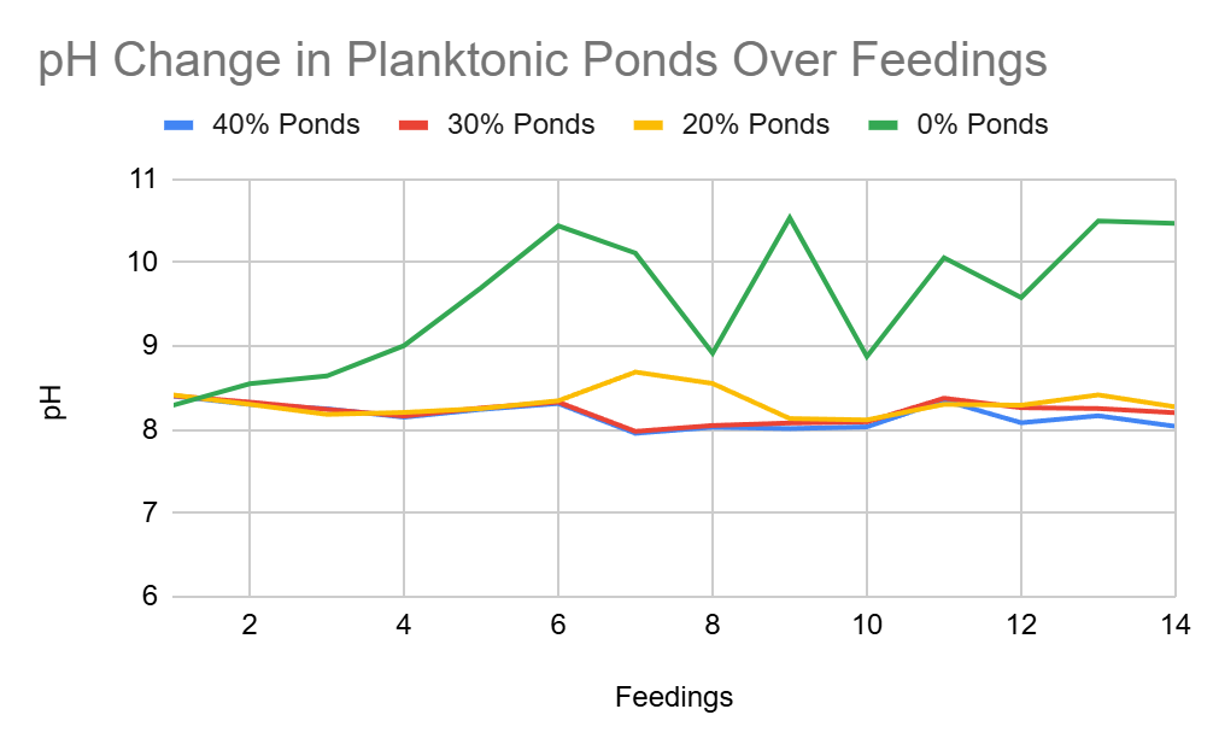
Figure 2. Average pH of water in RABRs and planktonic algae growth ponds over feedings.
Statistical Analysis

Figure 3. The Average Biomass Mass (g) – x̄, and Standard Deviation (g) – σ, for each trial. Only one data point in the 20% HTL-AP RABRs was found to be an outlier.
Equations
Equation 1:
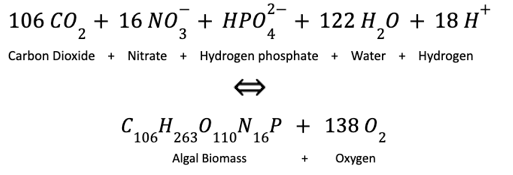
Equation 2:

Equation 3:

Equation 4:


Figure 4. Expected biofilm assimilation capacity at a given toxin concentration. The control RABR represents an HTL-AP stream treated with DOWEX ion exchange resin.

The use of DOWEX to remove all toxic phenol and heterocyclic nitrogen compounds reduces design size by a factor of 6.3.
Sources
[1] Algae Biofilm Reactors. Chapter 6, in: Biofilm Reactors Manual of Practice (MOP 35), 2nd ed., 2025. Water Environment Federation. J. Boltz, R. C. Sims, B. Hill [Eds).
[2] Chen, P. H.; Venegas Jimenez, J. L.; Rowland, S. M.; Quinn, J. C.; Laurens, L. M. L. Nutrient Recycle from Algae Hydrothermal Liquefaction Aqueous Phase through a Novel Selective Remediation Approach. Algal Research 2020, 46, 101776. https://doi.org/10.1016/j.algal.2019.101776.