
Impact of Angled Screw Insertion on the Strength of Humerus Fracture Repairs
Team: Michael Broderick, Ethan Edwards, Chanse Paskins, and Kathryn Sorensen
Sponsor: Wellstar
Introduction
In orthopedic surgery, humeral fractures require surgical intervention that usebone plates and bone screws for stabilization (see Figure 1). Standard humeralrepairprocedure includes normal screw placement relative to the bone.
Individualized humeral repairs may incite screw angle placement that deviatefrom the standard. The of angled screwsareskivedscrews (see Figure 2). Our team hypothesizes skived screws cause greater humeral fracture damage.
Bone screw insertion and removal torque and plate deformation areindicative of damage. Lower removal torque values and higherdisplacement values are proportional to damage from loading.
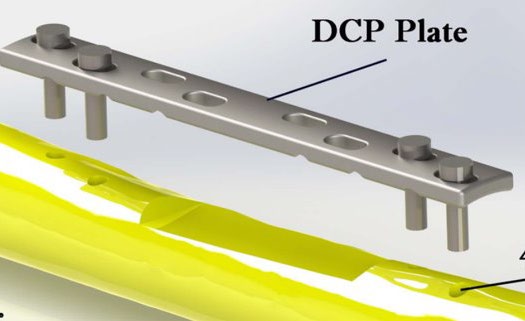
Figure 1: Bone plate and screws used in humoral fracture repair
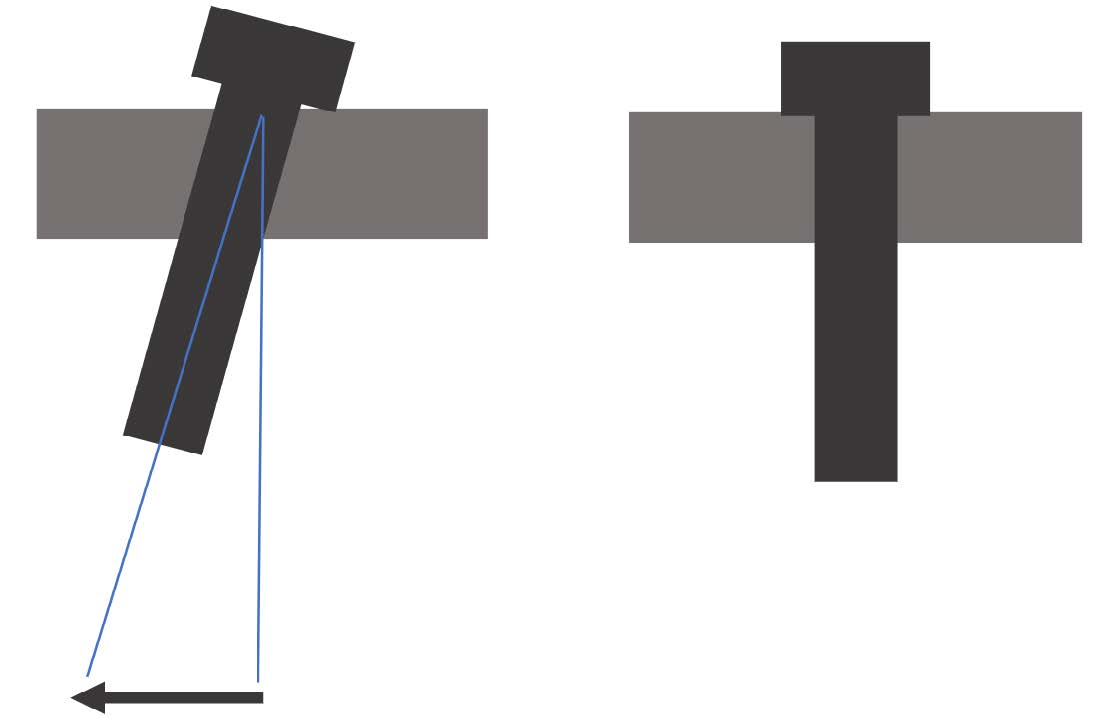
Figure 2: Bone fixation method with ‘skived’ orientation (A) compared to standard orientation (B)
Methodology
Using a fabricated stainless steel bone plate and steel screws, the bone mimic is screwed into the testing mechanism shown in Figure 5. To mimic Extension-Flexion and Adduction-Abduction on a humerus fracture repair, an Instron machine is set at 500N for 300 cycles. Trials are run with 1 out of 3 of the screws skived 30°. A control is run with no screws skived.

Figure 3: Humeral flexion and extension

Figure 4: Humeral adduction and abduction

Figure 5: The aluminum mount attaches directly to the tensile tester. Two aluminum blocks sit on top of the mount.The first block raises the sample up to allow displacement/bending during the test. The second block attaches to the mount with two bolts and is torqued down to keep the sample in place.
For each trial the torque of screw insertion and removal isrecordedusing a base of reported optimal torque of 4 Nm.A Torquescrewdriver was used for data collection.Resultsare discussed in the following section.
Results

Figure 6: The left two photos show the normal screw hole.The rightphotos show the skived screw hole, here the threads are highly damaged in the threaded portion.
Tensile testing: Analyzing samplesafter testing showed that there was minimal damage present on thescrews. Damage on thethreads in the bone mimic is seen in Figure 3.
There was a significant difference between flexion andabductionperformance in the tests, as seen in Figure 4. Abductionled to alarger deformation of the bone plate under load. Followingthe test,the plate retained some deformation permanently. Therewas nostatistical difference between skived orientations andcontrols.

Figure 7: Deformation from cyclic loading
Torque Data: Figure 8 shows that untested controls had the highest removal torque. There were no significant differences in removal torque across all tested samples. Skived screws did not appear to change the removal torque.

Figure 8: Torque removal data
Conclusions
Skived bone screws result in increased damage to the threads of bone mimic. This increased damage is hypothesized to reduce the strength of the repair resulting in increased displacement and reduced removal torque. Our hypothesis was correct for the portion of increased displacement, but there was no significant difference in removal torque. Further testing is needed to solidify and clarify these results.