
Effects of Process Design and Light Quality on Biomass Growth and Nutrient Uptake in Rotating Algal Biofilm Reactors
Team: Davis Haag, Emily Hanson, Colby Hamson, Hayden Harrison, and Shanelle Sorensen
Sponsor: WesTech
Abstract
Goal: Produce algae, to be used as bioproducts, from wastewater containing high concentrations of nitrogen and phosphorous. Determine if a single-stage or a two-stage reactor has a higher algae biomass yield.
Approach: Use single-stage and two-stage reactors to conduct experiments in triplicate to determine the reactor design that leads to the highest biomass yield and nutrient uptake.
Introduction
Rotating Algae Biofilm Reactors (RABRs) show potential for wastewater nutrient uptake.
Algae is especially proficient at removing nitrogen and phosphorus from wastewater. Additionally, the algae produced can be processed into high value products such as bioplastics and biofuels.
The fed-batch reactor is a single large stage that could approximate a continuous flow stirred tank reactor design. The two-stage reactor could approximate a plug flow reactor design. The batch designs were used instead of true continuous and plug flow designs due to expense, ease of setup, and ease of maintenance.
Hypothesis: Our team hypothesized that the two-stage reactor design would have a higher biomass yield.
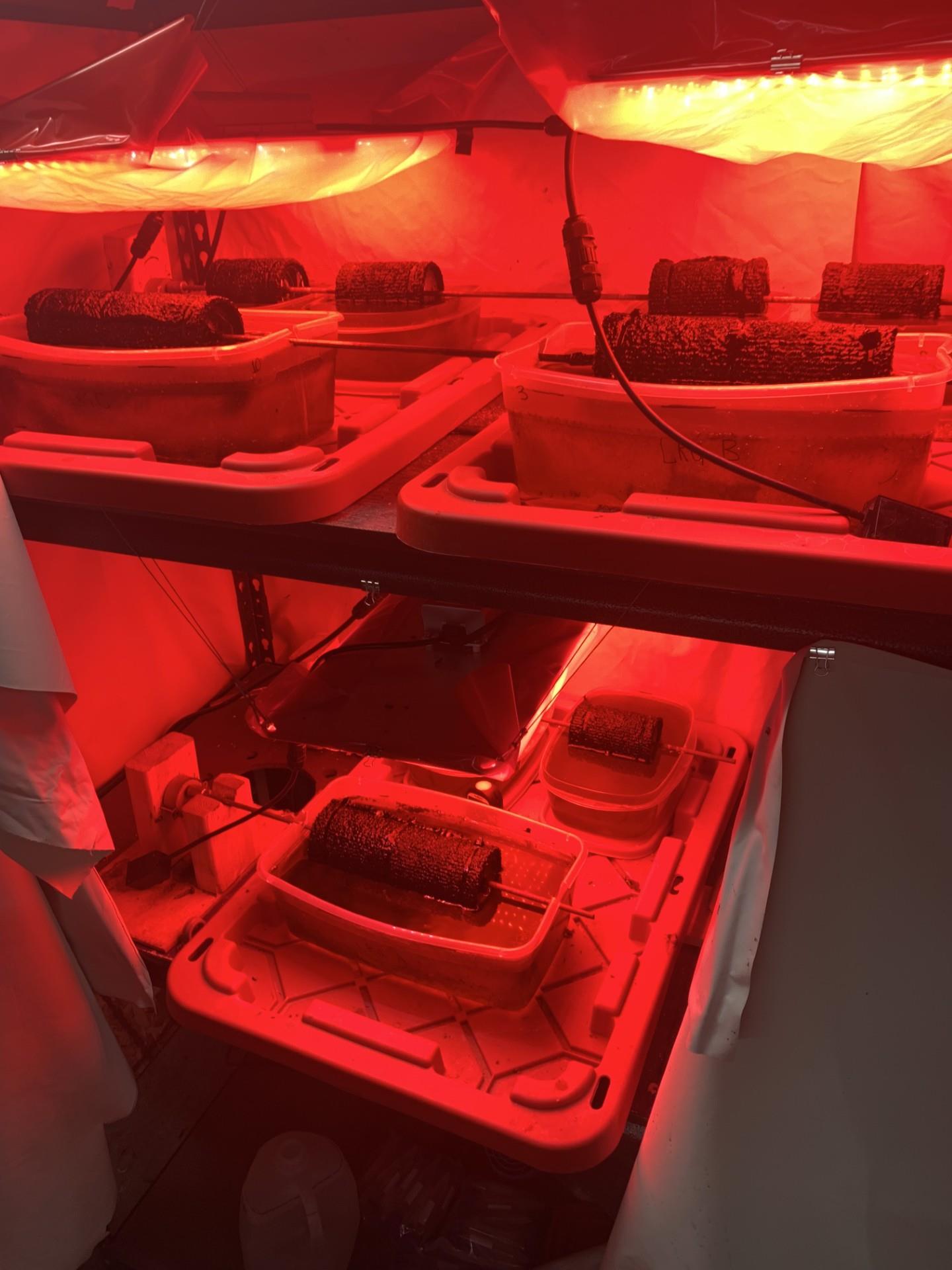
Figure 1. Triplicate RABR setup.

Figure 2. Shoes made from algae

Figure 3. Algae present in RABRs..
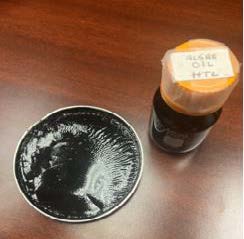
Figure 4. Bio-oil from algae.
Methods
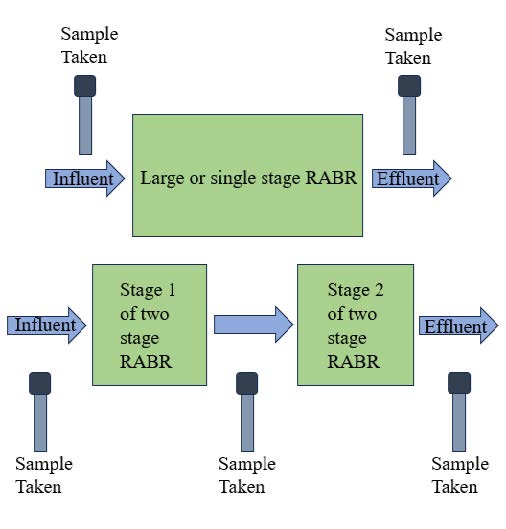
Figure 5.Methods used in RABR experimentation.
Results
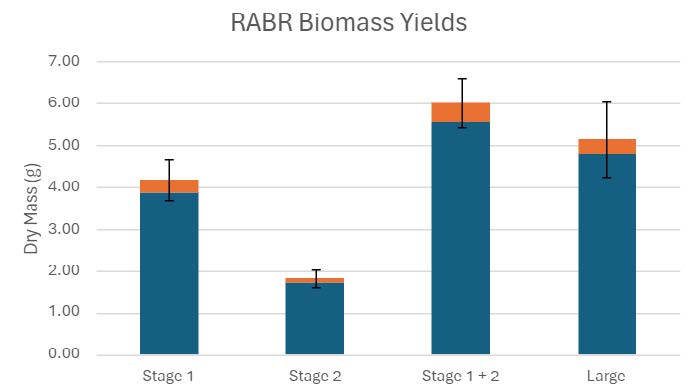
Figure 6. Details the total biomass by breaking it up into two sections: organic (blue), and inorganic (orange).
Results Continued
Results in Figure 6 show that stage 1 and 2 produce more organic content; however, there is overlap in the standard deviations, meaning the difference is not statistically significant between the two-stage and single-stage reactors.
Nutrient testing is actively being conducted. Initial results indicate single-stage method may be more effective at nutrient uptake.
Overall, it has been observed that the two-stage and single-stage reactor produce similar amounts of organic content.
Conclusion
This project is aimed towards providing the most effective design process for algae growth to remove targeted nutrients from wastewater to produce concentrations that are within EPA regulation standards.
After running triplicate testing using single and two-stage reactors with a red light source, we concluded that the mass content is not statistically significant between the two process designs.
Nitrogen tests are still being conducted and will be completed shortly.
Acknowledgements
We'd like to acknowledge Bethany Burton as industry mentor as well as WesTech Engineering LLC. for sponsoring this project. Dr. Sims provided us access to his lab for experiments.