
Verifying the Integrity of the Coating of Intravenous Catheters Using Fluorescent Particles
Team: Alison Fox, Robert Ruben, Sariah jardine
Sponsor: Merit Medical
I. Abstract
The hydrophilic coating of Merit Medical’s Prelude IDeal™ transradial catheter is necessary for its biocompatibility; as such, assessing the integrity of this coating is an integral part of its production.
II. Introduction
Merit Medical currently uses the Congo Red Dye test to verify the coverage of the hydrophilic coating of their intravenous catheters. This dye, however, is toxic, and each tested catheter is discarded, regardless of the result [1]. If enough from the same batch fail, the entire batch is discarded, resulting in significant financial losses. To address these concerns, we propose adding a fluorescent particle [2] to the coating which can be analyzed using a specialized camera under UV conditions. Tests will be conducted to ensure the design comparable or better results to the Red Congo Dye test while maintaining biocompatibility.
III. Methods
Biocompatibility test
- Goniometer. The catheter coated with solution undergoes hydrophilicity testing
- Dynamic light scattering. DLS was employed to check if the particle in the coating solution was small enough to stay suspended without additional stirring
- Lubricity. Lubrication reduces resistive forces between surfaces and friction. A force is applied to the catheter's sides, and the force needed to pull it through the grips is measured [3]
Design
- The use of Line Scan Camera will be used to replace the Congo Red Dye test.
- Imaging software will be used to analyze the image of the catheter's surface taken by the camera.
- The analysis will indicate if there are gaps in the coating. Catheters that pass the analysis can bet returned to the line, unlike the catheters tested using Congo Red.
IV. Results
Particle Size:
The average fluorescent particle size at a 1:10 v/v is between 179 - 718 nm (Figure 1). Its colloidal nature was confirmed by the mixture's ability to scatter light when light is shown through it (Tyndall Effect [4]).
Percent Solids:
The percent solids of a 1:10 v/v solution was 3.36%.
Contact Angle:
The average contact angle of a coated catheter without the particle was 37.6 degrees. For the coating with the particle, it was 34.4 degrees.
Line Scan Camera:
Under UV light, the Line Scan Camera was able to detect the difference between the coated and uncoated portion of the catheter based on brightness (Figure 2).
Fluorescence:
Under UV light and with a standard phone camera, the distinction between the coated and uncoated portion of the catheter can easily be seen (Figure 3).
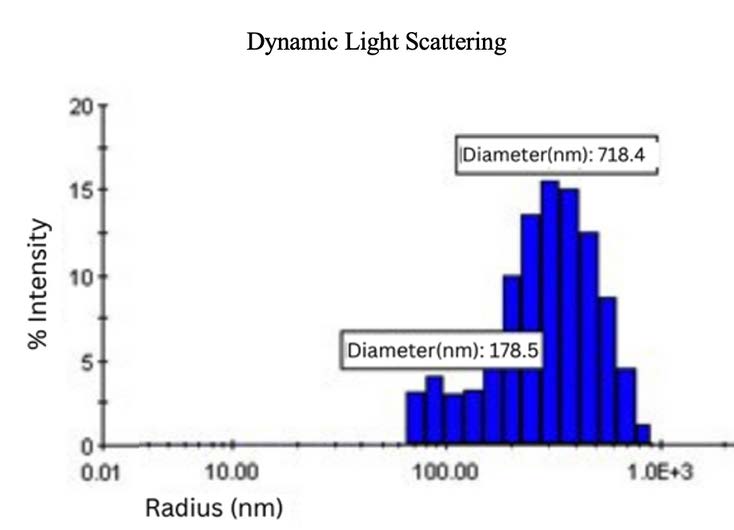
Figure 1. Dynamic Light Scatter Testing Results
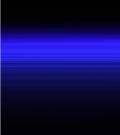
Figure 2. Line Scan Camera Results
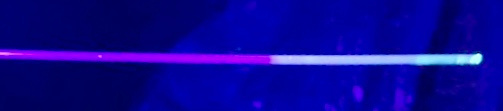
Figure 3: Coated catheter sheath under UV light

Figure 4: Diagram of the Line Scan Camera process
V. Conclusions
The Conclusions from Tests
- Particle's size as well as its light-dispersion attribute indicate that it will stay suspended in the coating solution with need for additional mixing (Figure 1)
- Percent Solids result was within the acceptable amount Particle does not change the hydrophilic capabilities of coating and may even improve its hydrophilicity
- Particle is visible under UV lighting at 1:10 dilution with the coating (Figure 3)
- The coated and uncoated portions are distinguishable under UV light using the Line Scan Camera (Figure 2)
Conclusions of Project
- By combining the dark box and lighting it with UV, the particle in the hydrophilic coating will fluoresce and show coated regions as well as uncoated regions
VI. Future Work

Figure 5: SolidWorks Model of the Dark Box
- Programing the Line Scan Camera to save and stitch each image together
- Leaching and Lubricity, and toxicity testing [3,5]
- Assembly of dark box (Figures 3, 5)
- Lighting for the dark box
- Statistical analysis of UV test vs Congo Red
VII. References
- Hernández-Zamora, M., Martínez-Jerónimo, F., Cristiani-Urbina, E., & Cañizares-Villanueva, R. O. (2016). Congo red dye affects survival and reproduction in the cladoceran Ceriodaphnia dubia. Effects of direct and dietary exposure. Ecotoxicology (London,England), 25(10), 1832–1840. https://doi.org/10.1007/s10646-016-1731-
- Thermo Scientific. (2015). Dyed Fluorescent and Colored Polymer Microsphere Suspension SDS (MSDS No. 1) (p. 12). Fremont, CA.
- Enhanced lubrication on tissue and biomaterial surfaces through peptide-mediated binding of hyaluronic acid | Nature Materials. (n.d.). Retrieved November 22, 2022, from https://www.nature.com/articles/nmat4048
- Tyndall Effect. (2013, October 2). Chemistry LibreTexts. Retrieved November 22, 2022, from https://chem.libretexts.org/Bookshelves/Physical_and_Theoretical_Chemistry_Textbook_Maps/Supplemental_Modules_(Physical_and_T heoretical_Chemistry)/Physical_Properties_of_Matter/Solutions_and_Mixtures/Colloid/Tyndall_Effec
- Tukey, H. B. (1970). The Leaching of Substances from Plants. Annual Review of Plant Physiology, 21(1), 305–324. https://doi.org/10.1146/annurev.pp.21.060170.001513